
Guides
Why it leaks, and how it gets fixed
Straight answers from the crew that does the work — grounded in real jobs across Toronto and the GTA. Looking for examples instead? Browse 126 projects.
61 guides
No guides tagged with that yet — .
Why does water get in where the balcony meets the wall?
The line where a balcony slab meets the wall is a cold joint that holds water. Why a maintained caulking bead prevents a far more expensive repair.
Read →Why does the outer edge of a balcony fail before the rest?
The lip of a balcony is exposed on three faces and fails first. How the edge is rebuilt, and why the coating has to wrap past the drip edge.
Read →Why are balconies on newer buildings already cracking?
Balconies under fifteen years old crack when a non-breathable paint traps moisture in the slab. What to strip, how to seal, and what to recoat with.
Read →Why is the base of your parking garage column falling apart?
The bottom foot of a garage column sits in salted meltwater and is usually left bare. Why epoxy trimming is the cheapest structural protection there is.
Read →Does a concrete patch actually restore your slab's strength?
A patch that is only anchored leaves the slab carrying load alone. How chemical bonding restores capacity, cuts demolition, and changes repair cost.
Read →What should a compactor room floor repair cost?
Three ways to finish a compactor room floor, what each costs on a 12 by 30 room, and why the longest-lasting system is usually the wrong buy.
Read →How do you find the heating cables before repairing a heated garage ramp?
Heated garage ramp repair in Toronto starts with energising every circuit and thermal-imaging the deck to mark the cables before any tool touches it.
Read →Why is the trench drain at the bottom of your garage ramp leaking into the level below?
Staining and dripping on the ledge beam under a Toronto garage ramp usually means the trench drain above is leaking. Here is how the repair is done.
Read →Why shouldn't you caulk a crack in a heated concrete ramp?
Rubber conducts heat about 100x worse than concrete, so caulking a crack in a heated garage ramp cooks the sealant. Use a cementitious repair instead.
Read →Why is a wobbly railing destroying your concrete stairs?
A loose handrail is not just a hazard. In Toronto freeze-thaw, metal and concrete move apart, opening a gap that cracks the stair from the anchor out.
Read →Why does the wall just above the ground fail first?
Salt and snow bank against the bottom three feet of a Toronto building all winter. What that does to brick and concrete, and how liquid flashing stops it.
Read →Where do Toronto rental buildings fail their inspection?
We analysed 31,493 flagged items across 3,587 Toronto rental buildings. Building exterior and parking areas lead by volume — but handrails fail worst of all.
Read →What does Toronto actually inspect in a rental building?
RentSafeTO scores 50 categories from 1 to 3, weighted by risk. Here is what a bylaw officer looks at outside and in the common areas, and how the score works.
Read →Where does bacteria actually hide on an industrial floor?
Not the open floor. The 90-degree wall junction, the gap under machine feet, and open control joints. What coving and plinth sealing are for.
Read →How do you repair a concrete floor in a plant that runs 24/7?
Repairs in a live plant are built around the shutdown window, not the reverse. Access, containment, cure time, and why contractors decline it.
Read →Which floor repair layers actually have to be food-grade?
In a food plant only the top inch or so of a floor repair must be food-grade. What the buried layers can be, and why the room's use decides the spec.
Read →Why is water ponding on our plant floor instead of reaching the drain?
Ponding water means the floor no longer falls towards the drains, usually because the room changed. Why re-sloping beats relocating a drain.
Read →Why do trench drain edges break up under forklift traffic?
Trench drain edges fail where a loaded forklift lands on an unsupported lip in a wet channel. What the repair must reach, and why patching fails.
Read →
Do I Need an Engineer to Repair an Expansion Joint in Ontario?
Waterproofing a joint is not a structural repair, so it needs no engineer's stamp in Ontario. When it is still worth bringing one in, and when it is not.
Read →
Can Garage Joint Repairs Be Spread Across Budget Years?
Each garage expansion joint is its own 20-foot job, so the work can be spread across budget years. Why that matters for a Class F reserve fund estimate.
Read →
Why Is Excavation Two-Thirds of a Garage Deck Repair?
About 70 percent of a top-side garage deck repair is digging and rebuilding the surface, not waterproofing. Here's where the money actually goes.
Read →
How Much Does It Cost to Repair One Garage Expansion Joint?
A single 20-foot garage expansion joint span runs roughly $6,000 to $10,000 in the GTA. Why you can't repair half a joint, and what changes the number.
Read →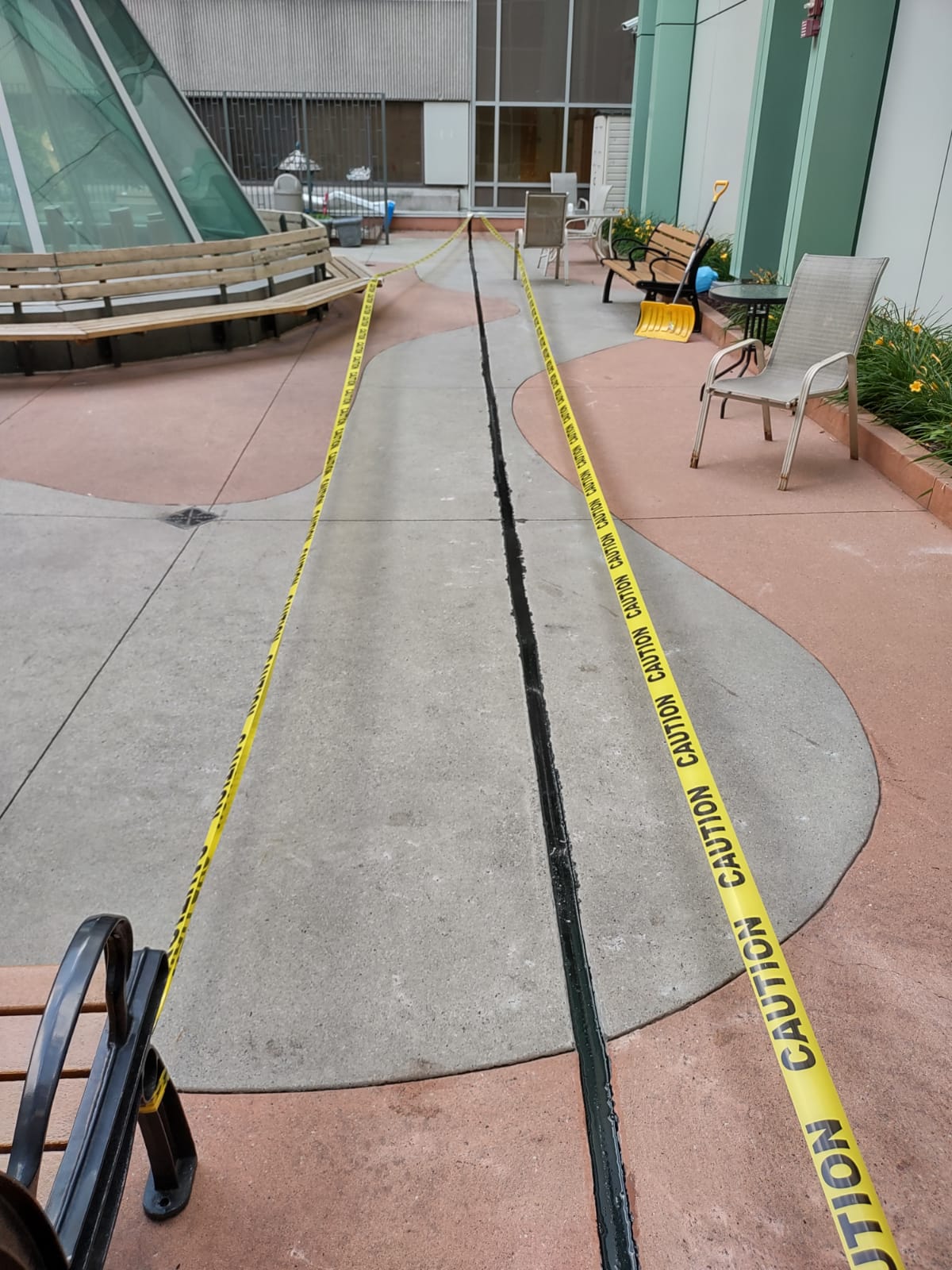
Will Injection Pressure Lift My Waterproofing Membrane?
The most common engineer's question about expansion joint injection: can the pressure lift the deck membrane above? Short answer, and what the pressure does do.
Read →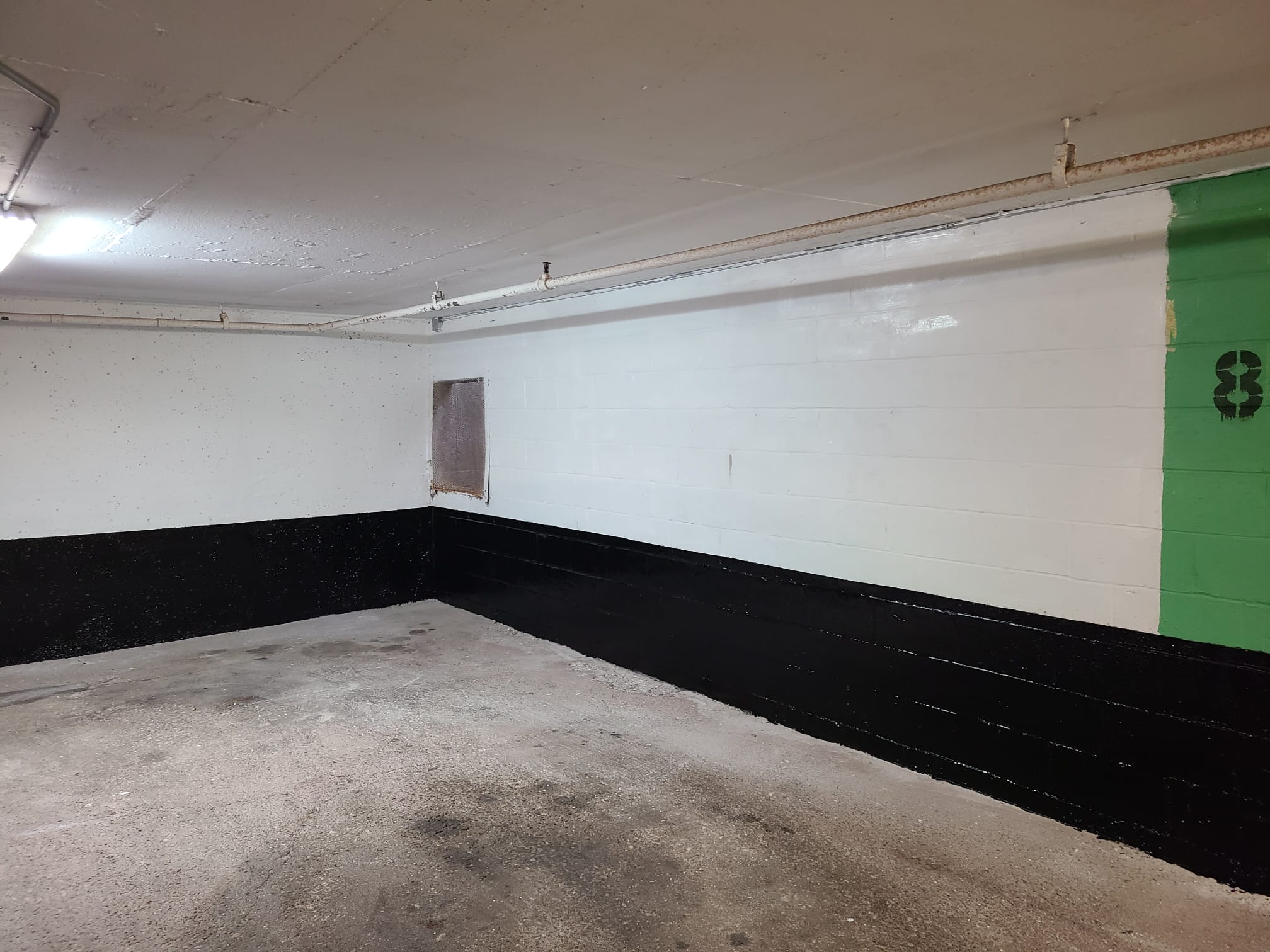
Why Does the Membrane Over a Garage Joint Come Unstuck?
The membrane over a garage joint fails two ways: slow freeze-thaw debonding under landscaping, or fast hydraulic pounding under cracked asphalt.
Read →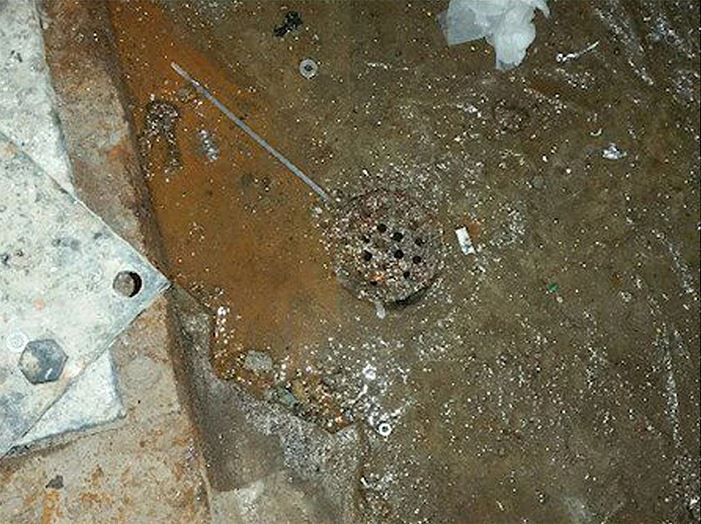
How long will our elevator be out of service for pit waterproofing?
One day per elevator pit, and only the car being worked on goes out of service. What extends it, and why the material you choose sets the shutdown length.
Read → Can you use crystalline waterproofing in an elevator pit?
Crystalline waterproofing seals concrete but cannot be coated over, and an elevator pit needs oil protection too. Why we use a membrane in a pit instead.
Read →What is a cold joint, and why does water keep coming through mine?
A cold joint is the seam where fresh concrete met concrete that had already set. Why it leaks, where the joints are in a high-rise, and how the repair is built.
Read →Crack injection or route and fill — which does your concrete crack need?
Crack width decides the method: under 1 mm is injected, over 5 mm is routed open and filled. Why cracks move more than the slab, and why repairs reopen.
Read →How do you repair spalling concrete on a ceiling overhead?
Overhead concrete repair uses a non-sag structural patch that needs no forming, over a corrosion inhibitor, with the slab still able to breathe through the repair.
Read →Our concrete stairs are cracking and spalling — repair or replace?
Cracked and spalling concrete stairs can usually be repaired instead of recast — about a quarter of the cost, and two days out of service instead of two weeks.
Read →How thick does a concrete patch have to be?
Most concrete patch materials need two inches of thickness. A chemically bonded patch goes down at 5 mm — and that decides how much slab gets demolished.
Read →How do you stop water coming in through a cable penetration in a garage wall?
A bonded, membrane-reinforced build-up over sound substrate — not bag mix. Why cheap penetration repairs fail in a season, and what the proper repair costs.
Read →Why did last year's concrete patch fail after one winter?
Concrete patches fail in a winter or two because they are bonded mechanically, not chemically. What causes delamination and what makes a patch last ten years.
Read →What gets removed or damaged during a pool refurbishment?
The bonding wire, lights, handrails, jets and drains all come out during a pool refurbishment. What belongs in the scope, and what is usually missing from the quote.
Read →Why is water leaking into our pool mechanical room?
Water in a pool mechanical room usually comes from the perimeter expansion joint, not the pool. How the joint fails, how it is rebuilt, and why it is water-tested.
Read →Why can't anyone give a firm price on a pool repair before the work starts?
Marbelite deadens the hammer, so hollow concrete cannot be mapped until the finish is off. How pool cracks are estimated and what the allowance has to cover.
Read →How long will our pool be out of service for repairs?
Crack repair takes two days. Resurfacing takes two weeks. A week-by-week schedule for a condo pool repair, including the drain-down and refill days.
Read →Does your condo pool have to be drained to repair it?
Whether a condo pool must be drained depends on where the damage is. When a partial drain works, when it does not, and what a full drain costs the building.
Read →Why is water running out of the electrical conduit box in our garage ceiling?
Water can enter at a buried cable penetration outside the building and travel the length of the conduit before it drips into the garage. How to trace it and what to do about the cars.
Read →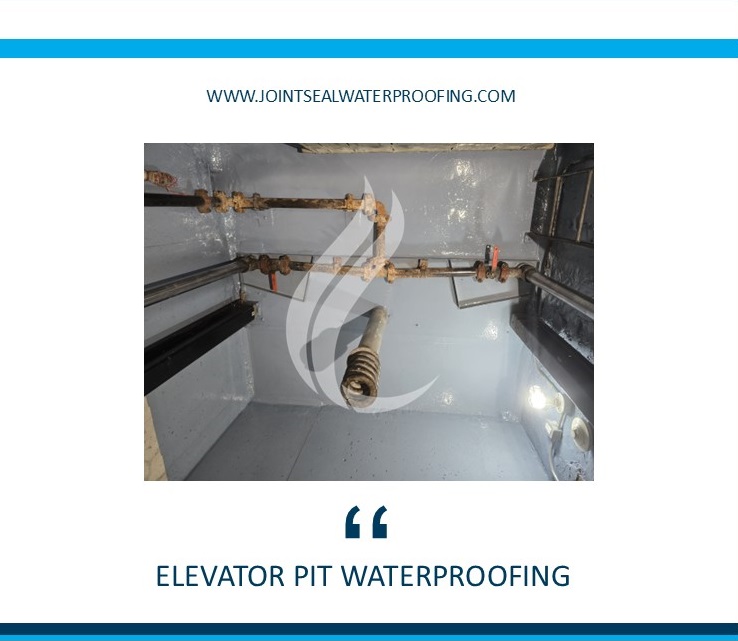
What does elevator pit waterproofing cost in Toronto?
Elevator pit waterproofing is priced per pit, and a double pit runs about 1.5x a single. The four things that actually move the number, and why no elevator fully shuts down.
Read →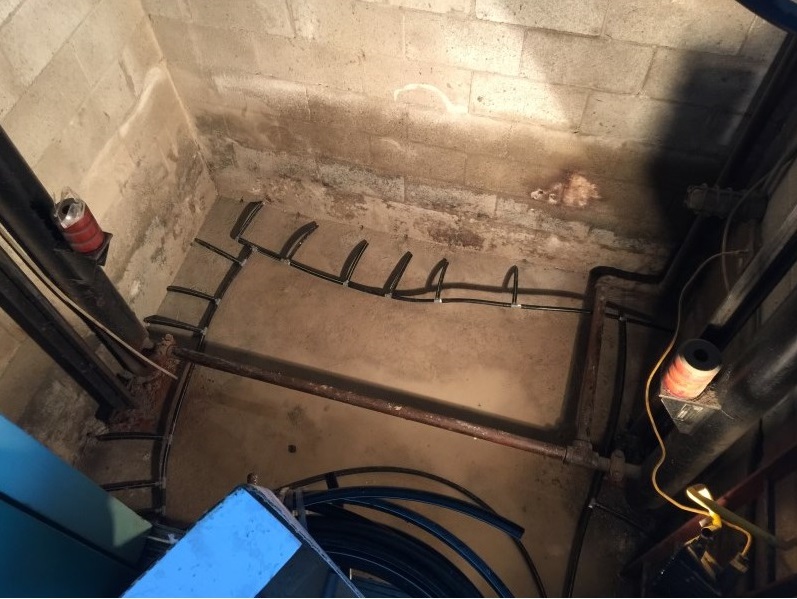
How do you waterproof a block-wall elevator pit?
Block-wall elevator pits under heavy hydrostatic pressure should not be sealed completely. Why pressure relief drains are the right answer, and what they cost you.
Read →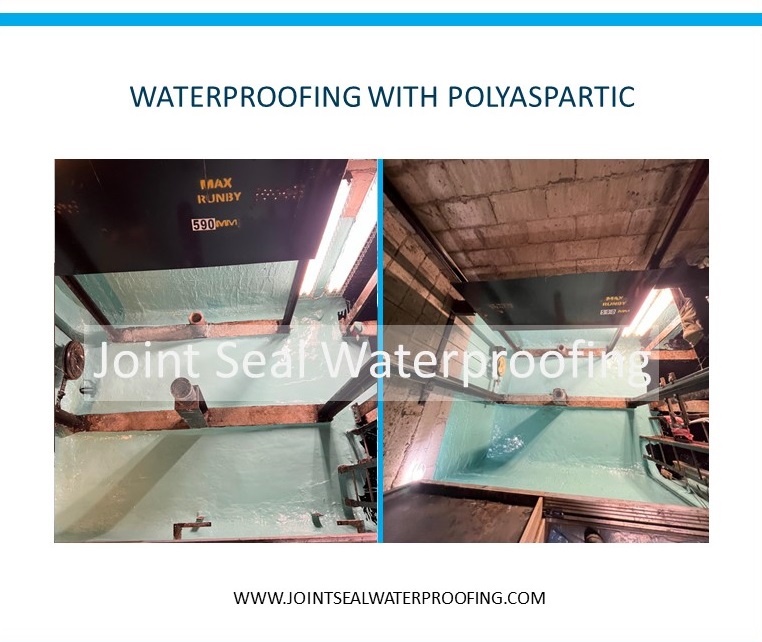
How do you waterproof a concrete elevator pit?
The full sequence for waterproofing an elevator pit: cleaning without saturating, slope correction, the cold joint and fiberglass upturn, then a monolithic coating.
Read →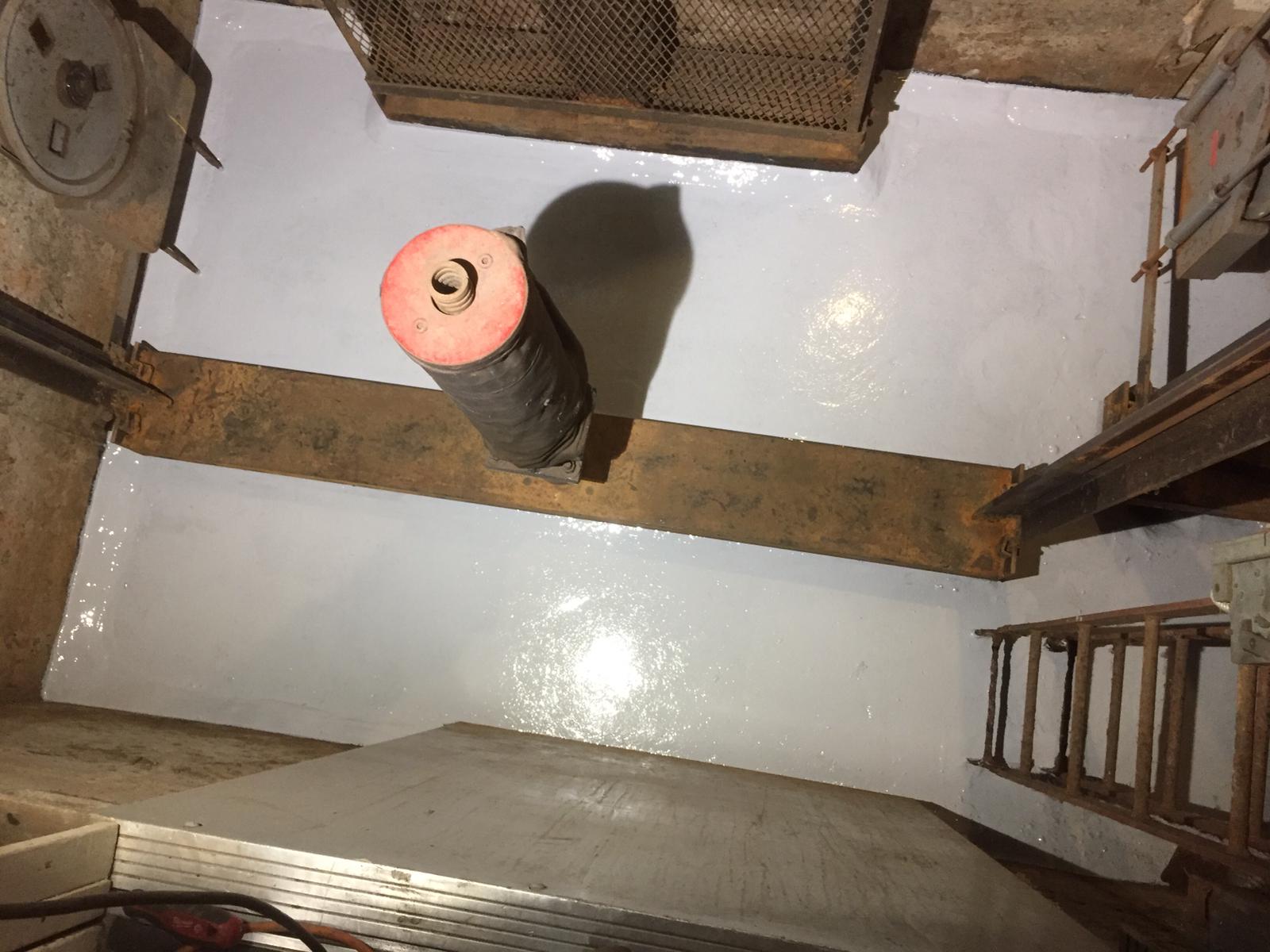
What do the stains around a crack in my elevator pit wall mean?
White deposits around a concrete crack mean heavy water flow. Yellow-brown means corroding rebar. How the colour and a sounding test decide inject versus patch.
Read →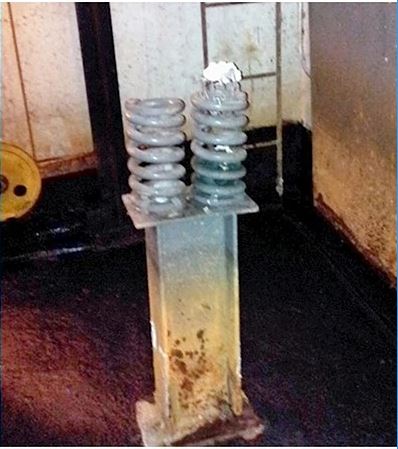
Why does water back up into my elevator pit through the drain?
Elevator pit drains reverse when the sump pit overfills. Oil clogging, bad slope and backflow preventers — the cheapest fix on the list, and the most overlooked.
Read →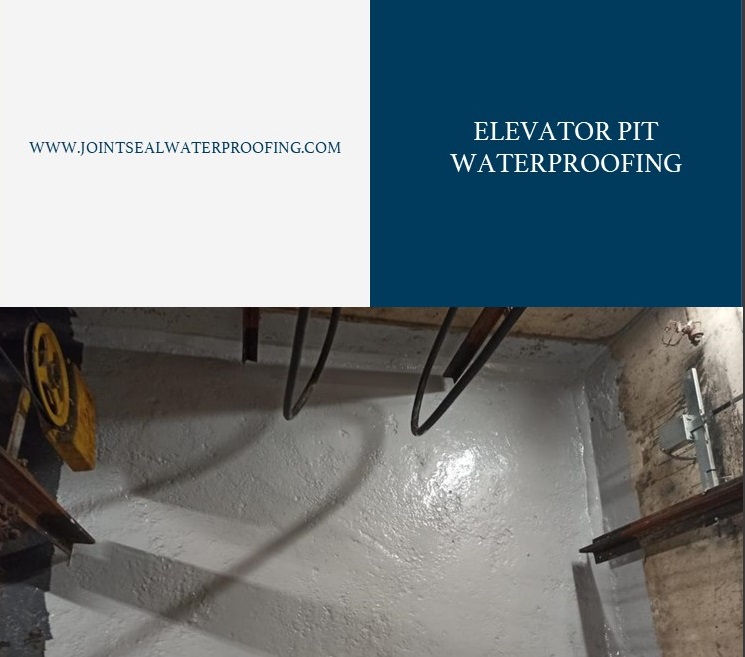
Water in my elevator pit — how serious is it?
A wet elevator pit rusts equipment, can get the elevator condemned by the TSSA, and has cost one building a $300,000 insurance claim. What is actually at risk.
Read →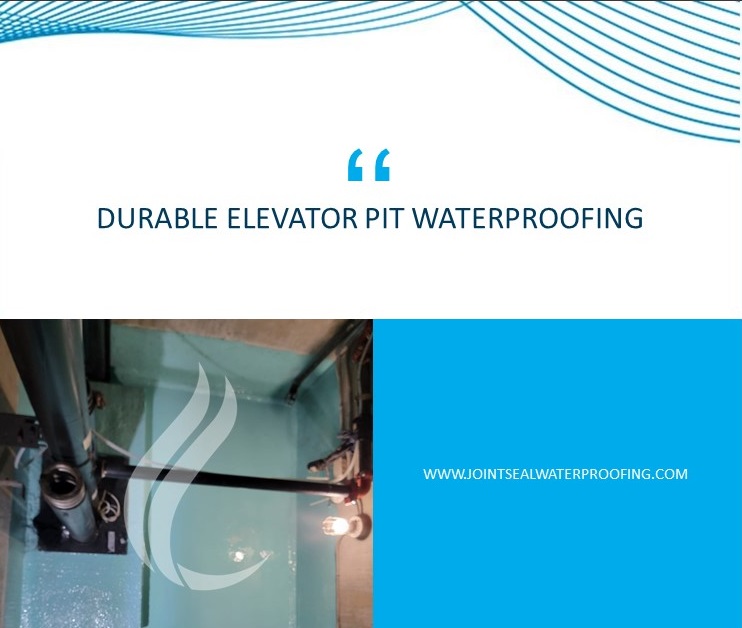
Can you waterproof an elevator pit with water actively running in?
Nothing bonds to concrete with water running through it. How a water-reactive plug buys a four-hour window, and why active water drives the cost up so hard.
Read →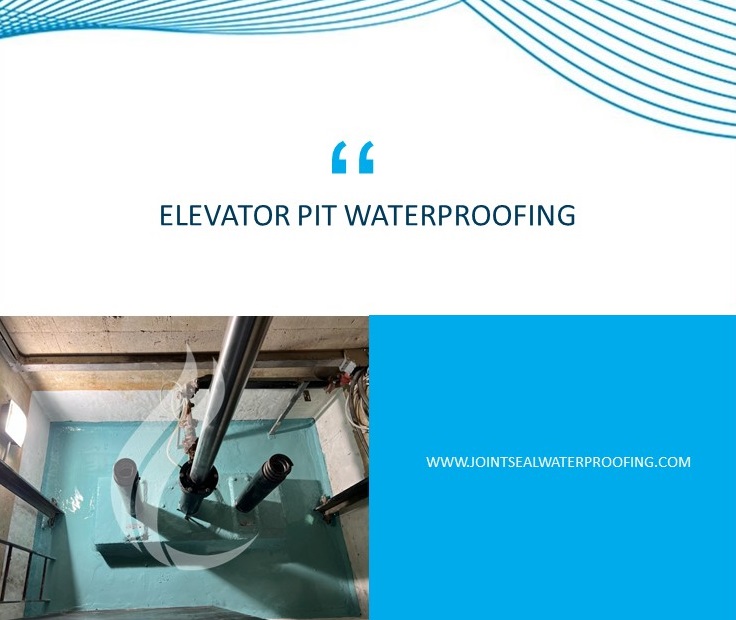
How do you waterproof around an elevator piston housing?
The void around a hydraulic elevator piston housing fills with groundwater. The sequence — screen, foam, rubber collar — and why the equalizer pipe is what makes it hold.
Read → Why does my elevator pit keep filling with water?
Water enters an elevator pit through seven distinct paths, and the cold joint at the floor and wall is the most common. How to tell which one you have.
Read → Why Does My Elevator Pit Keep Taking On Water, and How Is It Sealed?
Elevator pits leak at the cold joint where the floor meets the wall. Why a pump isn't a fix, and how a pit is sealed from the inside without excavation.
Read →
$5 a Foot or $300 a Foot: What a Crack in Your Asphalt Actually Costs
Sealing a crack in asphalt over a garage deck runs about $5 a foot. Letting it pound through to the membrane and concrete below runs about $300 a foot.
Read →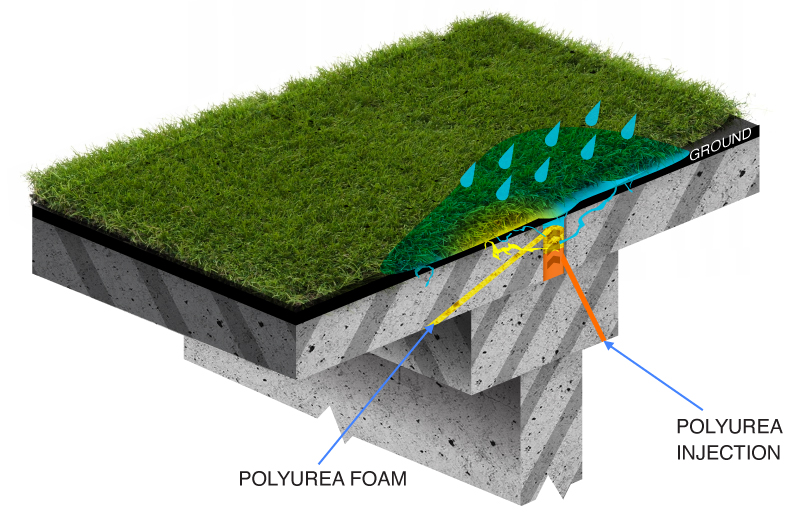
$4 Million or $500,000: How One Condo Board Decided on Its Garage Joints
A GTA condo board weighed a $4M garage excavation against a $500K injection proposal. What the consulting engineer admitted changed the decision.
Read →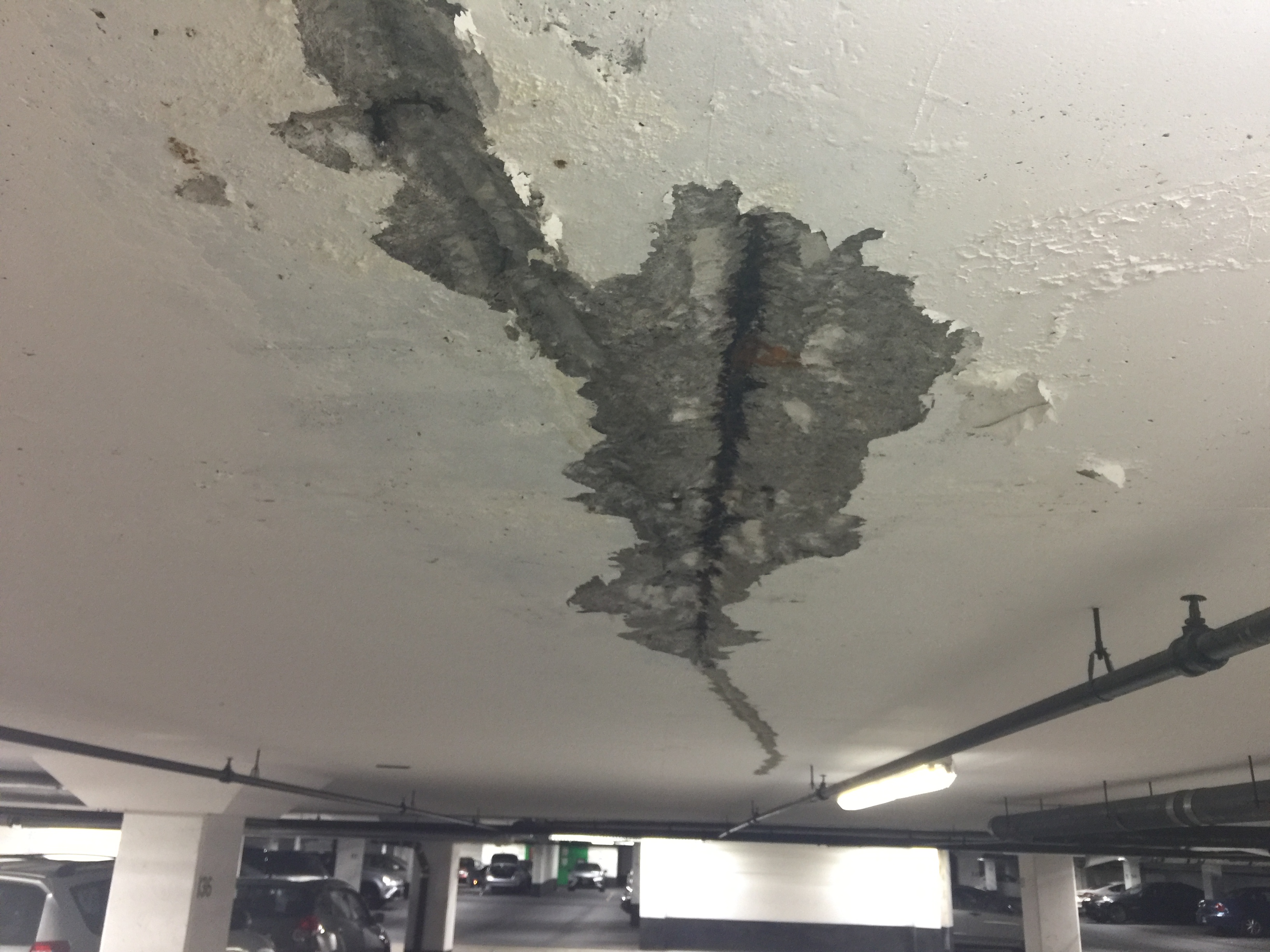
Why Does My Garage Leak 20 Feet From Where the Water Gets In?
Water under a debonded deck membrane travels along the slab before it exits at the expansion joint. That's why digging above the drip often misses the failure.
Read → Why do parking garage expansion joints leak, and how are they fixed?
Garage expansion joints leak because the membrane above them debonds, not the joint itself. Why the leak shows up 20 feet away, and how it is sealed.
Read →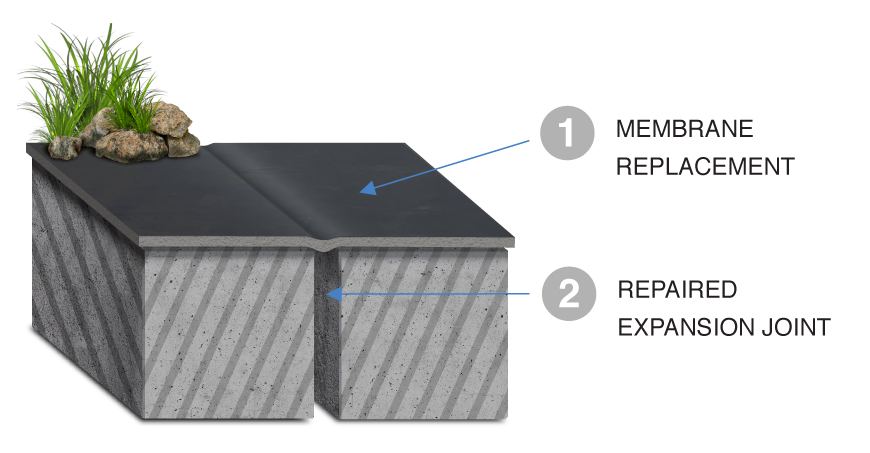
Negative-side injection vs digging up the garage deck: which repair does your building need?
Negative-side injection seals a leaking garage expansion joint from inside in about two days, instead of a five-month excavation of the deck above.
Read → How expansion joint injection resin chases water in reverse
Joint Seal Flex is heavier than water and will not react with it, so it sinks, pushes water like a piston, and chases the leak back to where it started.
Read → The ledge beam problem: when a garage drip stops being cosmetic
A dripping garage expansion joint can saturate the ledge beam underneath it. That beam holds the slabs up, which is why this stops being cosmetic.
Read →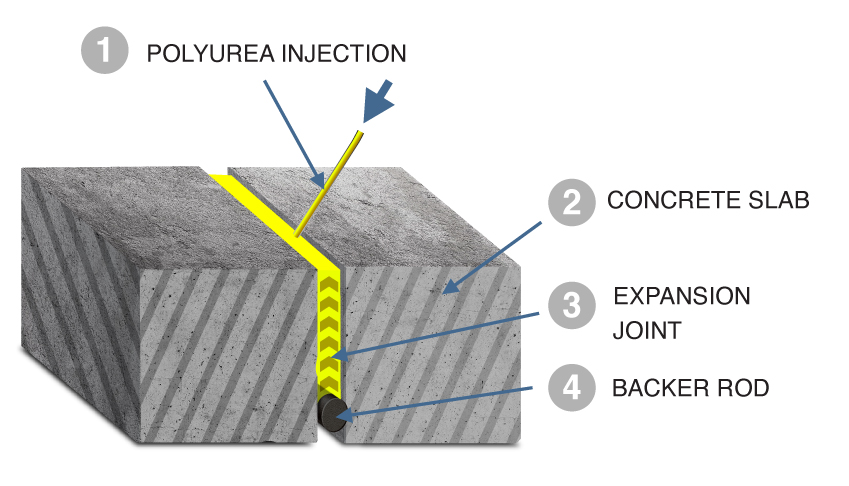
Mid-slab vs top-slab expansion joints: why one costs a fraction of the other
A mid-slab expansion joint on the floor of P1 is exposed on both sides, so it is a far cheaper fix than a joint buried under dirt or asphalt above.
Read → $5 a foot or $300 a foot: what a crack in your asphalt actually costs
Sealing a crack in garage-area asphalt runs about $5 a foot. Letting it pound through to the membrane and concrete below runs about $300 a foot.
Read → $4 million or $500,000: how one condo board decided on its garage joints
One GTA condo board compared a $4 million garage excavation against a $500,000 injection proposal. What the engineer admitted changed the decision.
Read →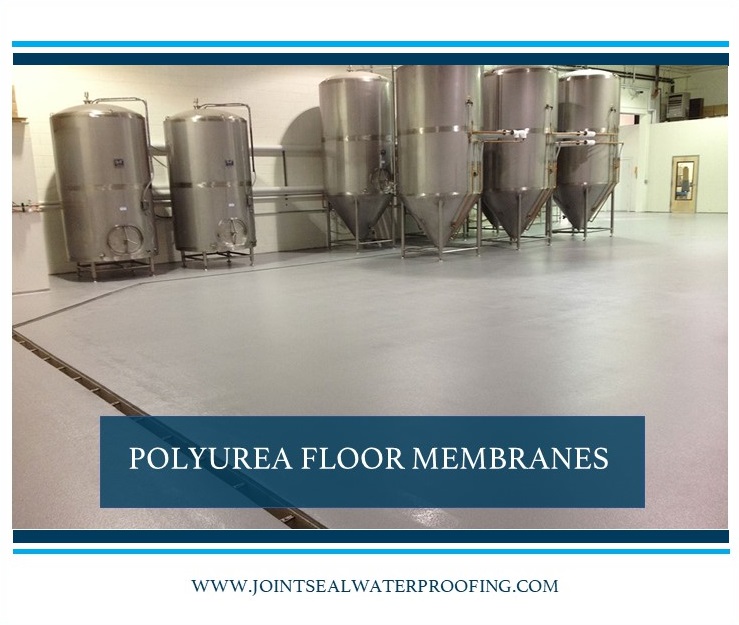
What Is Polyurea Waterproofing? | Joint Seal
Polyurea waterproofing explained: a moisture-insensitive, solvent-free membrane that cures damp, holds thickness on vertical surfaces and returns areas to use in 24 hours.
Read →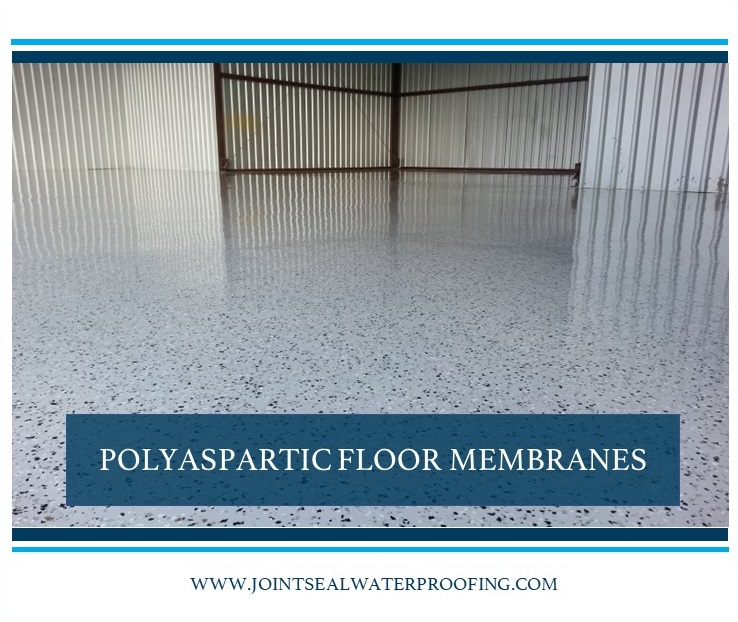
Polyaspartic vs Epoxy Floor Coatings | Joint Seal
Polyaspartic, epoxy and polycarbonate floor coatings compared for Toronto commercial buildings: cure speed, UV stability, chemical resistance and where each belongs.
Read →