Project & Insights
Mid-slab vs top-slab expansion joints: why one costs a fraction of the other
August 13, 2026
By Valeriy, Application Specialist, JSW Waterproofing
Not every leaking expansion joint is an expensive problem. If yours is on the floor of P1 rather than buried under a garden, the fix is a different — and much cheaper — conversation.
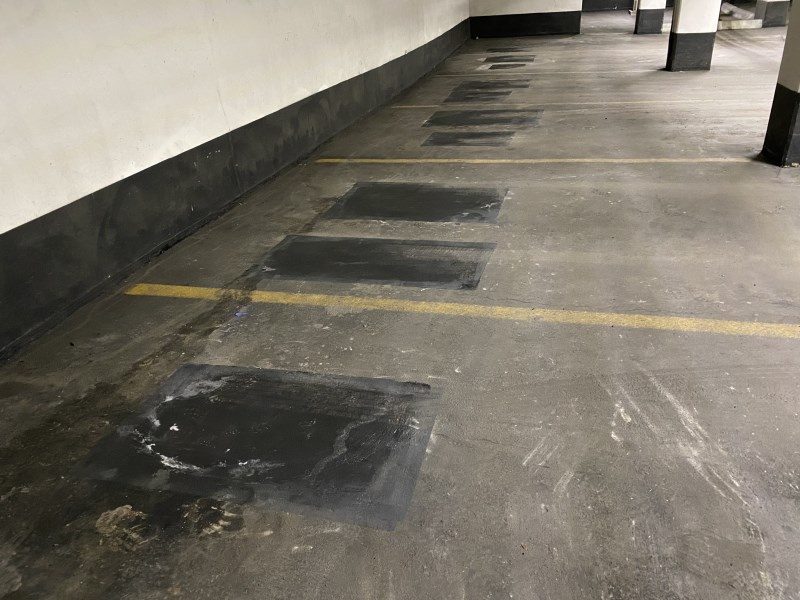
An expansion joint on the floor of P1 is far cheaper to repair than one on the ceiling of P1, because both sides of the slab are exposed. Nothing is buried on top of it — no soil, no playground, no asphalt — so the joint can be worked directly from above and gravity does most of the work. Property managers often assume every garage joint repair is a capital item. Mid-slab joints usually aren’t.
Knowing which type you have changes the number before anyone quotes it.
Which type of joint do you have?
| Where you’re standing | What’s above the leaking joint | Which type | Cost implication |
|---|---|---|---|
| P2, looking up | Another parking level | Mid-slab | Cheaper — both faces exposed, more method options |
| P1, looking up | Grass, soil, a park or playground | Top-slab | Injection from below, or an expensive dig |
| P1, looking up | Asphalt walkway or drive lane | Top-slab | Injection from below; also seal the asphalt above |
| P1, looking up | A podium, plaza, or planters | Top-slab | Injection from below strongly preferred |
What is the difference between the two kinds of garage expansion joint?
A parking garage has expansion joints at more than one level, and they behave differently.
Top-slab joints are at the ceiling of P1 — the underside of the deck that carries whatever is at grade. Above them sits waterproofing membrane and then soil and grass, landscaping, a playground, or asphalt. When one of these leaks, the water usually got in somewhere else entirely and travelled under a debonded membrane before exiting at the joint. This is the expensive category, and it’s the one where working from inside the garage instead of excavating saves the most money.
Mid-slab joints are between parking levels — the floor of P1, which is the ceiling of P2. Nothing is buried above them. Cars are.
Why do mid-slab joints leak?
A mid-slab expansion joint leaks mostly because of what cars bring in. Vehicles track a lot of moisture off Toronto streets — snowmelt, rain, road salt — and that water runs across the slab and settles into the joint. It sits there. Then it works its way through to the level below and shows up on the ceiling of P2.
It’s a simpler story than the top-slab version. The water is arriving at the joint from a few feet away, in plain view, not from twenty feet away under a membrane you can’t see.
Why is the repair cheaper?
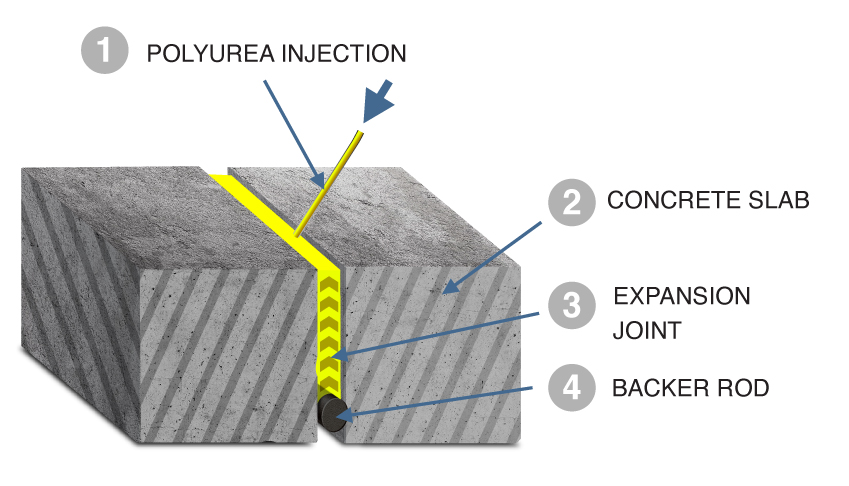
A mid-slab expansion joint repair is cheaper because both ends of the joint are exposed — the top face on the floor of P1 and the underside on the ceiling of P2. Nothing has to be excavated to reach it.
That opens up options that aren’t available on a buried joint:
- Gravity feed from the top. Material can be poured or fed into the joint from above rather than pressure-injected from below, which is simpler work.
- Mechanical expansion joint systems. A pre-manufactured joint can be inserted into the gap — a flexible profile that compresses and expands, shaped a bit like a harmonica. Wabo, made by Watson Bowman Acme, is one of the common brands and their compression seals have a long track record in parking structures.
- A choice of methods. Because access isn’t the constraint, the decision is driven by joint movement, traffic loading, and budget rather than by what can physically be reached.
These are joints we do commonly. They’re routine work, not capital projects.
How do you tell which kind you’re dealing with?
Stand under the leak and look at what’s above it.
If you’re on P2 and the joint is dripping from the ceiling, there’s a parking level above you — mid-slab, and probably the cheaper conversation.
If you’re on P1 and the joint is dripping from the ceiling, what’s above you is the deck and whatever sits on it at grade. That’s the top-slab case, and the useful next question is what’s up there: grass, a playground, or asphalt. Each one changes both the likely cause and the cost of excavating if it ever comes to that.
One rule holds for both: a joint gets repaired across its full 20-foot slab span. You can’t patch a short length of expansion joint and call it done — the joint moves as a unit.
What should you do next?
Note where each leak is, which level you’re standing on, and what’s above it. That single piece of information does more to size the problem than anything else a property manager can gather.
Then have it assessed. Book an inspection and we’ll tell you which type of joint you have, what caused the failure, and what the realistic options are — including the possibility that it’s a straightforward job.
Book a JSW inspection · More on expansion joint repair, traffic surface repair and parking garage repair
Common questions
Frequently asked questions
What is the difference between a top-slab and a mid-slab expansion joint?
A top-slab joint sits at the ceiling of P1, under the deck that carries landscaping or asphalt at grade. A mid-slab joint sits between parking levels — the floor of P1 and the ceiling of P2 — with nothing buried above it. The difference determines how the joint can be accessed and repaired.
Why is a mid-slab expansion joint repair cheaper?
Because both faces of the joint are exposed, nothing has to be excavated to reach it. Material can be gravity-fed from the top instead of pressure-injected from below, and mechanical joint systems can be installed directly. Access is not the constraint, so the method is chosen on movement and traffic rather than reachability.
Why do expansion joints between parking levels leak?
Mostly from vehicles. Cars track a large amount of snowmelt, rain, and road salt into a Toronto parking garage, and that moisture runs across the slab and settles into the joint. It then works through to the level below, appearing as a leak on the ceiling of the level underneath.
What is a mechanical expansion joint system?
A pre-manufactured flexible profile inserted into the joint gap, which compresses and expands as the slabs move — shaped somewhat like a harmonica. Wabo, manufactured by Watson Bowman Acme, is a common brand, and their compression seals have a long track record in parking structures and similar horizontal applications.
Can you repair just the leaking section of an expansion joint?
No. An expansion joint is repaired across its full slab span, typically 20 feet, because the joint moves as a single unit. Repairing a short length leaves the rest of the run at its existing condition and the movement simply concentrates elsewhere along the joint.
Related services & repair types