Project & Insights
What does Toronto actually inspect in a rental building?
September 9, 2026
By Boris Gopka, Owner, JSW Waterproofing — concrete and waterproofing repairs on Toronto rental and high-rise buildings since 2010
The City of Toronto evaluates a rental building against 50 scored categories, each rated from 1 to 3, and weighted according to how closely the item relates to health and safety. A bylaw enforcement officer walks the exterior, the interior common areas, and the building’s required plans and records, taking notes and photographs as they go.
Of those 50 categories, 17 are classified high-risk, 23 moderate-risk and 10 cosmetic. So a cracked structural element and a scuffed wall are not weighted the same, and the exterior and structural items sit disproportionately in the high-risk group.
This is the RentSafeTO programme, and it applies to every Toronto apartment building with three or more storeys and ten or more units — roughly 3,600 buildings, holding about 326,000 units.
What does the officer look at outside the building?
The exterior categories are where most concrete, coating and drainage deficiencies get recorded, and they carry heavy weighting because a falling piece of concrete or a failed guard is a safety item.
The exterior areas a RentSafeTO evaluation covers include:
- Building exterior — the wall face itself: brick, mortar, spalling concrete, caulking and flashing
- Balcony guards — guard integrity, slab edges, and the underside of the balcony above
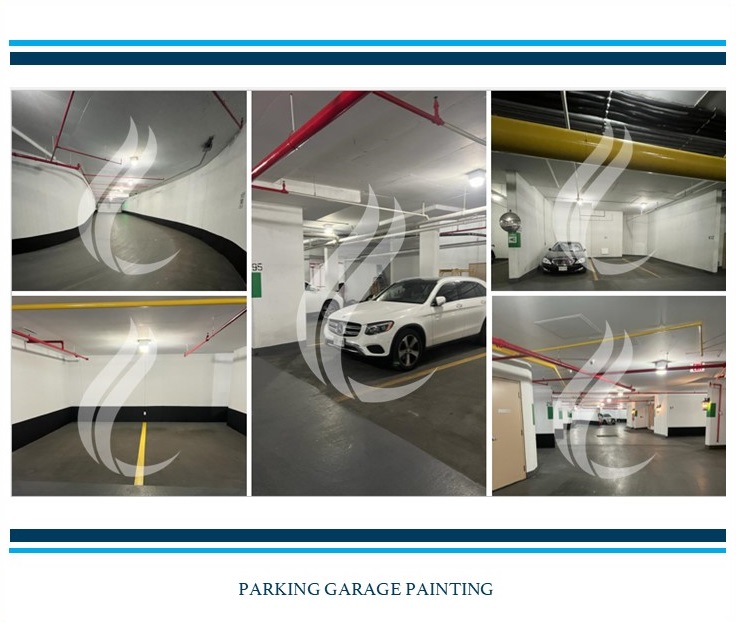
- Parking areas — both underground garages and surface lots
- Exterior walkways — paths, ramps and their safety markings
- Exterior grounds — grading, drainage and landscaping around the building
- Retaining walls
- Catch basins and storm drainage
- Windows and exterior doors
Interior common areas are scored separately: stairwell walls and ceilings, stairwell landings and steps, interior handrails and guards, garbage and compactor rooms, chute rooms, storage areas and lockers, elevator maintenance, lighting, ventilation and pest control.
And there is a documentary category that surprises people: the building’s State of Good Repair plan, a required five-year capital plan. It is scored like any other item, and a building with no plan scores badly on it.
How is the score actually calculated?
A RentSafeTO score combines a proactive component and a reactive one, which is why it moves between inspections.
The proactive score is the total of those 50 weighted category scores from the last evaluation. The reactive score is a deduction for active violations — outstanding Orders to Comply, Notices of Violation and emergency orders.
The City’s own worked example makes the mechanism clear: a building with a proactive score of 70 per cent that receives two Property Standards Orders shows an evaluation score of 68 per cent. When the building comes into compliance, the score returns to 70 per cent.
That is worth stating plainly, because it is commonly misunderstood: an Order to Comply is a deduction against your score, not a fine attached to the order. Fees in the programme are charged for other things — audits, re-evaluations and targeted engagement — and those are separate from the scoring mechanism entirely.
Scores are refreshed daily on the City’s interactive building map, so a building that fixes something does not wait two years to see it reflected.
What do the coloured signs at the entrance mean?
Since June 15, 2026, every RentSafeTO building must display a City-issued green, yellow or red sign in a conspicuous location near the main entrance.
| Colour | Score | What it signals |
|---|---|---|
| Green | 85–100% | Satisfactory |
| Yellow | 70–84% | Improvement needed |
| Red | 69% or below | Significant issues, enhanced City oversight |
When a re-evaluation moves a building into a different colour band, the owner has 14 calendar days to post the new sign. An officer may attend afterwards to confirm the correct sign is up, and missing or inaccurate signs can be reported by anyone to 311.
The sign is the part of this programme that changed the commercial stakes. A score used to be something you looked up. It is now something every prospective tenant sees before they walk through the door.
What happens if a building scores badly?
Two escalations sit above a poor score, and both carry a fee.
Targeted engagement is triggered when a building’s reactive score drops by five per cent or more for two consecutive months as a result of Orders and Notices being issued. City staff then engage directly with tenants and accept complaints about in-unit issues. The published 2025 fee for a targeted engagement is $3,016.00, charged to the owner.
A building audit applies to buildings scoring in the lowest 2.5 per cent of all evaluated buildings that year. An audit is a full inspection with City staff going door to door canvassing tenants for complaints, and the owner has to post notice of it on the Tenant Notification Board 30 days ahead. The published 2025 audit administrative fee is $3,016.00, plus an inspection fee of $158.84 per hour, per officer.
That hourly figure is the one property managers underestimate. An audit of a large building is not a one-hour visit.
The programme’s standards sit in Toronto Municipal Code Chapter 354, Apartment Buildings, with the fees in Chapter 441. Fees are waived for non-profit and social housing providers.
Which of these categories are actually concrete work?
Roughly eight of the 50 categories describe conditions that a concrete and waterproofing contractor fixes, and they cluster in the high-risk group.
Building exterior, balcony guards and slab edges, parking areas, exterior walkways and ramps, stairwell landings and steps, retaining walls, catch basins and storm drainage, and exterior grounds where the issue is grading and water. In practice the deficiency behind the score is nearly always one of four things: spalled or cracked concrete, a failed traffic coating or polyurea membrane, water going where it should not, or a guard or handrail that has come loose.
What is not our work, and worth saying so you know who to call: interior finishes and paint, mechanical and electrical systems, fire safety equipment, pest control, ventilation, and anything inside a tenant’s unit. Those are separate trades and a waterproofing contractor should not be quoting them.
What we found across three rental properties this year
Across three City-inspected Toronto rental properties this year the same short list came up at every one: broken stair treads, wobbly railings with the concrete anchoring failed around them, missing brick and spalling on the building face, deterioration in the bottom few feet of wall at grade, and repairs needed in the parking areas.
At one property the membrane under the asphalt at the parking deck had let go, and water was tracking from the exposed deck straight through into the garage below. The City separately ordered the asphalt repaired, which is the same failure chain from the other direction — cracked asphalt drives water into the membrane and the membrane goes quickly after that.
The pattern is not coincidental. These are the items that fail on a 1960s or 1970s Toronto rental building, and they are the items the evaluation tool weights most heavily, because they are the ones that hurt somebody when they fail.
One of the three had been walked and repaired in advance of the City’s visit. Very little was written up against it.
What to do before your next evaluation
Find out when your building was last evaluated and what it scored — search the address on the City’s RentSafeTO interactive building score map, or contact the programme directly at RentSafeTO@toronto.ca or 416-396-7228.
Then walk your own exterior against the category list above, in that order: the wall face, the balcony guards and slab edges, the stairs and handrails, the walkways, the parking areas, the catch basins. Photograph what you find. And check that your five-year State of Good Repair plan actually exists, because it is a scored category and it is one of the easiest points on the sheet to lose.
For the concrete and waterproofing items, we will walk the building with you and tell you what is a repair and what is a capital item, before an officer decides for you.
Two things worth reading next: where rental buildings actually fail their City inspection, which is what the City’s own data says about the most-cited categories, and why the wall just above the ground fails first, which covers the single most common exterior finding on the buildings we worked through this year. If your building has an underground garage, the parking garage waterproofing and balcony repair pages set out how that work is scoped.
Programme details in this article are drawn from the City of Toronto’s published RentSafeTO material, including the Apartment Building Standards pages, the Fees and Fines schedule, and Toronto Municipal Code Chapters 354 and 441. Fee figures are the published 2025 rates and are updated by the City periodically — confirm current amounts with RentSafeTO before budgeting against them.
Common questions
Frequently asked questions
Which buildings are covered by RentSafeTO?
RentSafeTO covers Toronto apartment buildings with three or more storeys and ten or more units — roughly 3,600 buildings holding about 326,000 rental units. Condominium corporations are not covered by the programme, though the same concrete, balcony and garage conditions get picked up by a reserve fund study instead.
How often is a rental building evaluated?
RentSafeTO buildings are evaluated by the City roughly every two years. Between evaluations the score still moves, because active Orders to Comply and Notices of Violation reduce it, and the scores are refreshed daily on the City's interactive building map. A building owner can also request a re-evaluation, for a fee.
What does a green, yellow or red sign at the entrance mean?
The colour-coded RentSafeTO sign reflects the building's evaluation score: green is 85 per cent and above, yellow is 70 to 84 per cent, and red is 69 per cent or below. Signs have been required at building entrances since June 15, 2026, and when a building's colour changes the new sign must be posted within 14 calendar days.
Do Orders to Comply cost money or cost score?
An Order to Comply under Toronto's RentSafeTO programme reduces a building's evaluation score rather than carrying a direct fine. The City's published example: a building at 70 per cent that receives two Property Standards Orders shows 68 per cent, and returns to 70 per cent once it comes into compliance. Separate fees apply to audits, re-evaluations and targeted engagement.
What triggers a building audit?
Buildings scoring in the lowest 2.5 per cent of all evaluated buildings in a year are prioritised for a full audit. An audit includes City staff going door to door to canvass tenants for complaints, and the owner has to post notice of it on the Tenant Notification Board 30 days before the scheduled date.
Which inspected categories are concrete and waterproofing work?
Building exterior, parking areas, exterior walkways, stairwell landings and steps, balcony guards, retaining walls, catch basins and storm drainage, and exterior grounds are all categories where the deficiency is usually concrete, coating or drainage. Interior finishes, mechanical systems, pest control and fire safety are separate trades entirely.
Can a building be prepared before the City arrives?
A building can be walked and repaired ahead of an evaluation, and that is materially cheaper than repairing under an order afterwards. On the three rental properties we prepared this year, the one that had been walked and fixed in advance came through its City evaluation with very little written up against it.
Related services & repair types