Project & Insights
Why Does My Elevator Pit Keep Taking On Water, and How Is It Sealed?
August 14, 2026
Valeriy — Application Specialist, Joint Seal Waterproofing — fifteen years on GTA elevator pits
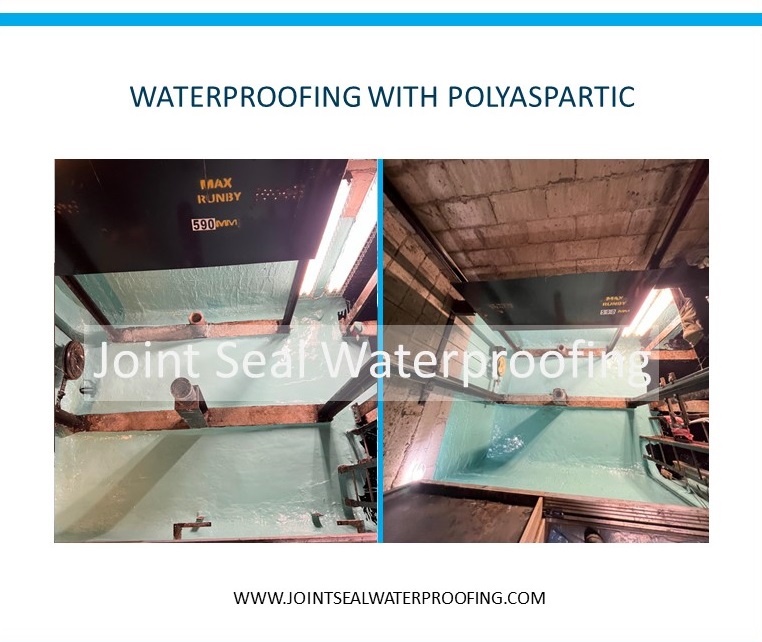
An elevator pit takes on water because the cold joint where the pit floor meets the pit wall was never watertight, and groundwater finds it. The pit is the lowest point in the building, so water reaching the foundation ends up there. Joint Seal seals pits from the inside — crack repair, cold joint repair, then a membrane carried up the wall — with no excavation outside the building.
A pump is not a repair. It’s a way of living with the leak.
Why the cold joint is almost always the culprit
A pit floor and its walls are poured separately, and concrete does not bond to itself across that seam. Under normal conditions it holds. Add pressure from wet ground outside and the seam becomes the path of least resistance.
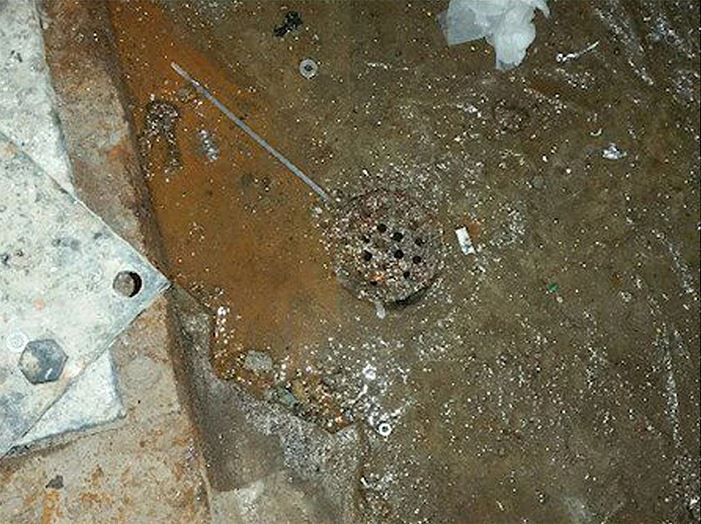
We see the same thing every time we open one. On a high-rise in Mississauga the pit only looked damp, but as the crew started chipping out the cold joint to prepare it, water began gushing out. Moisture had been building behind the seam for a long time.
That’s why a visual check under-reads the problem. What you see on the floor is what got through, not what’s waiting behind the concrete.
Why pumps and painted-on sealers don’t hold
A sump pump moves water that has already arrived. It protects the equipment and it should stay, but it treats the symptom indefinitely.
Painted-on damp sealers fail for a different reason. They go on the inside face while water pushes from the other side, so they lift. If a pit has been coated before and the coating bubbled or peeled, that is usually what happened — we have had to strip failed, bubbled-up membrane out of a pit before recoating it properly.
The fix has to close the path, not cover it.
How the pit actually gets sealed
The order matters as much as the materials.
Clean and prepare. Grinding takes off the top layer of the floor surface along with any failed coating, so new material bonds to sound concrete rather than to old paint.
Open the cracks before filling them. Cracks get chipped out — deliberately widened — so repair material can get properly inside. A crack filled at hairline width is a crack that reopens.
Repair the cold joint. This is the actual leak path, and it gets treated as its own step rather than lumped in with general patching.
Patch the concrete. Our thin-patch materials go down as thin as 5 mm, which lets us rebuild a surface without raising the floor of a pit that has no height to spare.
Coat, and carry it up the wall. The membrane goes across the floor and continues as an upturn around the entire perimeter. That upturn is the part cheaper jobs skip, and it is the part that matters — water arrives at the joint, not in the middle of the floor.
What we look at before quoting
Whether the water is constant or seasonal is the most useful thing you can tell us. Constant points to groundwater sitting against the foundation. Seasonal points to surface water finding a route down during thaw or heavy rain.
We also look at whether the pit is block or poured concrete, whether there is a piston, how much clearance there is under the car, and what condition the existing floor is in. Those decide the method and the schedule.
Where we’ve done this
Elevator pits sealed this way across the GTA include high-rises on Weston Road and Lee Centre Drive, a mid-rise on Grandview Way in North York, a mid-rise on Bronte St, and a high-rise in Mississauga. We work in block-walled and poured pits, with a piston or without.
Most of our pit work reaches us through elevator contractors who need the civil side handled properly before they will sign off on their own equipment.
What to do if your pit has water in it now
Photograph the pit floor and the base of the walls, and note whether the water is constant or seasonal.
Then have it looked at before the equipment takes damage. Book an inspection and we’ll tell you where it’s entering and what sealing it involves.
More on elevator pit waterproofing, crack repair and concrete surface repair.
Common questions
Will a sump pump fix a leaking elevator pit?
No. A pump removes water that has already entered and protects the equipment, but it does not close the path the water is using. A pit on a pump keeps taking water, and the concrete and any steel in it stay wet.
Can an elevator pit be waterproofed from the inside?
Yes, and that is normally how it is done. Sealing from inside means crack repair, cold joint repair and a membrane carried up the wall as an upturn, with no excavation outside the building.
Why did the coating in my pit bubble or peel?
A coating applied over a damp or poorly prepared surface, or applied without first closing the cold joint, gets pushed off from behind by water pressure. Preparation and closing the leak path are what make a coating hold.
Common questions
Frequently asked questions
Will a sump pump fix a leaking elevator pit?
No. A pump removes water that has already entered and protects the equipment, but it does not close the path the water is using. A pit on a pump keeps taking water, and the concrete and any steel in it stay wet.
Can an elevator pit be waterproofed from the inside?
Yes, and that is normally how it is done. Sealing from inside means crack repair, cold joint repair and a membrane carried up the wall as an upturn, with no excavation outside the building.
Why did the coating in my elevator pit bubble or peel?
A coating applied over a damp or poorly prepared surface, or applied without first closing the cold joint, gets pushed off from behind by water pressure. Preparation and closing the leak path are what make a coating hold.
Related services & repair types