
North York · Toronto & GTA
Waterproofing & Concrete Repair in North York
In North York the balcony call and the garage call are usually the same water. Towers along Yonge and Bathurst sit over deep multi-level garages, so a spalling balcony edge on an upper floor and a flooded elevator pit at the bottom of the shaft are one building ageing at both ends.
- Balcony Slab Repair
- Underground Garages
- Expansion Joint Injection
- Elevator Pit Waterproofing
- Parking Deck Membranes
- Mechanical Room Floors
Balcony Repair on Two Generations of Tower
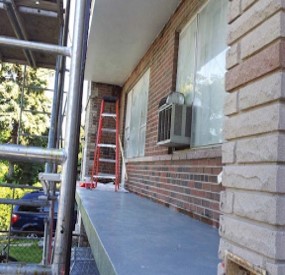
Balcony repair is the enquiry we get most often in North York, and the answer depends on which generation of tower is asking. The Yonge–Sheppard and Yonge–Finch condos built through the subway era have large balconies with a topping over the structural slab, and they leak at the cold joint where the slab meets the wall or where the slope was lost when the topping went down. The high-rise apartment clusters around Bathurst and Antibes Drive are a generation older, and there the failure is physical: the slab edge spalls, the soffit delaminates over corroding reinforcing steel, and pieces come off the underside.
Neither case normally needs a slab recast. Chemically bonded patches as thin as 5 mm restore the edge and the soffit without forming, slope is corrected in the same pass, and a two-layer polyaspartic finish with non-slip aggregate seals the walking surface. Recasting is done only where an engineer specifies it. On the Bathurst and Antibes towers our work has so far concentrated below the balconies: at a high-rise condo on Antibes Drive we installed close to 43,000 SQF of polyurea-based membrane on the parking deck before being brought back for the rooms inside.
Deep Garages Under the Sheppard Towers
The subway-era towers here were built with garages that go down several levels, and depth changes what fails. Vehicles carry snowmelt and road salt down every ramp, that water crosses the slab and settles into the joints, and it works through to the ceiling of the level below. Further down, the structure is holding back groundwater instead of rainwater, so the leaks stop being seasonal and start being constant.
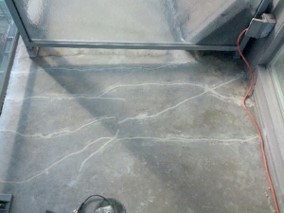
The work follows the water. At a low-rise residential building on Kenaston Gardens the underground parking spots had loose and damaged material and drained poorly, so we ground out the failed concrete, patched it, regraded the area to slope water away, then primed and installed a traffic topping and a waterproofing coat. At a residential garage on York Valley Crescent every crack in the floor slab was opened, cleaned and filled with the bonding system before two layers of polyaspartic membrane went down, each broadcast with sand, two hours of cure between coats. At a commercial building on Railside Rd the water was coming through the foundation: 30 linear feet of cold joint repair and 120 square feet of foundation wall waterproofing, finished with a polyurea membrane.

The Bottom of the Shaft
An elevator pit is the lowest point in a deep building, which makes it the place water goes when it has nowhere else to be. Most of the leaking happens at the cold joint where the wall and floor slabs meet, not through the walls themselves, and plenty of pits have no drain at all, so anything that enters simply sits there against the equipment. Season makes little difference at that depth. Heavy rain and sudden snowmelt do, which is why a pit can stay dry for months and then flood twice in a week.
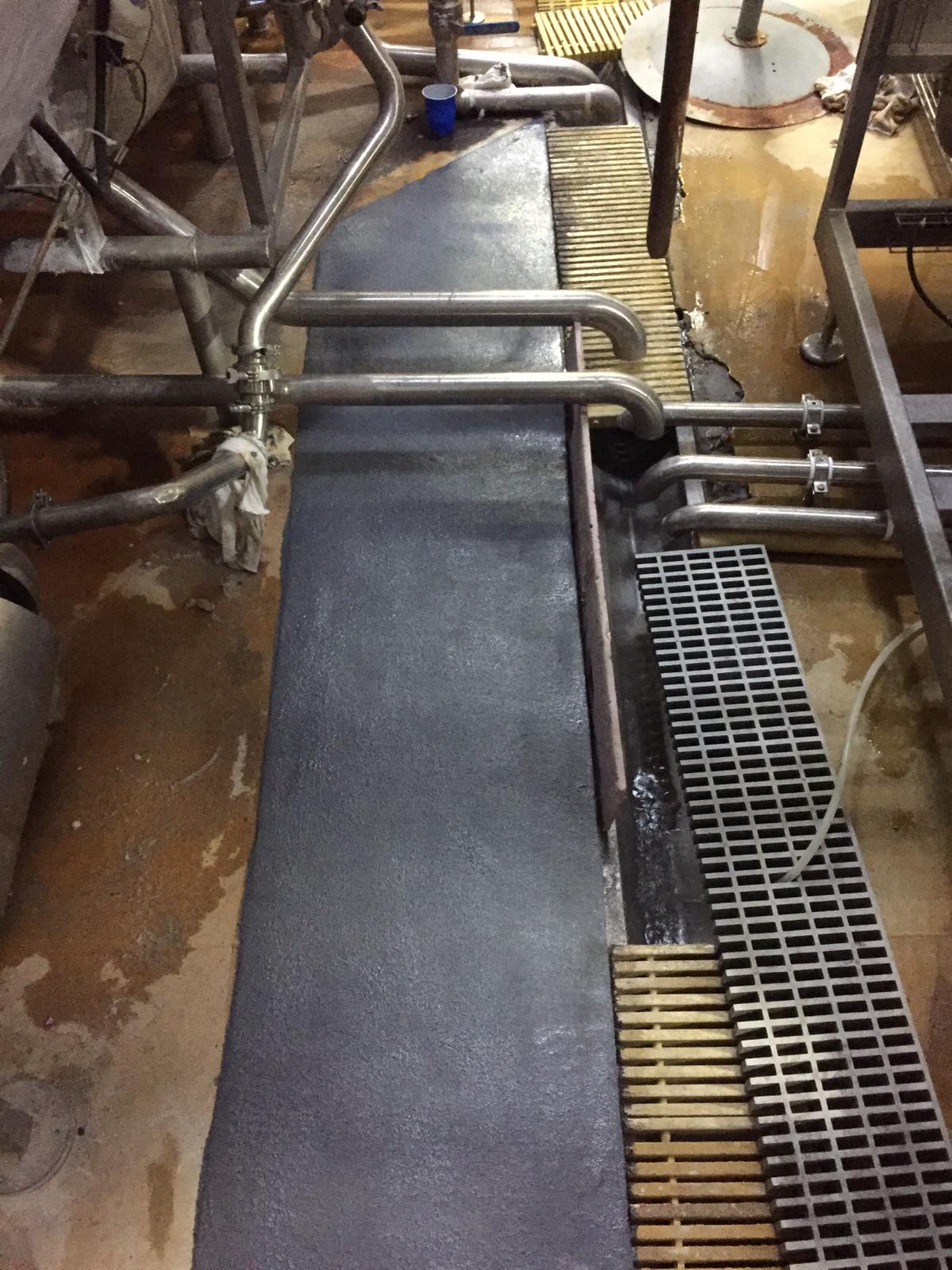
At a mid-rise residential building on Grandview Way five elevator pits were waterproofed, one of them already flooded by an active leak that threatened the equipment and risked shutting the elevator down. The leak was stopped with hydraulic cement, then the cold joints were sealed around the entire pit with a continuous 45-degree patch and finished with a pigmented polyaspartic coating over the floor and a wall upturn. Mechanical rooms fail the same way and get the same treatment: at a high-rise condo on Doris Ave the old membrane on the mechanical room floor had delaminated and the slab had cracked, so the full 1,500 SQF was stripped, crack-filled and rebuilt with a two-layer polyurethane membrane.
Our Repair Methods
Working From the Inside in an Occupied Building
Almost everything here is done from the accessible side, with residents in place and the garage open. These are the four methods that come up most often on North York buildings.
Overhead Repair on Balcony Soffits and Garage Ceilings
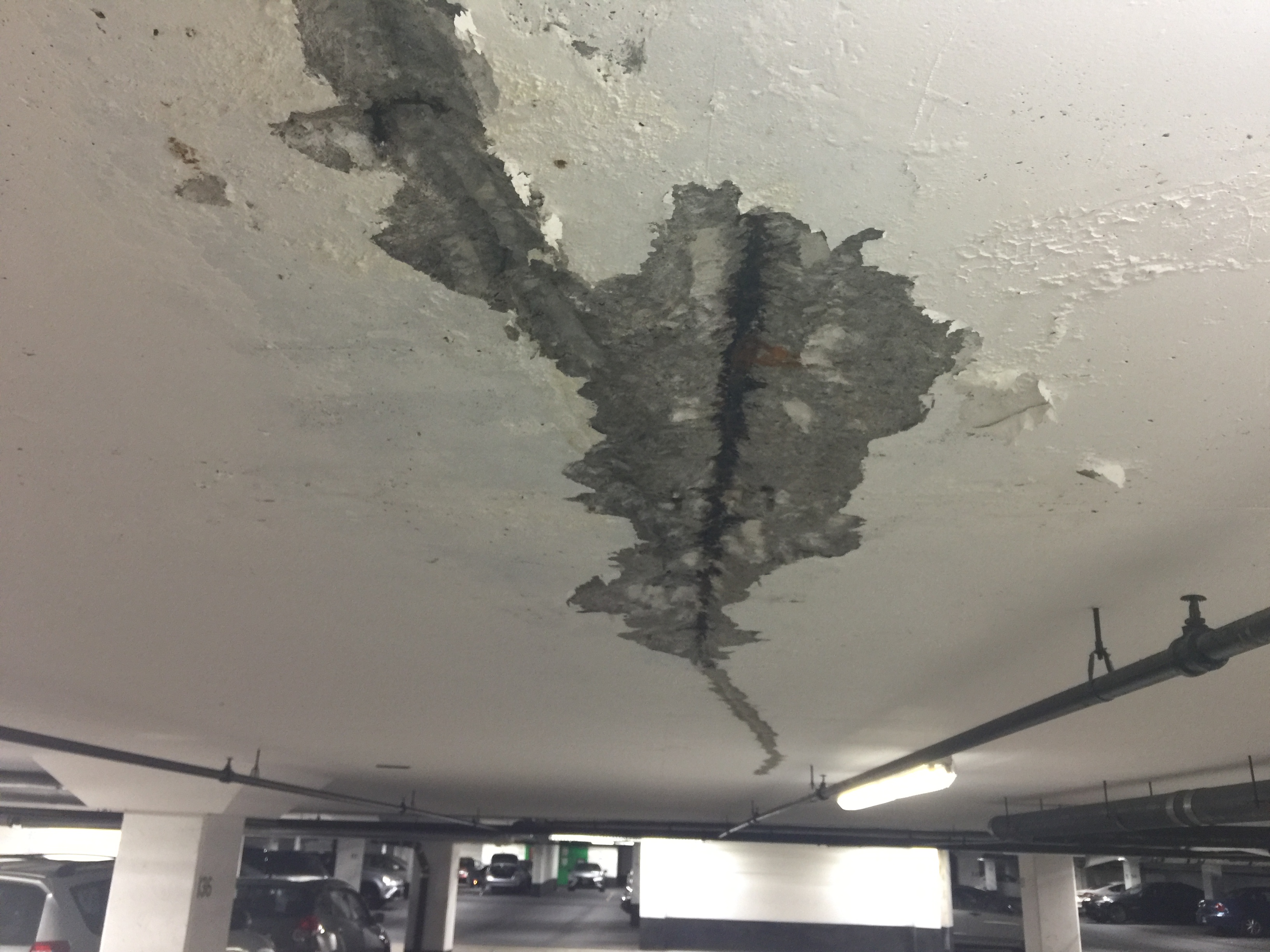
Most of the damage on an older North York tower is on the underside of something. A balcony soffit and a P1 ceiling both fail the same way, from behind: water carrying road salt reaches the reinforcing steel, the steel corrodes and expands, and it pushes the concrete cover off. Patching over exposed steel without treating it first only restarts the clock, so the steel is dealt with before anything is placed over it.
Overhead work needs a material that holds its shape against gravity while it cures. Structural patch material with a clay-like consistency does that without forming or propping, and fibreglass reinforcement is added where the repair has to bridge a corner or a long crack line rather than fill a pocket. Ceilings, soffits, walls and floors are handled in one campaign with one system, which is why a single mobilisation can cover a balcony stack and the parking level under it.
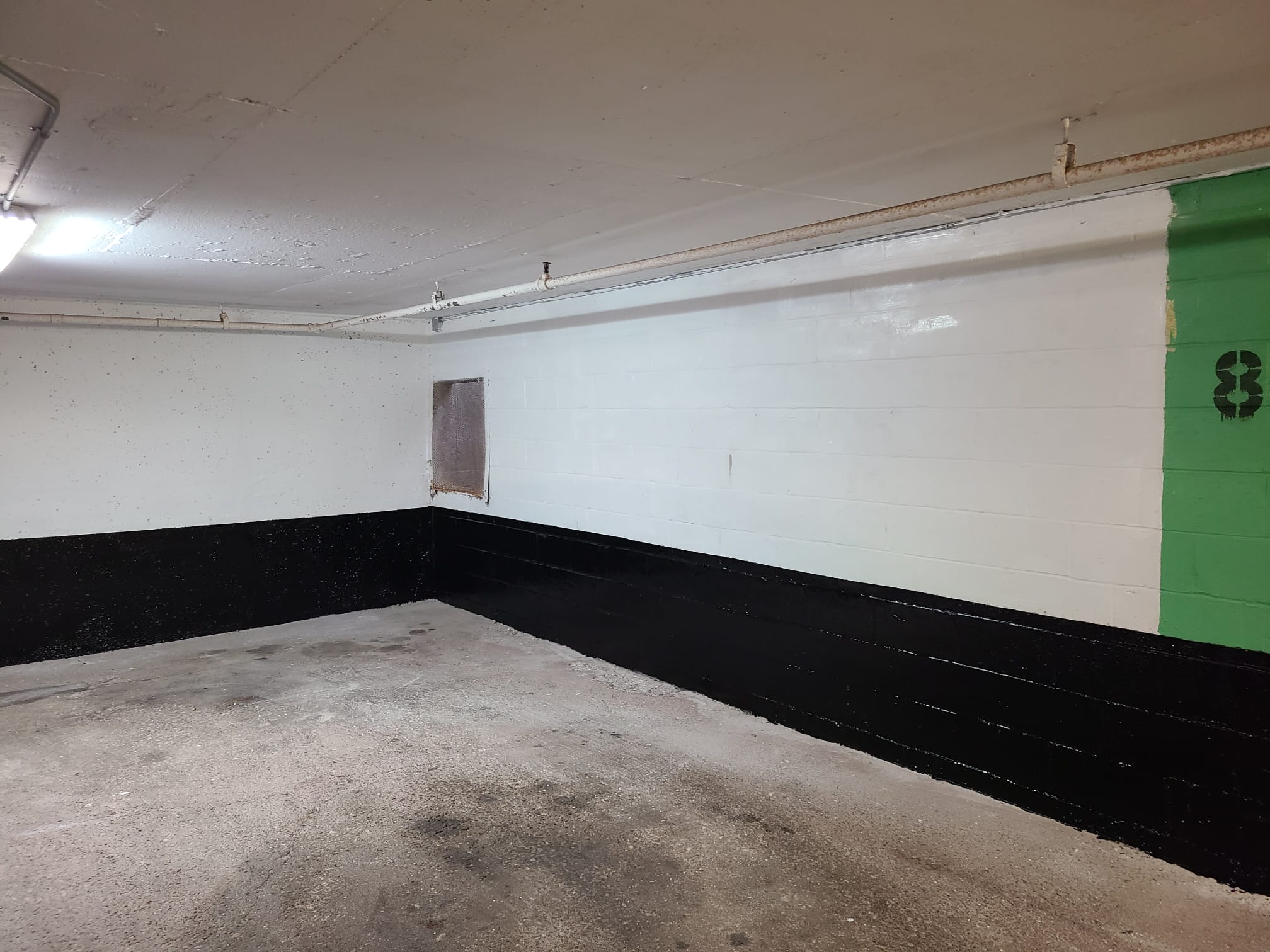
Garage Floors, Parking Spots and Slope
A garage floor that ponds is a waterproofing problem before it is a drainage problem, because standing water finds every crack and joint in the slab it is sitting on. Where an area drains poorly we regrade it as part of the repair rather than coating over the low spot, which is what we did to the affected parking spots at the Kenaston Gardens garage.
The finish is built up in layers. Primer, then a traffic topping or the first polyaspartic coat with sand broadcast into it for grip, the unabsorbed sand swept off once it has cured, then the second coat to seal. On the York Valley Crescent garage floor the two coats went down two hours apart, and the repairs restored the slab without resurfacing the whole floor.
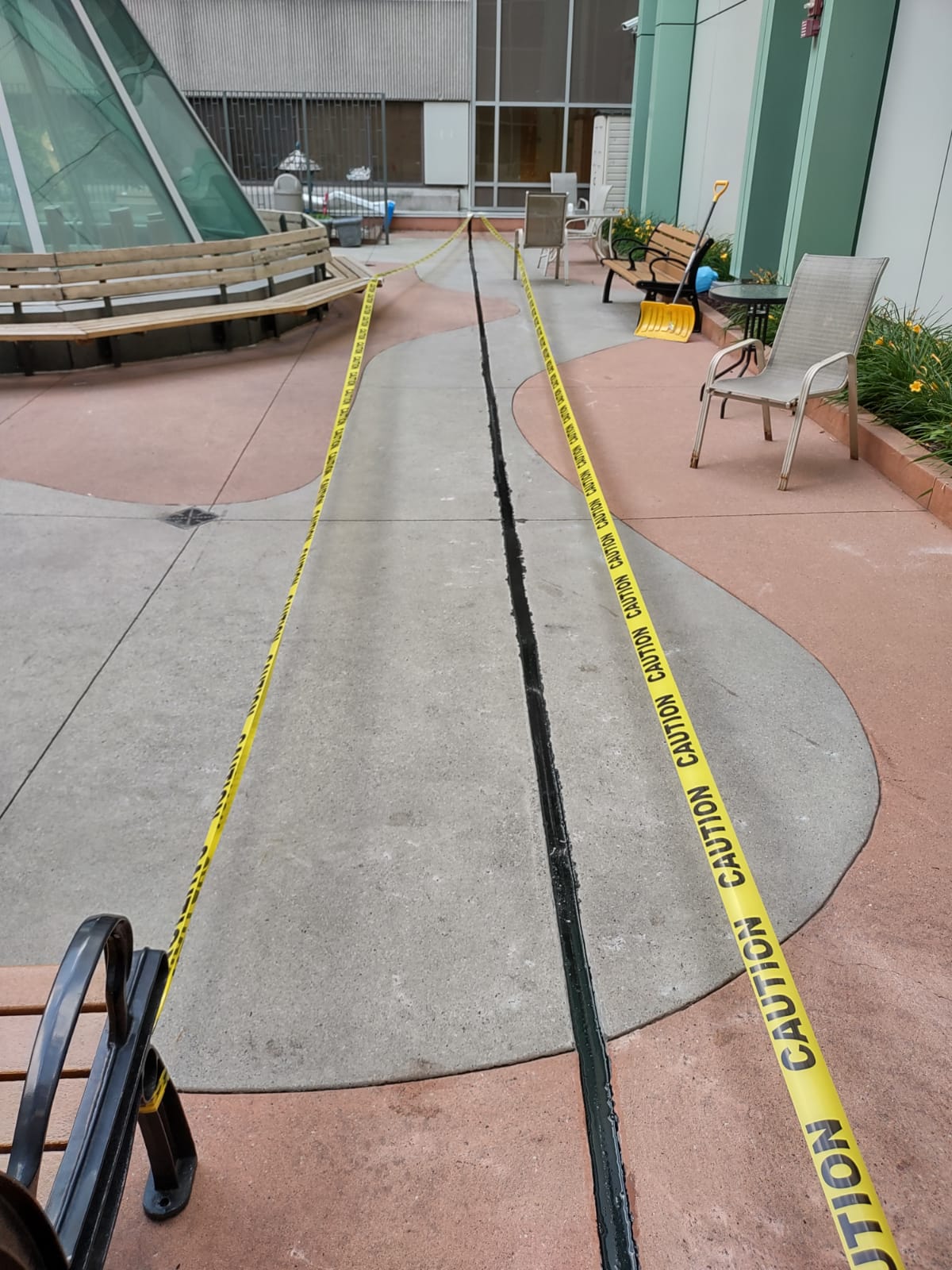
Injecting a Leaking Joint in Winter
Winter is when positive-side work becomes impractical and ice sits in the joint cavities, and it is also when boards notice the leak. At a mid-rise condo on Fairview Mall Dr a vertical expansion joint with a horizontal run at the top was leaking into the parking garage in the middle of winter, so the whole repair was done from inside: backer rods placed to hold the material, ports drilled, a 45-degree angle cut at the top along the ceiling, and cold-applied polyurea injected until every cavity was full.
The ice is not an obstacle to that material. As the polyurea cures it heats up and melts the ice, and on contact with that water the liquid turns to foam and generates pressure from inside the cavity, which is what seals the joint. No excavation, and nothing above ground is disturbed.
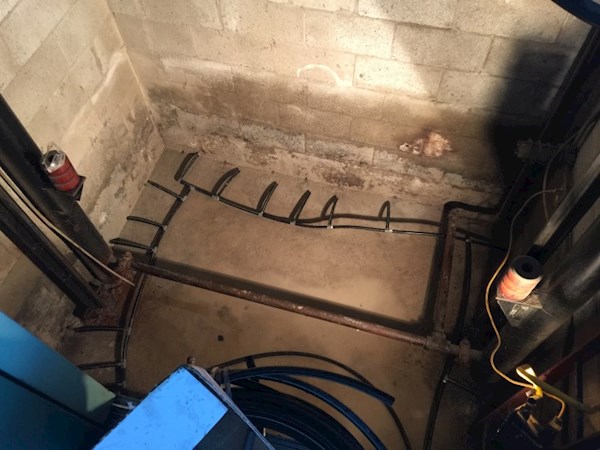
Cold Joints, Pits and Mechanical Room Floors
A cold joint runs through the full thickness of the element, so surface sealant does nothing. The joint is opened with a chipping gun or a saw, cleaned of loose material, fully coated with adhesive, filled and rebuilt as a continuous patch at a 45-degree angle, then waterproofed across the corner and, where it is a visible wall, painted back to match. That was the sequence at a mid-rise on London Green Court, one of three projects at that building in the same month for a client we have worked with since 2017, and at a low-rise on Don Mills Rd.
In pits and mechanical rooms the same joint detail is carried around the full perimeter and then covered by a membrane that turns up the wall. Pit floors get a pigmented polyaspartic coating so any new crack, stain or seepage shows up against it immediately, which gives a property manager something to look at rather than something to take on trust.
Common questions
Frequently asked questions
Do you work in North York?
Yes, regularly. Our shop is in Etobicoke, and recent North York work includes five elevator pits at a mid-rise on Grandview Way, a 1,500 SQF mechanical room floor at a high-rise condo on Doris Ave, a winter expansion joint injection in a garage on Fairview Mall Dr, close to 43,000 SQF of parking deck membrane at a high-rise condo on Antibes Drive, and garage floor and parking spot repairs on York Valley Crescent and Kenaston Gardens.
Our balcony slabs are original to the building — do they have to be replaced?
Rarely. Age on its own is not the deciding factor — what matters is whether the reinforcing steel can be cleaned and covered again, and on most of these slabs it can. The spalled edge and the soffit are rebuilt with thin structural patches that need no forming, and a recast is done only where a consulting engineer calls for one.
How long does elevator pit waterproofing take?
We aim for one day per pit, so a single pit is a day and a double pit is two. Jobs sometimes spill into an extra half day per bay. The things that stretch it are active running water, floor slope correction, and blocked access at the floor-to-wall corner rather than the size of the pit itself.
Why do expansion joints between parking levels leak?
Mostly from vehicles. Cars track a large amount of snowmelt, rain, and road salt into a Toronto parking garage, and that moisture runs across the slab and settles into the joint. It then works through to the level below, appearing as a leak on the ceiling of the level underneath.
How often should a condo parking garage be inspected for leaks?
A walkthrough every three to twelve months, set by the age and condition of the garage. Most garage leaks are reported by a resident rather than found by the superintendent or property manager, which means the problem is already dripping on someone's car by the time anyone hears about it. A scheduled condition assessment moves that discovery forward.
Can a leaking garage expansion joint be injected in the middle of winter?
Yes, and winter is often when it has to be. On a garage joint at a mid-rise condo on Fairview Mall Dr the cavities held ice, and the cold-applied polyurea heats as it cures, melts the ice, then foams on contact with that water and pressurises the cavity from inside. The work is done from inside the garage, so nothing above ground has to be opened up in frozen conditions.
Balcony, garage or elevator pit leaking in your North York building?
We repair balcony slabs, garage floors, joints and elevator pits from the inside, with residents in place. Assessments and quotes are free.