Project & Insights
Why Does My Garage Leak 20 Feet From Where the Water Gets In?
August 13, 2026
Valeriy — Application Specialist, Joint Seal Waterproofing — fifteen years injecting expansion joints across the GTA
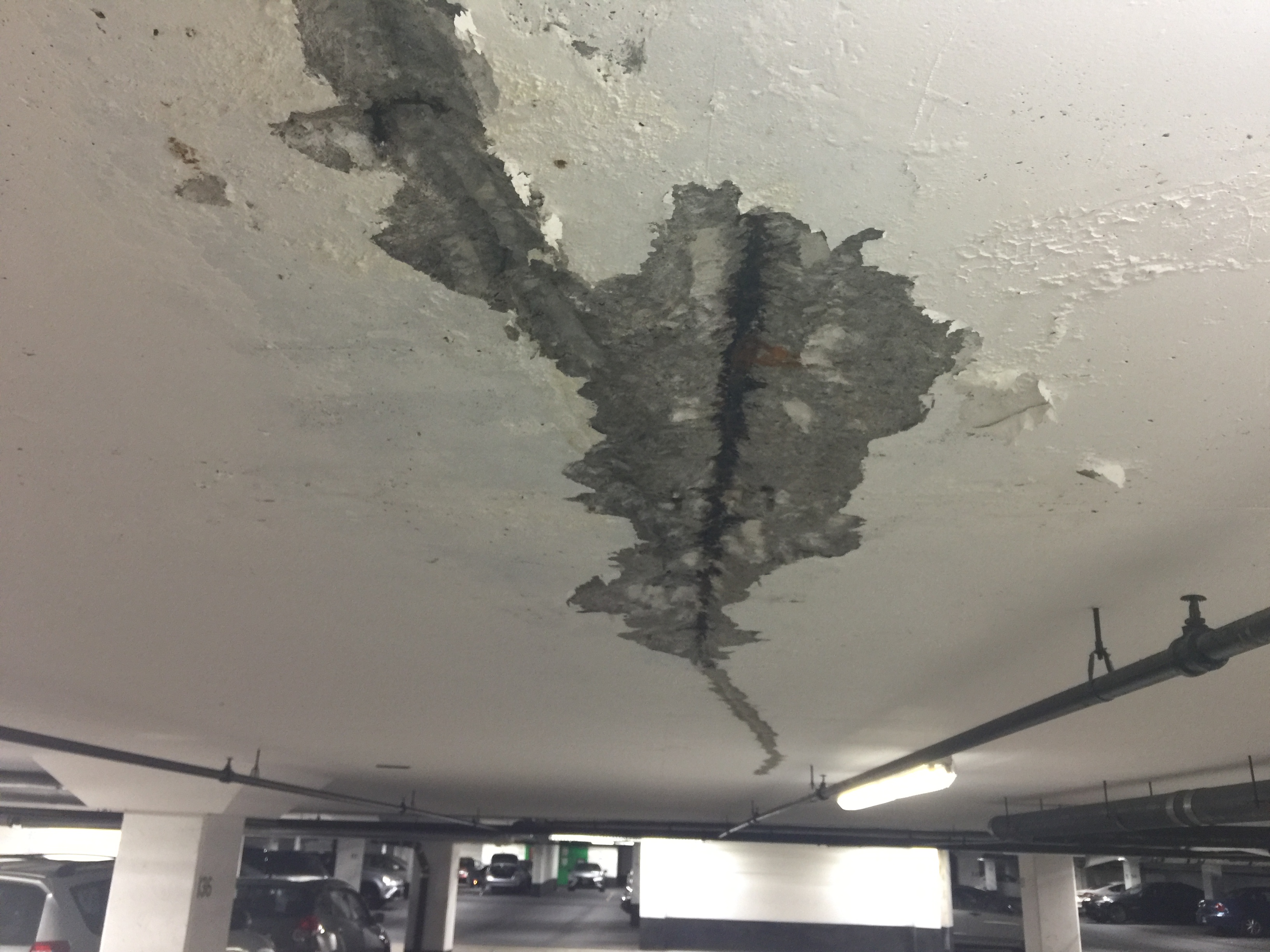
A parking garage leak almost never appears where the water got in. Water that breaches the deck membrane runs sideways along the concrete slab until it reaches an expansion joint, then exits there. On one downtown Toronto garage we traced roughly 20 feet between the crack where water was entering and the drip inside the garage.
This is the single most expensive misunderstanding in garage waterproofing, because it sends crews digging in the wrong place.
Why water travels sideways
The deck above a parking garage is a concrete slab with a waterproofing membrane bonded to the top of it, and soil, asphalt, or landscaping above that.
When the membrane loses its bond — freeze-thaw over the years, or asphalt cracking and pounding it — water gets into the gap between the membrane and the concrete. It can’t soak downward through the slab quickly, and it can’t get back up through the membrane. So it runs along the interface, following the slope of the slab, until it finds an opening.
The expansion joint is that opening. It’s the one deliberate gap in the deck.
What that means when you’re standing under the drip
The drip tells you where water is leaving. It tells you almost nothing about where it arrived.
Property managers find this hard to believe, and understandably — every instinct says the hole is directly above the wet spot. But we’ve measured 20 feet of travel on a real job, and it can be more. A crew that excavates directly over the drip can strip the deck, find intact membrane, and put it all back having fixed nothing.
Why this changes the repair you should choose
There are two ways to deal with a leak you can’t locate from above.
Excavate broadly and hope. Because nobody knows exactly where the breach is, a top-side repair opens a wide area. That’s the honest reason excavation costs what it does — you’re paying to search. A consulting engineer on one GTA condo board admitted as much about his own recommendation: a dig isn’t guaranteed either, because you don’t know every place the membrane has cracked.
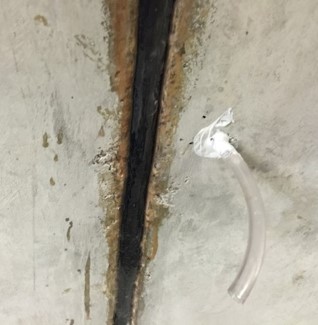
Let the material find it. Injecting resin into the joint from inside the garage inverts the problem. The resin takes the path of least resistance, which is the same path the water used, so it travels back up the leak in reverse and cures where the water was. You don’t have to locate the entry point. That’s the whole advantage.
What to do about it
Don’t let anyone quote a garage leak repair based on where the stain is. Get the failure diagnosed first — the entry point, the likely cause above, and whether the joint can be sealed from below.
Book an inspection and we’ll tell you what’s actually feeding the leak before anything gets budgeted.
More on expansion joint repair and parking garage repair, or start with why garage expansion joints leak.
See the work. Examples of garage leak investigations and repairs: Lasting Repair and Waterproofing Solutions for Parking Garages · Parking Garage Waterproofing \u2013 Concrete Repairs That Last. More in our projects.
Common questions
Frequently asked questions
How far can water travel under a parking garage deck membrane?
On one downtown Toronto garage we traced roughly 20 feet between the crack where water entered the deck membrane and the point where it dripped inside the garage. Water runs along the interface between the membrane and the concrete slab until it reaches an opening, which is usually the expansion joint.
Can you find where a garage leak starts without excavating?
Often you do not need to. Injecting resin into the joint from inside the garage lets the material follow the path of least resistance, which is the same route the water used, so it travels back toward the entry point on its own and cures there.
Related services & repair types