Project & Insights
How expansion joint injection resin chases water in reverse
August 13, 2026
By Valeriy, Application Specialist, JSW Waterproofing
Most repair materials react with water. This one ignores it, sinks under it, and pushes it backwards up the leak until it runs out of somewhere to go.
Expansion joint injection resin seals a leaking garage joint by displacing the water rather than fighting it. The resin JSW uses is heavier than water and doesn’t react with it, so it sinks to the bottom of a wet joint and, as more is pumped in, pushes the water ahead of it like a piston — back up the same path the water used to get in. You don’t have to find the leak’s entry point. The material finds it.
That last part is the whole advantage, and it’s the part that takes some explaining.
What is the material used to inject an expansion joint?
The resin we use is Joint Seal Flex, a hydrophobic polyurethane injection resin manufactured in the United States and formulated specifically for this kind of work. It arrives as two components and mixes to a very liquid state.
Two properties matter:
It doesn’t react with water. Inject it into a cavity full of moisture and it won’t foam up or react adversely. Many injection resins are hydrophilic — they react with water and expand into a foam. That behaviour is useful in some applications and a problem in others. This one stays predictable in a wet joint.
It’s heavier than water. In a joint holding standing water, the resin settles underneath it rather than mixing with it or floating on top.
And once cured it stays soft, which matters in an expansion joint. The joint has to keep moving — opening in the cold, closing in the heat. A rigid filler would fail the first winter. A soft one moves with the slabs.
How does the injection work, step by step?
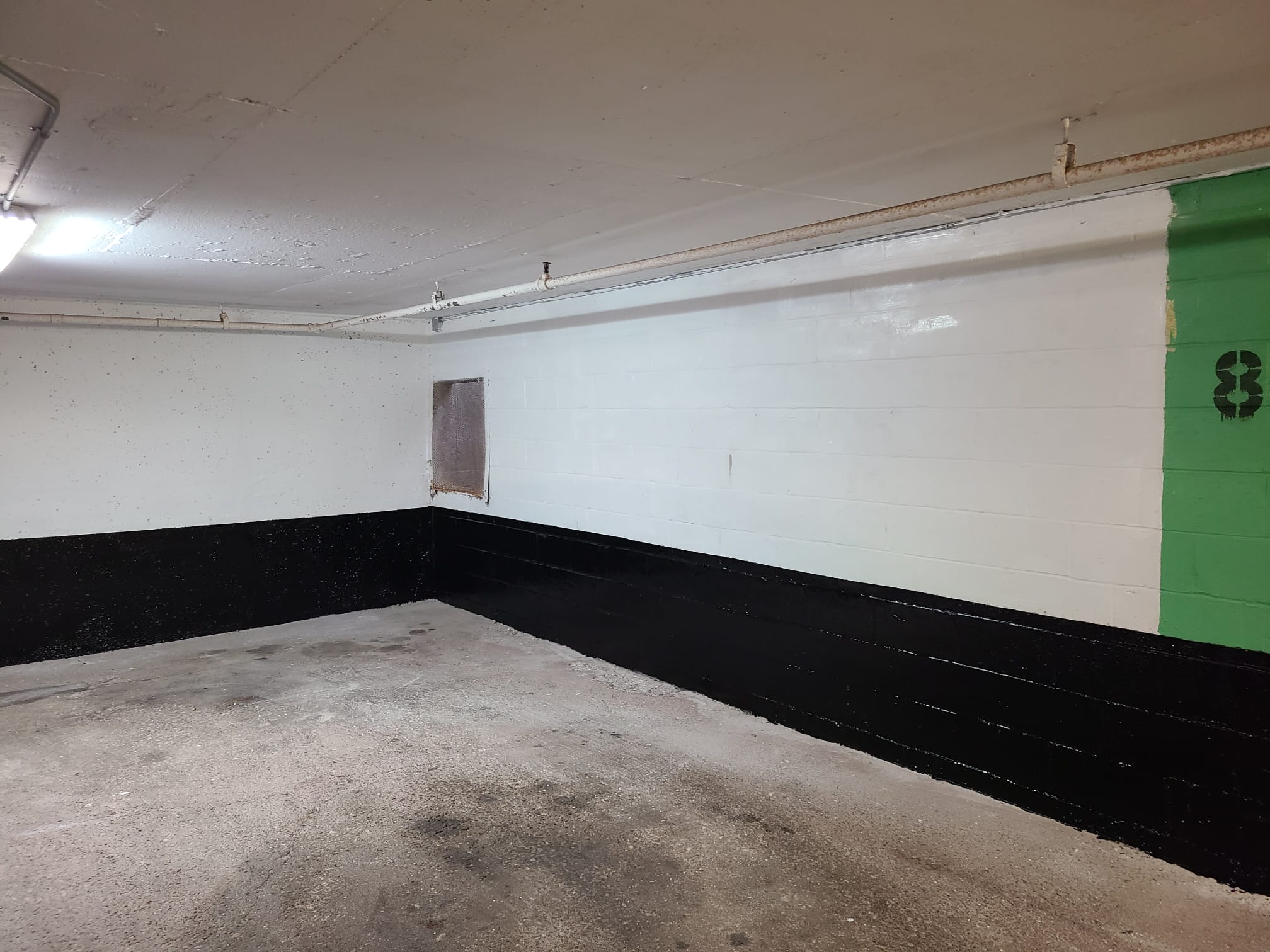
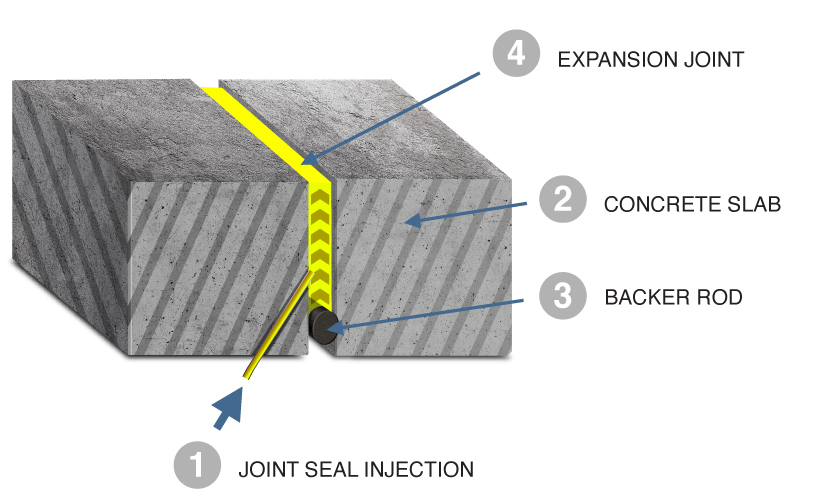
A garage expansion joint is injected from below, inside the parking garage, in this sequence:
- A form is set against the expansion joint from underneath, closing it off so the resin has somewhere to build pressure against.
- Injection ports go in behind the form. On one downtown Toronto garage, the whole joint was done through two nozzles.
- Resin is pumped in. Pressure climbs as the joint fills.
- The resin displaces whatever water is in the joint, pushing it ahead of itself.
- With the joint full and nowhere else to go, the resin takes the path of least resistance — which is the same crack the water was entering through.
- It travels back up that path, chasing the water in reverse, and cures where the water was.
The operator can tell what’s happening from the pressure. If material is leaving into the structure in quantity, the pressure keeps moving. If it’s holding, the pressure climbs and stays high. That’s the read on whether the joint is filling or the resin is still finding somewhere to go.
Why don’t you need to find the leak first?
This is the practical consequence, and it’s why the method works on garage decks specifically.
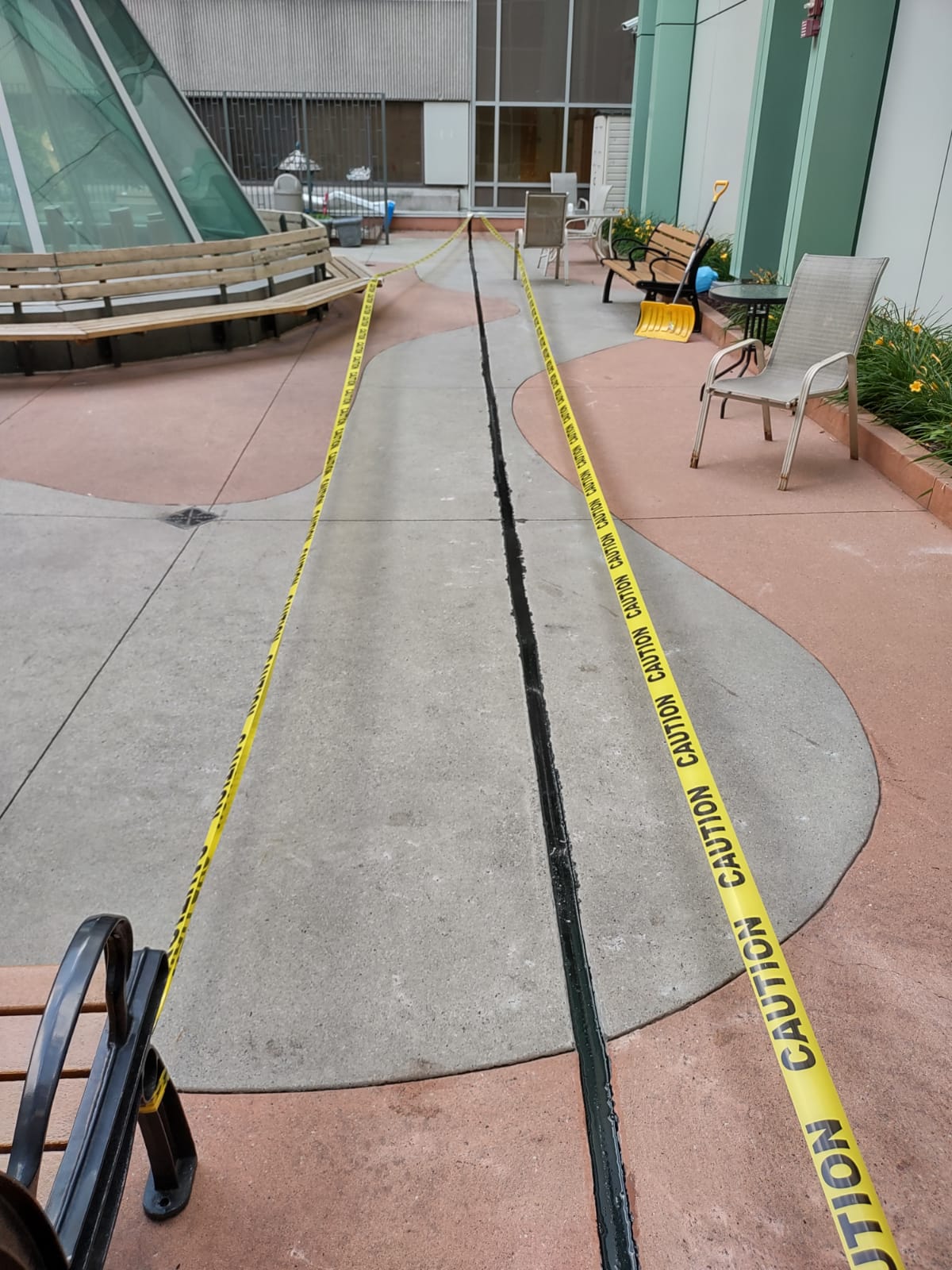
Water under a debonded deck membrane can travel a long way before it exits at the joint — we’ve measured about 20 feet between the crack where water entered and the drip inside the garage. On a top-side repair, that distance is the whole problem: you excavate a broad area because you don’t know exactly where the failure is.
Injection inverts it. The resin follows the water’s path backwards, so it goes where the water came from without anyone having to locate that spot from above. You pump at the joint. The material does the searching.
The question engineers always ask
The most common technical objection is whether injection pressure will lift the deck membrane above.
It won’t. The pressure isn’t strong enough for that, and it’s a fair thing to ask — it’s the first question we get from consulting engineers. What the pressure is enough for is displacing water out of the joint and travelling back up the ingress path, which is all the repair needs.
What doesn’t injection fix?
Injection seals the joint and the path the water was using. It does not replace a failed deck membrane.
If a membrane is at the end of its life across the whole deck, injection is treating symptoms one at a time. That can still be the right economic choice for years — each pass is cheap enough to repeat — but it should be a decision, not an assumption. We’ve set out when excavation is the better call.
It also doesn’t address whatever broke the membrane in the first place. If there’s cracked asphalt above pounding the membrane every time a car rolls over it, that keeps happening.
What should you do if a joint is dripping now?
Have it looked at while it’s still one joint. Water flowing through concrete carves voids, and a bigger void carries more water, so the failure grows on its own schedule rather than yours.
Book an inspection and we’ll tell you what’s feeding the leak and whether injection is the right answer for it.
Book a JSW inspection · More on expansion joint repair, crack injection and parking garage repair
Common questions
Frequently asked questions
What kind of resin is used to inject a leaking expansion joint?
A hydrophobic polyurethane injection resin — JSW uses Joint Seal Flex, manufactured in the United States for this application. It does not react with water, is heavier than water, and stays flexible after curing so the joint can keep expanding and contracting through Toronto's freeze-thaw cycles.
Does injection resin react with the water already in the joint?
No. Hydrophobic resins like Joint Seal Flex do not foam or react when injected into a cavity full of moisture, which keeps the behaviour predictable in a wet joint. Because the resin is also heavier than water, it settles beneath standing water and pushes it ahead as more material is pumped in.
Can injection pressure lift or damage the waterproofing membrane above?
No. This is the most common question from consulting engineers, and the injection pressure is not strong enough to lift the deck membrane. It is enough to displace water out of the joint and travel back along the path the water was using, which is all the repair requires.
Do you need to find where the water is entering before injecting?
No, and that is the main advantage of the method. The resin takes the path of least resistance, which is the same route the water used, so it travels back toward the entry point on its own. On garage decks this matters because water can travel 20 feet or more under a debonded membrane before it exits at the joint.
How does the crew know when the joint is properly filled?
By watching the injection pressure. If resin is still escaping into the structure, the pressure keeps moving. If the joint is filling and holding, the pressure climbs and stays high. That reading tells the operator whether to keep pumping or stop.
Related services & repair types