
Swimming Pools · Toronto & GTA
Swimming Pool Repair & Waterproofing
Joint Seal repairs and waterproofs condominium swimming pools — the shell, the deck, the perimeter expansion joint and the mechanical room underneath. Most condo pools are suspended structures sitting over occupied space, so a leak is an equipment problem before it is a water-loss problem. We work from both faces to fix it, and we keep the pool out of service for as little time as the damage allows.
- Crack Repair
- Epoxy Injection
- Resurfacing
- Perimeter Expansion Joints
- Pool Decks
- Mechanical Rooms
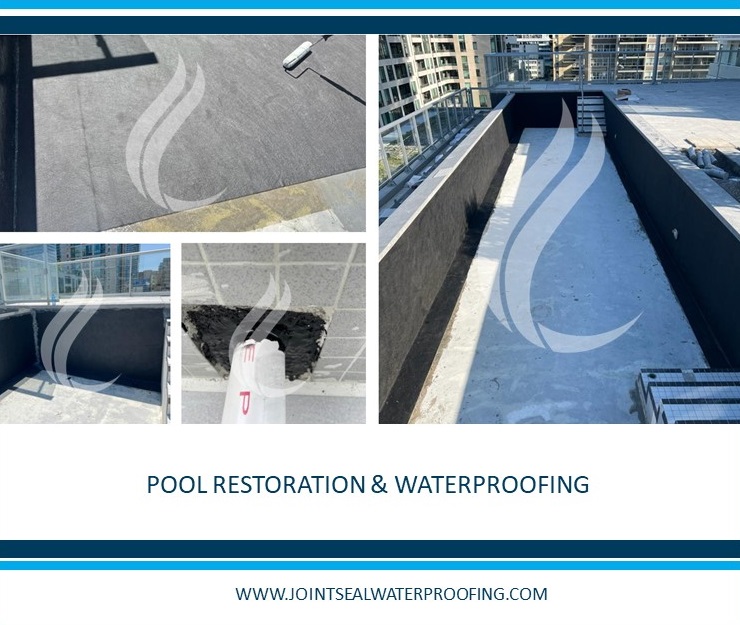
Condominium Pool Repair
We repair the whole pool structure, not just the visible surface — through-slab cracks, delaminated concrete, the perimeter expansion joint, the pool deck, and the mechanical room floor below.
Nearly every condominium pool is a suspended pool, with a crawl area underneath holding the plant. That access is an advantage: cracks can be opened and sealed from both faces, which is what makes the repair permanent instead of cosmetic.
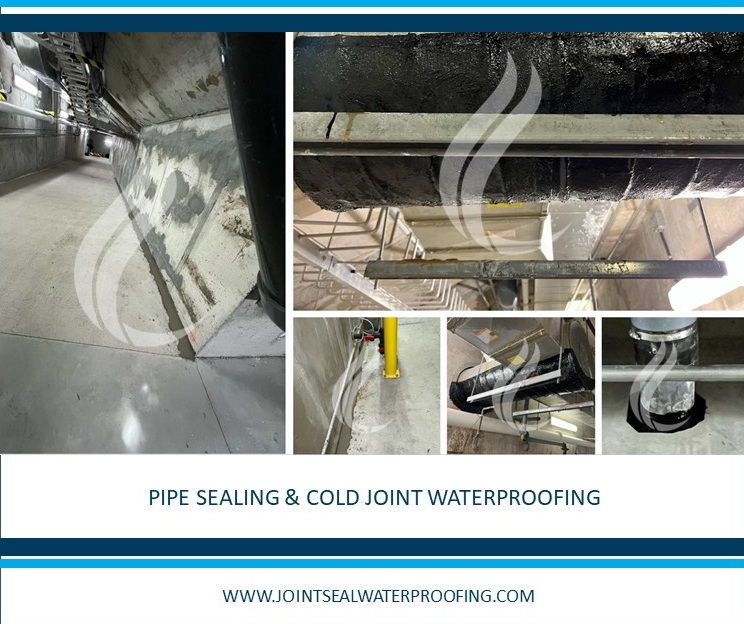
Why Condo Pools Leak
Reinforcing steel in a pool shell sits about an inch and a half to two inches below the surface. Once water reaches it the steel corrodes, the corrosion products expand, and the concrete above is pushed off from behind — which is where roughly ninety-nine percent of delamination starts.
The other common source is not the pool at all. The expansion joint around the deck fails, and deck water runs straight down beside the shell into the mechanical room, landing on pumps, filters and controls.
Our Solutions
Crack Repair — through-slab cracks are opened from inside the pool and from the mechanical room below, epoxy injected, parged, and covered with a bonded fibreglass band.
Resurfacing — the existing finish is ground off, the whole shell is hammer-sounded, every hollow area is chipped out and refilled, and a new marbelite finish goes on.
Perimeter Expansion Joints — the joint is stripped out completely and rebuilt with adhesive, backer rod, flexible sealant and an unbonded geotextile loop, then water-tested before the paving goes back.
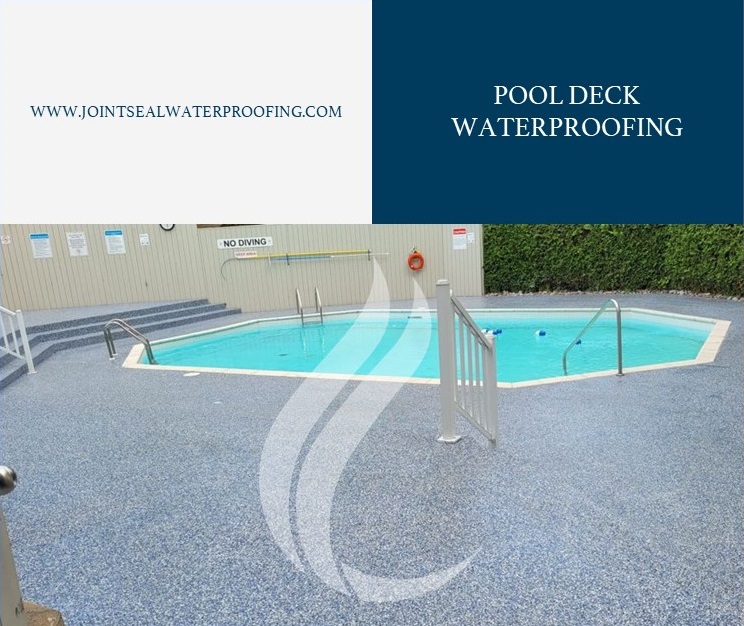
Pool Decks and Mechanical Rooms — full concrete repair followed by polyaspartic or polyurea-based waterproofing membranes.
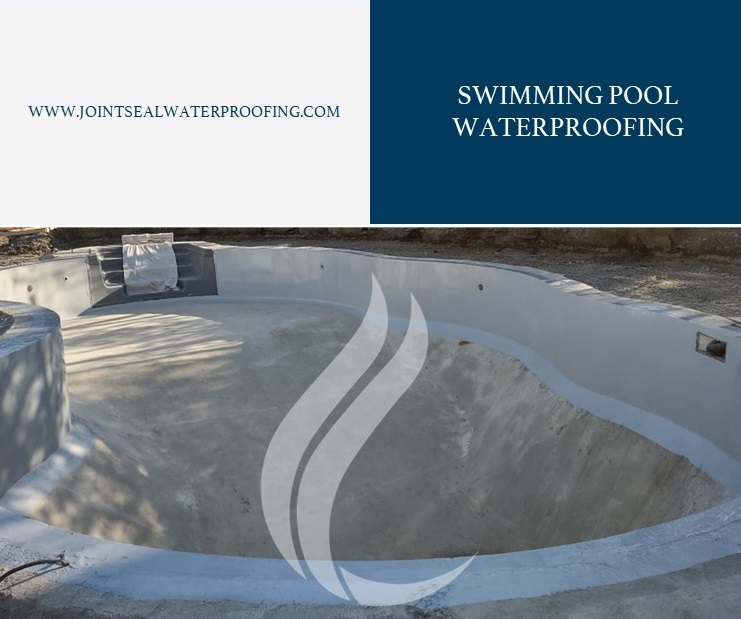
Less Downtime, Less Water
Draining a pool costs the corporation more than most people expect — ten to twenty thousand dollars of water on a mid-size condo pool, plus the amenity closed for the whole building.
So we drain only as far as the damage requires. A localised repair on a wall needs the water down to just below the damaged area, not to the floor. A crack repair is about two days of work; it is resurfacing, not repair, that closes a pool for weeks.
Our Repair Methods
How a Pool Repair Is Done
From the controlled drain-down through to flooding the new finish the same day it is applied, these are the core steps in a condominium pool repair.
Controlled Drain-Down
A full pool holds its shell expanded under load, so the water comes down slowly — a minimum of twenty-four hours — to keep structural movement small. Where the damage allows, we drain only partially, to just below the affected area.
Sounding and Assessment
Once any existing finish is ground off, the whole surface is tapped with a hammer. Sound concrete rings sharp; delaminated concrete rings dull. Every hollow area is marked before anything is chipped out, so the extent of the work is visible and photographable.
Crack and Patch Repair
Cracks are opened out with a chipping gun — from both faces where they pass through the slab — then epoxy injected, bonded, parged and covered with a six-inch band of woven fibreglass set in epoxy.
Marked hollow areas are chipped back to sound concrete and refilled, because whatever pushed the first layer off is still behind it.
Perimeter Expansion Joint
The deck paving is lifted and every trace of old sealant removed. Adhesive, backer rod and a flexible rubberised sealant go back in, followed by a geotextile loop bonded at its edges and left slack so it absorbs deck movement like an accordion.
The joint is water-tested before any paving is relaid. Finding a defect afterwards means lifting the paving again.
Finish and Refill
Marbelite has to cure under water, so the pool is filled the same day the finish is applied. Lights, handrails, return jets and the perimeter bonding wire all go back before the fill starts.
Common questions
Frequently asked questions
Does the pool have to be fully drained to repair it?
Not always. A crack passing through the slab needs the pool completely empty, because a crack cannot be opened against water pressure. A localised repair on a wall needs only a partial drain, down to just below the damage. A floor patch needs a full drain, but the refill starts about fifteen minutes after the patch is finished.
How long will the pool be closed?
Crack repair is about two days of work, and the pool refills the next day — roughly four days end to end once the twenty-four hour drain-down is counted. Resurfacing takes ten days to two weeks. A full refurbishment runs about three weeks.
Why is water showing up in our pool mechanical room?
Usually the perimeter expansion joint around the deck rather than the pool shell. When the sealant in it fails, deck water passes straight down beside the pool into the space below — which on a suspended condominium pool is where the pumps, filters and controls live.
Can you tell us the full cost before the pool is opened up?
Not with complete precision, and nobody honestly can. Marbelite is soft and deadens a hammer, so hollow concrete cannot be mapped until the finish is ground off. We inspect from the mechanical room below, count what is visible, and price a stated crack and patch allowance with a unit rate above it.
Do you repair the pool deck as well as the pool?
Yes. Pool decks, concrete steps and the surrounding surfaces get full concrete repair followed by a waterproofing membrane with a UV-stable topcoat. On one Mississauga pool deck the repaired and coated area came to 3,200 square feet including the steps.
Do you work on the mechanical room under the pool?
Yes, and it is often where the real problem is. We repair cracks in the slab, remove old floor paint that would stop a membrane bonding, and install polyurea-based or polyaspartic membranes on the floor — on one Toronto pool mechanical room, over a thousand square feet in a single phase.
Pool losing water, or leaking into the room below?
We will inspect the shell, the perimeter joint and the mechanical room, and tell you what scope the pool actually needs — including whether it can be repaired without draining it — in a form you can take to the board.