Project & Insights
How do you waterproof around an elevator piston housing?
August 17, 2026
By Boris Gopka, Owner, JSW Waterproofing — elevator pit waterproofing across Toronto and the GTA
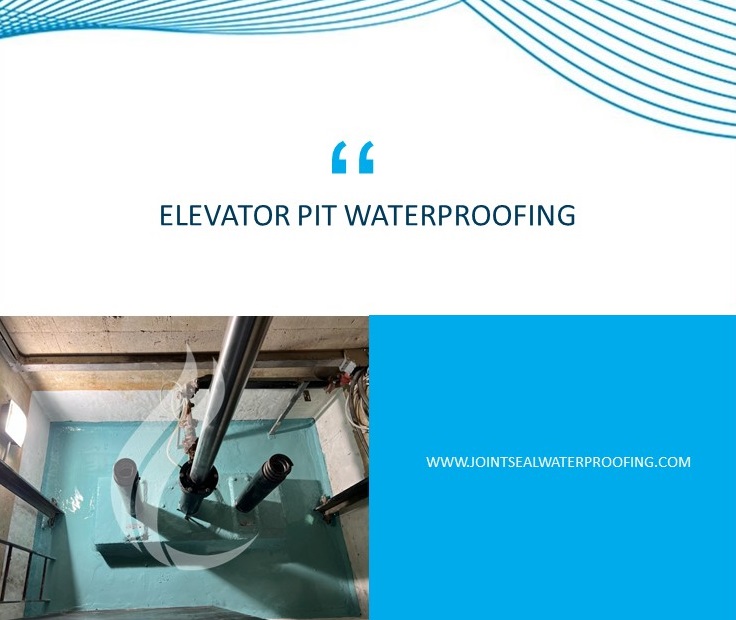
The void around an elevator piston housing fills with groundwater, and waterproofing it means removing that void rather than sealing water out of it. The sequence runs bottom to top — sediment screen, foam, injected rubber, then a flexible collar at the floor — with a pressure equalizer pipe running the full depth. Skip the pipe and the whole installation gets pushed out from below.
This is the most involved work we do in an elevator pit, and it costs more than waterproofing the entire rest of the pit.
What the piston housing is
On a hydraulic elevator, the piston housing is a large sealed steel cylinder running from about twenty feet below the pit floor to roughly a foot above it, containing the piston and the oil that drives it. Oil pressure into the cylinder pushes the piston, the piston pushes the elevator floor, and the car rises.
Buildings under about five storeys usually have this arrangement rather than a cable system, because at that height a piston is cheaper to install and to run. Pistons are often multistage, so a car travelling forty feet does not need forty feet of cylinder buried below the pit — it might be two twenty-foot stages.
The cylinder is not the problem. It is completely sealed, and it does not degrade or leak.
The problem is what pushing something twenty feet into the ground does to the ground. The installation creates a void around the housing, that void collects water, the water rises, and it arrives in the elevator pit.
Why you cannot just concrete around it
Sealing around an elevator piston housing with concrete does not last, because the housing vibrates every time the elevator moves. Every rigid seal between the steel and the surrounding concrete floor breaks under that movement — not eventually, routinely.
So the detail at the floor has to flex. What works is a collar of rubberised material bridging the housing and the pit floor around it, which absorbs the movement instead of fighting it.
But the collar on its own is not the job either, and this is where most of the thinking is.
Remove the void before you seal anything
The first move is not sealing. It is reducing the amount of water that can be there at all.
Working from the bottom of the void upward:
- Sediment screen goes in first, down into the pool of water alongside the housing. It has a sand-like consistency and it fills the lowest part of the void.
- Foam is driven in above it on a rod, filling the bulk of the space.
- Rubberised injection starts from roughly a foot below floor level, sealing the ring and creating adhesion between the steel housing and the concrete floor section around it.
- The collar finishes it at the top — fiberglass over a soft rubberised material, ringing the housing completely.
The screen and the foam are not waterproofing. They are removing the void, and that distinction is the whole idea. No void, no flow. Before the work you might have a hundred litres of water sitting around the piston housing; afterwards you have a fraction of a litre. Less water means less pressure, and less pressure means far less chance of the installation floating or damaging the floor around it.
The equalizer pipe, and why it matters more than the collar
A pressure equalizer pipe runs the full depth alongside the piston housing, from the screen layer at the bottom up to floor level, and it is what stops the waterproofing being pushed out from underneath.
It is a pipe of roughly one to one and a half inches, starting in the screen layer rather than the foam — the screen keeps dirt out of the pipe while still letting water in. As water rises around the housing it rises inside the pipe, and at the top the pipe turns ninety degrees and discharges into the elevator pit drain.
Leave it out and everything you have installed sits under pressure with nowhere to vent. It floats. It pops out like a cork from a champagne bottle.
With the pipe in, the pressure stays equal, the installation stays put, and the water that does arrive goes straight into the drain rather than onto the pit floor.
There is a refinement worth knowing about. Where the pit has a backflow preventer in the drain, we sometimes route the equalizer line past the preventer and straight into the line running to the sump pit. If the backflow preventer ever fails, the pressure around the piston still has somewhere to go — it will overfill the sump pit, but it will not come back onto the elevator pit floor, because the preventer blocks the return.
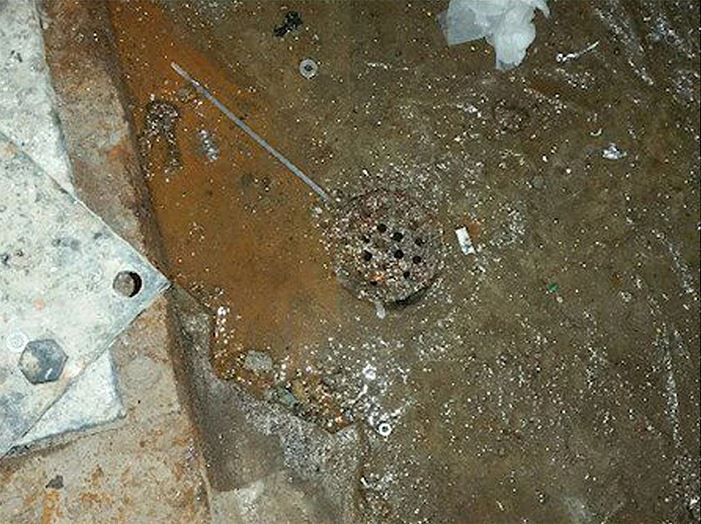
On a medical facility on Lake Shore Boulevard West in Etobicoke, water had accumulated both in the pit and around the piston housing. The housing was pumped out, injected with polyurea-based foam, primed, filled, and then finished with a concrete layer over an industrial-strength adhesive — alongside the cold joint work and coating the rest of the pit needed.
What this costs, and why it is separate
Waterproofing a piston housing costs more than waterproofing the whole rest of the elevator pit, and it is priced as its own item. Multiple injected layers to twenty feet of depth, a relief pipe running that full depth, and a flexible collar detail is simply more work than routing a cold joint and rolling on a coating.
Which means the first thing worth establishing on a piston elevator is whether the piston is actually the source. A cable-pulled pit, or a piston pit where the water is coming from the cold joint or a wall crack rather than around the housing, is a completely different quote.
What a property manager should do
Find out whether your elevator is hydraulic or cable-pulled — under five storeys it is probably hydraulic — and if there is water welling up around the piston, say so when you book the inspection.
The distinction matters before anyone prices the work. A pit where the water is arriving around the piston housing needs this method; a pit where it is arriving at the floor-to-wall corner needs the standard pit sequence at a fraction of the cost. Getting that wrong in either direction is expensive.
Book a JSW inspection · More on elevator pit waterproofing and polyurea membranes
Common questions
Frequently asked questions
Does the elevator piston housing itself leak?
The piston housing does not leak. It is a fully sealed steel cylinder holding the piston and its oil, and it does not degrade or fail in the way people assume. The water problem is around it, not through it — the void in the ground surrounding the housing fills with groundwater, and that water then rises into the elevator pit.
Why can't you just concrete around the elevator piston?
Concreting around an elevator piston housing does not hold because the housing vibrates every time the elevator moves. That movement breaks every rigid seal between the steel housing and the concrete floor around it. The seal has to be flexible, which is why the detail is a rubberised collar rather than a rigid patch.
What is the equalizer pipe for?
The equalizer pipe relieves water pressure from underneath the piston housing waterproofing so the installation is not pushed out from below. Without it, pressure builds under the sealed collar and eventually forces it out — like a cork from a champagne bottle. The pipe lets that water rise and discharge into the pit drain instead.
Is piston housing waterproofing more expensive than doing the rest of the pit?
Waterproofing an elevator piston housing costs more than waterproofing the entire rest of the elevator pit. It is the most involved work done in a pit — multiple injected layers to depth, a pressure relief pipe, and a flexible collar detail — and it is priced separately from the standard pit system for that reason.
Which buildings have piston elevators rather than cable ones?
Buildings under about five storeys usually have piston-operated elevators, because a hydraulic piston is cheaper to install and run at that height. Anything taller is normally cable-pulled. Pistons can be multistage, so a forty-foot travel does not mean forty feet of cylinder below the floor — it may be two twenty-foot stages.
Related services & repair types