Project & Insights
Why do trench drain edges break up under forklift traffic?
September 9, 2026
By Valeriy, Application Specialist, JSW Waterproofing
Trench drain edges break up because the edge is the one strip of floor with nothing supporting one side of it. A loaded forklift crossing the grating puts its wheel load onto an unsupported lip, and that same lip sits in whatever runs down the channel every hour of every day. Concentrated load and constant wetting work on the same twelve inches of concrete, so the edge is gone long before the slab around it shows any distress.
Once the edge starts to go it does not stop. The concrete undermines, the lip breaks off in pieces, the grating loses its seat and starts rocking, and the rocking finishes what the forklifts started.
What actually breaks first at a trench drain edge?
A trench drain edge fails from underneath first, and the undercut is invisible from above. In a food plant the channels carry acid wash from tank flushing, product residue and hot water, and that mixture attacks the concrete at the edge of the channel from the side. By the time the surface spalls, the material behind the visible lip has already been eaten back.
That is why an edge can look like a minor cosmetic chip one month and be collapsing into the trench the next. You are not watching the damage start. You are watching it surface.
Why does patching the lip never hold?
A surface patch on a trench drain edge does not hold because it is bonded to material that is already failing. Chip out the loose piece, trowel in a repair mortar, and the new material is sitting on the same undermined concrete that let go in the first place. The next loaded forklift breaks it along the same line, usually within a few months.
This is the same failure we see under concrete patching in industrial facilities generally: the repair is only as good as the worst thing it is stuck to. On a drain edge the worst thing it is stuck to is hidden under the lip.
How deep does the repair actually have to go?
A trench drain edge repair has to go down to sound substrate, which is normally deeper than the budget assumes. On the most recent drain edge we rebuilt in the main batching area of a food-processing plant in south Etobicoke, we took out 32 feet either side of the channel — about 60 feet of edge in total — and broke back roughly a foot to a foot and a half from the drain. Downward, we ended up more than a foot below the floor before we found anything worth building on.
The rebuild then goes in layers:
- Compacted stone in the bottom of the excavated trench, so the new edge sits on a proper base rather than on saturated fill.
- Mesh and rebar, tied in so the rebuilt edge acts as part of the floor instead of a separate block beside the channel.
- A concrete layer bringing it back to level and resizing the opening so the grating seats properly again.
- A polyurethane wearing surface on top to take the forklift traffic and the wash-down.
Resizing matters more than it sounds. A grating that rocks under a wheel is a hammer, and it will break a new edge as reliably as it broke the old one.
How long does the line have to be down?
A 60-foot drain edge rebuild needs roughly a five-day shutdown window, and a full day of that is cure. For that rebuild we were given five days — Monday morning through Friday evening, strict in and out, arranged to fall while the plant was running a wash around the tanks. We took one extra shift on the Saturday morning, in the gap before the new shift started.
The part that is easy to underestimate is cure. Surfacing and coatings want at least 24 hours before anything drives on them, and that 24 hours is inside the window, not after it. A five-day window is really four days of work and one day of waiting, and any schedule that ignores that is going to put forklifts on green material.
Working to that kind of clock is its own discipline, and it is most of why repairs in a plant that runs 24/7 get priced differently from the same repair in an empty building.
Is this only a food plant problem?
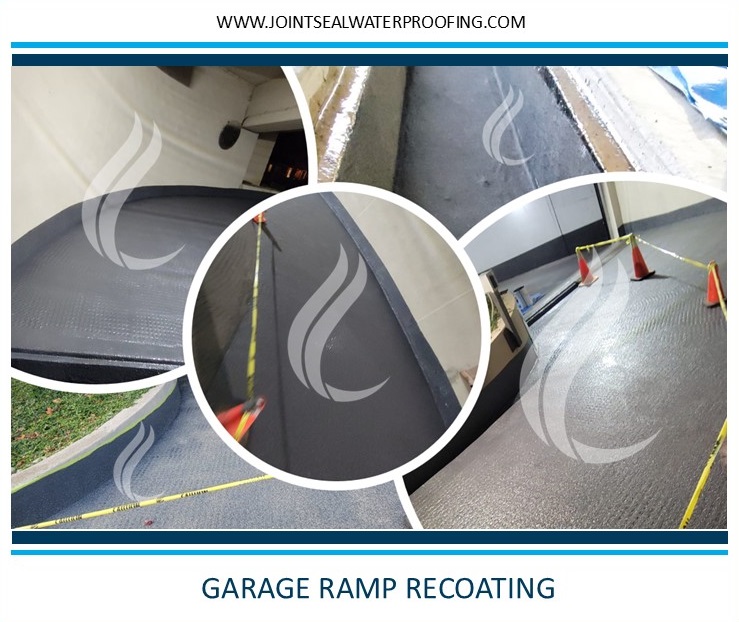
Trench drain edges fail the same way in underground parking garages, minus the acid. This is the part worth knowing if you manage buildings rather than plants. The trench drain at the bottom of an underground parking ramp takes every wheel entering the building plus all the water coming down the slope, and its edges break up exactly the same way. What is missing is the acid: rainwater, salt and grit are less aggressive than tank wash, so the timeline is longer.
The mechanical story, though, is the same, and so is the fix. We have rebuilt trench drain edges and ramp coatings on that basis, and the reason the repair holds is the same reason it holds in a plant: it goes down to a real base and it is reinforced.
Our view, after doing a lot of these: a drain edge is not a patching job that happens to be near a drain. It is a small piece of structure, and it has to be rebuilt as one. Contractors who price it as patching lose money on it, which is a good part of why so few will quote it.
We have worked other areas of the same plant on the same basis, including ongoing floor repairs around the trench drains, and the approach is set out on our utility and process room floors page.
If you have a drain edge going, the useful next step costs nothing: walk the channel and put a foot on each grating. Any that rock are on a short clock, and those are the lengths to get measured and priced before they turn into an emergency. We will come and look at it and tell you which sections have to move this year and which can wait — see the FAQ page for what we get asked most.
Common questions
Frequently asked questions
Why do trench drain edges break before the rest of the floor?
The drain edge is the only part of the floor with nothing under one side of it. A loaded forklift wheel crossing the grating lands on an unsupported lip, and the same edge sits in whatever runs down the channel all day. Load concentration and constant wetting attack the same 12 inches of concrete, so the edge fails years before the slab around it shows anything.
Can you just patch the broken lip of a trench drain?
A surface patch on a drain edge usually lasts months. The concrete under the lip is already undermined, so the patch is bonded to material that is on its way out, and the next loaded forklift breaks it along the same line. On the last edge we rebuilt we had to break out roughly a foot to a foot and a half back from the drain and dig down more than a foot before we reached anything worth building on.
How do we know whether a drain edge can wait another year?
Once the grating rocks under a wheel, it cannot. A loose grating becomes a hammer on the remaining edge and the rate of loss changes from gradual to fast. While the edge is only spalling at the surface there is usually room to plan the work into a scheduled window, which is far cheaper than doing it as an emergency between shifts.
Do rebuilt drain edges need reinforcement?
Yes, where forklifts cross. We build the edge back with mesh and rebar tied into the new section, then a concrete layer, then a polyurethane wearing surface on top. Reinforcement is what stops the rebuilt lip behaving like a separate block of concrete sitting beside the channel.
Will the drain grating still fit after the edge is rebuilt?
It has to, and that is part of the work rather than an afterthought. When an edge collapses the opening loses its shape, so the rebuild resizes the channel back to the grating rather than leaving a gap packed with sealant. A grating that rocks under a wheel starts breaking the new edge the same way the old one went.
Does this happen outside food plants?
The same failure shows up at the bottom of underground parking ramps, where the trench drain takes every wheel entering the building plus all the runoff. The chemistry is gentler — rainwater, road salt and grit rather than acid wash — but the mechanical story is identical, and so is the repair.
Related services & repair types