Project & Insights
Why does water back up into my elevator pit through the drain?
August 17, 2026
By Boris Gopka, Owner, JSW Waterproofing — elevator pit waterproofing across Toronto and the GTA
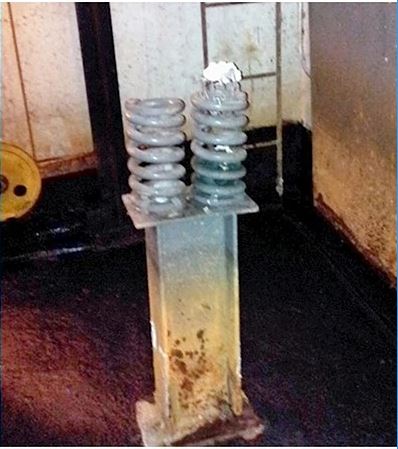
Water backs up into an elevator pit through the drain when the sump pit it discharges into fills higher than the drain line, and the flow reverses. The pit is not leaking at all in that case. It is being fed, through the pipe that was supposed to empty it, and no amount of waterproofing the walls will change that.
This is the cheapest category of elevator pit problem to fix and the one most often missed, because everyone starts by looking at the concrete.
How an elevator pit drain is supposed to work
An elevator pit drain runs from the pit floor down into a sump pit set lower than the pit, where a pump lifts the collected water out to the storm drain. Gravity moves water from the pit to the sump; the pump moves it from the sump to the street. That is the whole design, and it depends on the sump pit having capacity to accept whatever arrives.
The trouble is that the same sump pit is often serving other parts of the building as well as the elevator. It was sized for a certain inflow. When that inflow goes up — a storm, snowmelt, a failure elsewhere — or when the pump is undersized, failing or dead, the water level in the sump pit climbs past the drain line. At that point the pipe works in reverse and delivers water onto the elevator pit floor.
Why oil blocks the bottom of the drain
Elevator pit drains clog from the bottom up, with oil, because oil is heavier than water and settles. Elevator equipment sheds oil into the pit over years, and it accumulates on the floor along with sediment and debris. Every time water drains out of the pit, it carries some of that oil into the line, where it sinks and stays.
We routinely find the bottom half of a pit drain completely occupied by oil and sediment. The line is not broken. It is half a pipe, doing half a job, and it needs cleaning and inspecting rather than replacing.
Two ways a drain is installed wrong from the start
Some elevator pit drains were installed in a way that guarantees they will not drain, and both versions are easy to miss.
The first is a drain line that runs up before it runs down. It happens when the line was drilled or routed badly during construction, and the effect is that water has to fill to the height of that rise before anything moves.
The second is subtler and more common: the drain sits slightly higher than the pit floor. Visually it looks like nothing — an inch, less. In practice it means the pit has to accumulate a genuine depth of standing water before gravity does anything at all. The pit is not draining because it never gets the chance to.
Which is why the first thing to establish is whether the floor even falls toward the drain. We roll a golf ball or a cue ball across the pit floor. It sounds crude and it takes ten seconds, and it finds floors that slope up and then down, leaving one area permanently ponding while the drain sits dry in the other. Where the slope needs correcting we flood the floor with Sika Level first to get it flat, then use Versa Speed on top to build the fall toward the drain — the sequence matters, because you cannot build an accurate slope over a floor full of valleys.
What a backflow preventer does
A backflow preventer is a one-way fitting installed into the elevator pit drain at the floor and wall corner, and it lets water out of the pit while stopping it coming back. Water flowing from the pit toward the sump passes through it. Water rising from an overfull sump pit does not.
We installed our first one at an institutional building on University Avenue in Toronto, and it is now standard on any pit where the sump is the source. The reason it matters is that it protects the pit from a failure that is not the pit’s fault and not under the building’s control on the day it happens. Sump pumps fail on the weekend of the storm, not on a Tuesday.
It also changes what a pump failure costs. Without the preventer, a dead sump pump means water on the elevator pit floor and equipment standing in it. With one, a dead sump pump means an overfull sump pit — a plumbing problem, in a plumbing room, not an elevator problem.
Where the sump pit stops being our work
The sump pit and the sump pump are a plumber’s work, not a waterproofing contractor’s, and they can be inspected and serviced independently of the elevator because they have their own access from a separate room. We do not touch them.
Where a job needs a plumber we hire one rather than handing the property manager a phone number, because a building should get the whole thing from one supplier rather than coordinating three trades itself. But the boundary is real: inside an elevator pit, anything made of metal is the elevator company’s and anything made of concrete is ours.
How to check the drain before spending anything
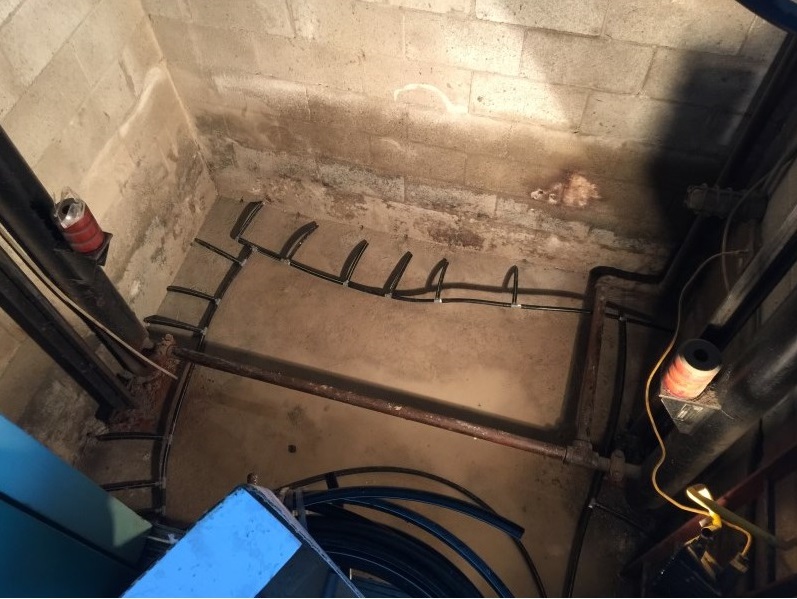
Run a camera down the line. We put a camera on a snake through the pit drain toward the sump pit, and it shows blockage, slope and damage in a single pass — usually as part of the same visit as cleaning and inspecting the pit, because a pit full of sediment cannot be assessed for anything.
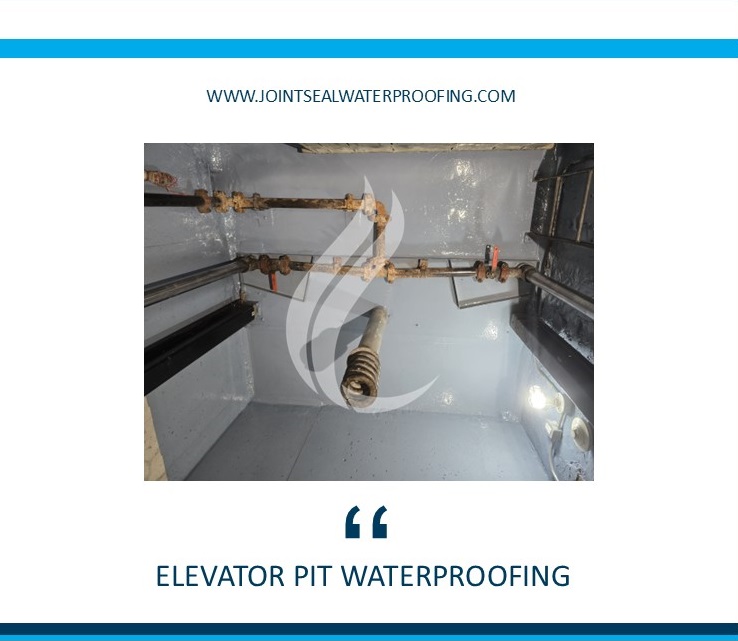
On a mid-rise pit on Elm Street in Toronto the pit had accumulated both oil and water, and cleaning the contaminants out was what made it possible to find where the infiltration was actually coming from.
Do this before authorising waterproofing. If the drain is the source, waterproofing the walls is money spent on a path the water was never using, and the pit will be wet again after the next storm. A new or second sump pump plus a backflow preventer is a few thousand dollars — against equipment damage that has cost one building a rejected $300,000 insurance claim.
What to do first
Ask two questions before anything else: does the pit have a drain, and does the floor actually fall toward it?
Then get the line camera’d and the sump pump’s condition confirmed. A surprising number of wet pits are a drainage problem wearing a waterproofing problem’s clothes, and the fix is a fitting and a pump rather than a project.
Book a JSW inspection · More on elevator pit waterproofing and concrete surface repair
Common questions
Frequently asked questions
What is a backflow preventer in an elevator pit?
A backflow preventer in an elevator pit is a one-way fitting installed into the pit drain, at the floor and wall corner, that lets water leave the pit toward the sump pit and blocks it from returning. It does exactly what the name says. We installed our first one at an institutional building on University Avenue in Toronto and now fit them wherever a pit is fed by sump reversal.
Why is our elevator pit drain clogged with oil?
Elevator pit drains clog with oil because oil is heavier than water and settles at the bottom of the pipe. Elevator equipment sheds oil onto the pit floor over years, and every time the pit drains, some of it goes down the line and stays there. It is common to find the bottom half of a pit drain completely blocked with oil and sediment, which needs cleaning and inspection rather than replacement.
Does every elevator pit have a drain?
Not every elevator pit has a drain, and that is one of the first things worth establishing. Where a drain exists it is usually in the middle or at one end of the pit floor. Where none exists, any water entering the pit has nowhere to go at all, which changes the repair strategy — the floor slope and the waterproofing have to do the whole job.
Can a plumber fix an elevator pit drain problem?
A plumber handles the sump pit and the pump; a waterproofing contractor handles the drain line at the pit and the concrete around it. Sump pits sit in their own room with separate access and can be serviced without touching the elevator at all. We do not work on sump pits — where a job needs one, we bring in a plumber rather than sending the property manager to find one.
How do you check whether an elevator pit drain is working?
The practical test is a camera on a snake run down the drain line toward the sump pit, which shows blockage, slope problems and damage in one pass. Before that, a golf ball or cue ball rolled across the pit floor tells you whether the floor actually falls toward the drain — plenty do not, and some slope up before they slope down.
Related services & repair types