Project & Insights
Polyaspartic vs Epoxy Floor Coatings | Joint Seal
February 17, 2023
Polyaspartic, epoxy and polycarbonate are not three grades of the same product. They fail differently, they cure at different speeds, and the right one is decided by how long the room can be out of service and what gets spilled on it — not by the finish.
Here is the short version. Polyaspartic is the fast, UV-stable, chemically tough choice for floors that have to go back into service quickly. Epoxy is the cheaper build coat with the deepest decorative range, and it ambers in sunlight. Polycarbonate and polyurethane top coats sit above either one where abrasion resistance matters more than looks.
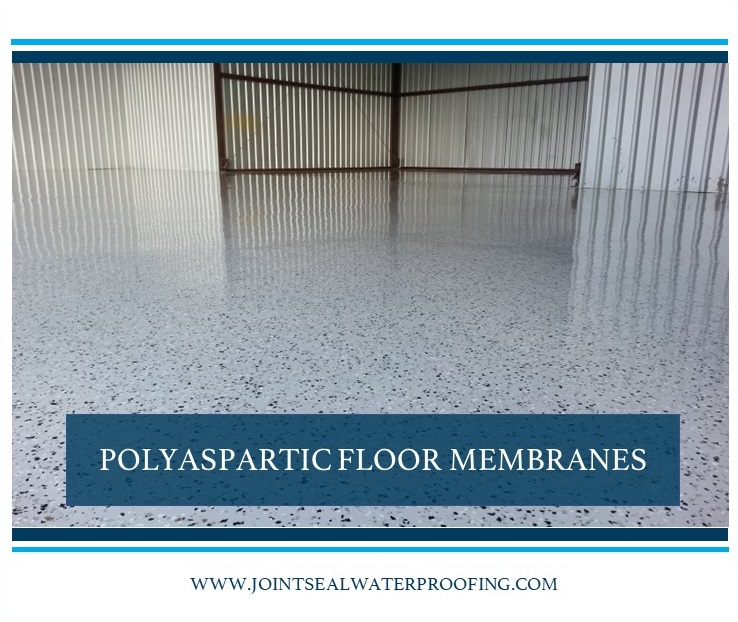
Polyaspartic
Polyaspartic coatings were developed for durability under heavy foot traffic and regular contact with harsh chemicals. Three properties decide most specifications:
- Cure speed. They set far faster than epoxy, which is what makes them viable in a room the building cannot lose for a week. Most areas we coat are back in service within 24 hours.
- UV stability. They do not yellow. Epoxy exposed to daylight ambers — visible on any floor near a window or a garage entrance.
- Adhesion and chemical resistance. They bond hard to prepared concrete and tolerate the cleaners, oils and solvents a mechanical room or garage produces.
The trade-off is working time. A fast cure means a short window to place and finish the material, so polyaspartic is unforgiving of a crew that is improvising.
Epoxy, including metallic epoxy
Epoxy is the workhorse build coat: thick, hard, and by far the widest decorative range. Metallic epoxy — the poured, marbled finish used in showrooms, lobbies and residential garages — is an epoxy system with a metallic pigment dispersed through the top coat, and it is chosen for appearance first.
Where epoxy loses is daylight and cure time. It ambers under UV, and it needs a longer window before the room can be used. In an occupied condominium that is often the whole argument.
Polycarbonate and urethane top coats
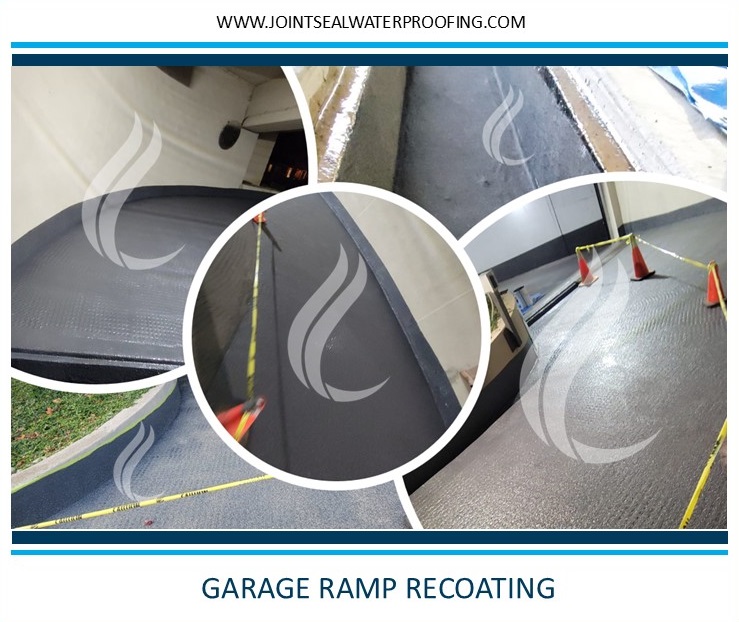
These are wear layers rather than build coats. Their job is abrasion resistance and impact tolerance over a system that is already waterproof. In a parking structure the equivalent is a urethane traffic topping, which is engineered to flex with the slab and take tyre traffic, and which is a different product family from a decorative floor coating even though both get called “floor coating” in quotes.
Where each one actually belongs
| Room | Usual answer | Why |
|---|---|---|
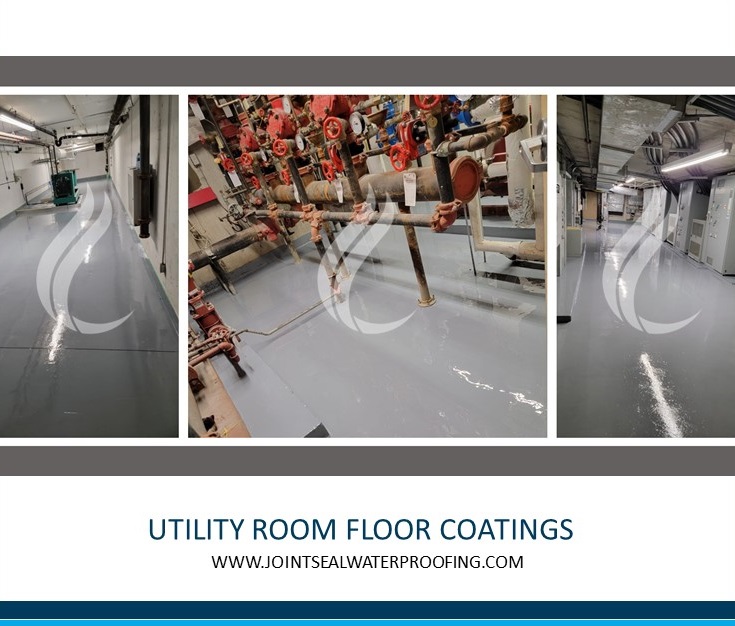
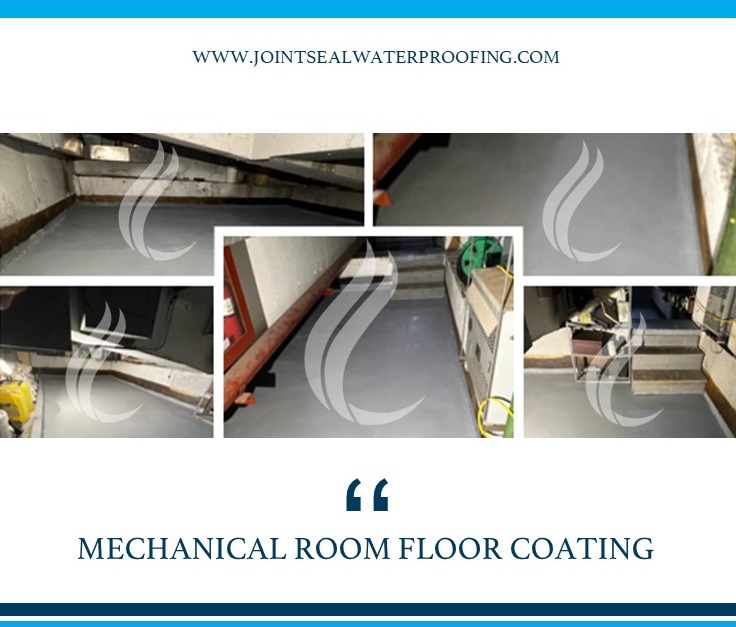
| Mechanical and utility rooms | Polyurethane methacrylate or cementitious urethane | Chemical spills, standing water, thermal cycling |
| Food and industrial plants | Cementitious urethane or polyurethane screed | Acids, caustics, hot wash-down, seamless hygiene |
| Parking decks and ramps | Urethane traffic topping | Movement, tyre wear, de-icing salt |
| Lobbies, showrooms, residential garages | Metallic epoxy with a clear top coat | Appearance is the specification |
| Rooms that cannot be closed for long | Polyaspartic | Cure speed decides it |
The part nobody quotes
A coating is only as good as what is underneath it. If the slab is delaminated, the cold joint at the wall is open, or the floor no longer falls to its drain, the coating will telegraph every one of those defects within a season. On our jobs the surface repair and the cold joint come first, patched in sections as thin as 5 mm where a conventional chip-out would need two inches, and the coating goes on last.
The materials we use carry a Ministry of Transportation Ontario rating for roughly a 25-year service life. That is a material service-life rating, not a warranty term, and it assumes the substrate under it was repaired rather than covered.
The opinion, stated plainly
Most coating arguments are really scheduling arguments in disguise. If a room can be closed for a week, epoxy is cheaper and the finish options are better. If it cannot — and in an occupied building it usually cannot — polyaspartic wins before the chemistry is even discussed. Choose on the outage first, the chemical exposure second, and the finish last.
Related: floor coating systems · mechanical and utility room floors · food plant floor repair · traffic toppings · documented projects · common questions
Common questions
Frequently asked questions
Can a cheaper coating be used in the non-production areas of a plant?
In genuine office and administrative space, yes. The trap is that some rooms look administrative and are not. We were once asked to use a cheaper epoxy in what was described as an office area, and on walking it we found the micro testing lab where quality control work is done. We flagged it, the engineers agreed, and it was finished in food-grade material.
Why does a coating peel back at the edge of the reinforcement?
A coating peels back at the reinforcement edge when the topcoat is terminated level with the fiberglass instead of past it. With too little waterproofing epoxy or polyurea above the edge, the edge curls, delaminates and lets moisture in behind the coating. Carried past a razor-cut woven fiberglass edge, the same detail holds. The run must also finish on coating at the bottom, never on exposed fiberglass.
How is dust controlled when grinding inside an occupied facility?
With HEPA-filtered vacuum extraction on the grinding and chipping, plus containment of the work area set up before any tool is switched on. In a food plant the cleanliness requirement is absolute, so there is no version of the job where dust gets dealt with afterwards. The same approach applies in hospitals and other occupied buildings.
What is the practical difference between polyaspartic and epoxy?
Cure speed and UV stability. Polyaspartic sets fast enough to return a room to service quickly and does not yellow in daylight; epoxy needs a longer window before the room can be used and ambers under UV. Epoxy is cheaper and has the wider decorative range, so the decision usually comes down to how long the space can be closed.
Will a floor coating stop a leak?
Not on its own. A coating is a wearing and chemical-resistant surface, not a repair. If the slab is delaminated, the cold joint at the wall is open, or the floor no longer falls to its drain, those defects come back through the coating within a season. The repair goes first and the coating goes on last.
How long is the room out of service?
Most areas we coat are back in use within 24 hours. The governing number is cure time, not application time, and it has to be counted inside the shutdown window rather than after it.
Related services & repair types