Property Manager's Guide
What to do about common condo building problems
If you manage a condo or commercial building in Toronto or the GTA, most costly repairs start as small, visible warning signs. Here's how to recognise them, what they mean, and the lasting fix — so you can act before minor water intrusion becomes structural damage.
Symptom → Cause → Fix
Common problems and what they mean
Find the symptom you're seeing. Each links to the detailed solution.
Go deeper
Property manager resources
Practical, no-fluff guides for running a building in Ontario's climate.
Building inspection checklist
The water & concrete warning signs to walk your building for, by area.
Read →Seasonal maintenance calendar
What to inspect and repair each season to beat freeze-thaw damage.
Read →Roof inspections (3×/year)
Why flat roofs need spring, fall and post-storm checks — and what to look for.
Read →Repair vs. replace
A straight framework for the most expensive decision you'll make.
Read →What drives cost
A transparent look at what moves the price — and how to keep it down.
Read →Property manager FAQs
Frequently asked questions
What maintenance does a condo building need to prevent water damage?
The highest-risk areas are elevator pits, parking-garage slabs and expansion joints, balconies, flat roofs, and utility-room floors. Inspect these annually for cracks, efflorescence (white mineral deposits), rust staining, ponding water, and leaks to spaces below. Addressing early is far cheaper than repairing structural concrete or corroded rebar later.
How do I know if my parking garage needs waterproofing?
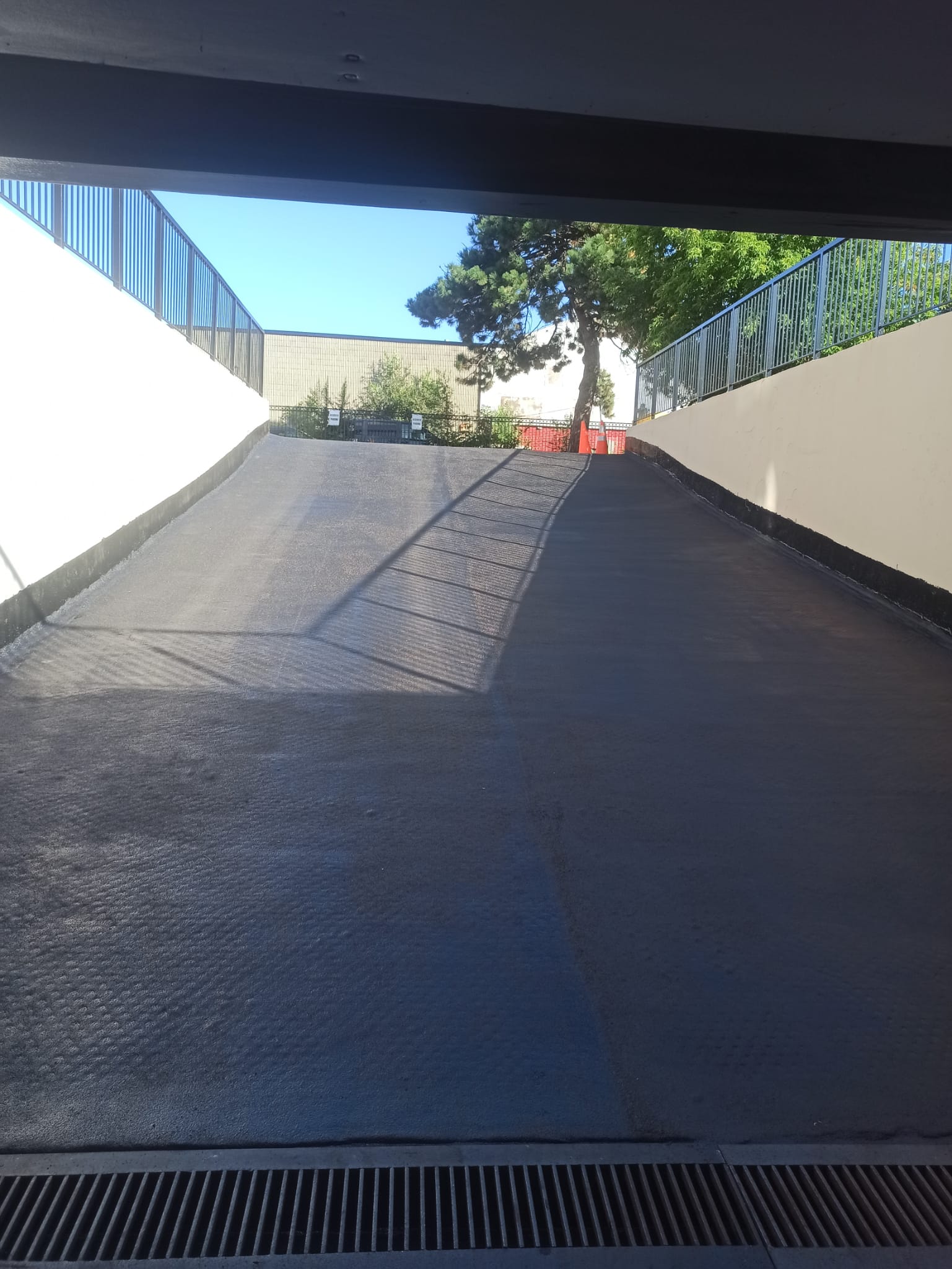
Warning signs include water stains or dripping on the level below, white efflorescence deposits, exposed or rusting rebar, and cracks along expansion joints. These indicate the membrane above has failed and water is reaching the reinforcing steel — which should be addressed before it causes structural spalling.
Do concrete repairs require excavation or shutting down the building?
Usually not. Joint Seal works from inside pits, garages and utility rooms using high-strength adhesives and injection methods, which avoids excavation. Work is phased so elevators, parking and operations keep running, and most repaired areas return to use within 24 hours.
How long do professional waterproofing repairs last?
Joint Seal uses MTO-rated (Ministry of Transportation Ontario) polyurea and polyaspartic materials engineered for roughly a 25-year service life, even under standing water and exposure to oils and chemicals.
Who is responsible for balcony and common-element repairs in a condo?
In most Ontario condominiums, balconies and structural elements are common elements maintained by the condo corporation, while unit owners are responsible for their interiors. Because balcony leaks often damage the unit below, timely common-element waterproofing protects the corporation from owner claims. Confirm specifics with your declaration and property manager.
Not sure what you're looking at?
Send us a photo and a description. We'll tell you what's happening and give you a clear, no-obligation price — free assessments across Toronto & the GTA.