Project & Insights
Why does water get in where the balcony meets the wall?
September 10, 2026
By Valeriy, Application Specialist, JSW Waterproofing
Water gets in where the balcony meets the wall because that line is a cold joint, and cold joints leak. The wall bears on the balcony slab, so the two were poured at different times and never bonded into one piece. A coved bead of the right sealant, inspected and replaced as it ages, keeps water out of that seam for a fraction of what the repair costs once it has been left.
What makes the balcony-to-wall junction a cold joint?
A cold joint is the seam that forms where fresh concrete is poured against concrete that has already begun to set, and it is a common water path because the two pours never fully bond. At a balcony, that seam runs along the base of the wall for the full width of the slab.
The reason is structural. A balcony slab does not begin at the building line. It starts inside the suite and continues outward, with most of the slab inside and a smaller portion projecting beyond the wall. That is what allows the balcony to cantilever. The exterior wall then sits on top of that slab.
So the wall is quite literally standing on the balcony floor. Where it lands, there is a joint, and that joint holds moisture.
What does the inexpensive version of this repair look like?
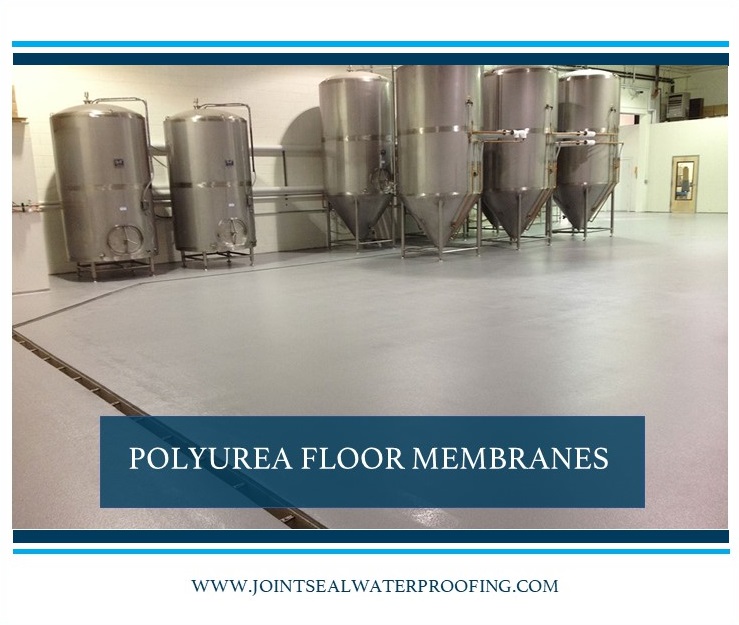
The preventive detail is a coved bead of specialty sealant where the balcony floor meets the wall, applied well and replaced as it ages. Coving means the sealant is run so it rounds off the corner rather than being pressed flat into a square angle. A curved transition sheds water and does not tear under movement, and it also stops moisture, dust and dirt collecting and packing into the edge, which is what turns a square corner into a permanently damp line. The same shape is used in food-grade and industrial floors for the same reason, with a completely different material and a much larger cross-section than anything a balcony needs.
Neither the material nor the labour is expensive. The sealant we use on this joint is Tremco Dymonic FC, a single-component hybrid that Tremco lists for perimeter caulking and that skins in roughly an hour. This belongs on the maintenance schedule alongside every other exterior sealant on the building: inspect it, and reapply or replace it as needed.
That is the whole argument here. A maintained bead costs a fraction of the repairs below, and it is the one that gets skipped.
What happens when the joint is left alone?
Once the sealant has failed and water has been in the seam for years, the joint stops being a caulking item and becomes a waterproofing repair. At that point the balcony is treated as a cold joint properly, and the build-up runs in three stages: fibreglass applied up the wall as an upturn, sealer injected into the joint itself to fill the seam rather than cover it, then fibreglass carried down from the wall and tied into the floor so wall, corner and slab are one continuous sealed surface.
That is real work at real cost, normally done as part of a larger balcony restoration once there is already significant damage.
The blunt version: apply and maintain the caulking and you never need the fibreglass. Those two paragraphs describe the same joint at two very different prices.
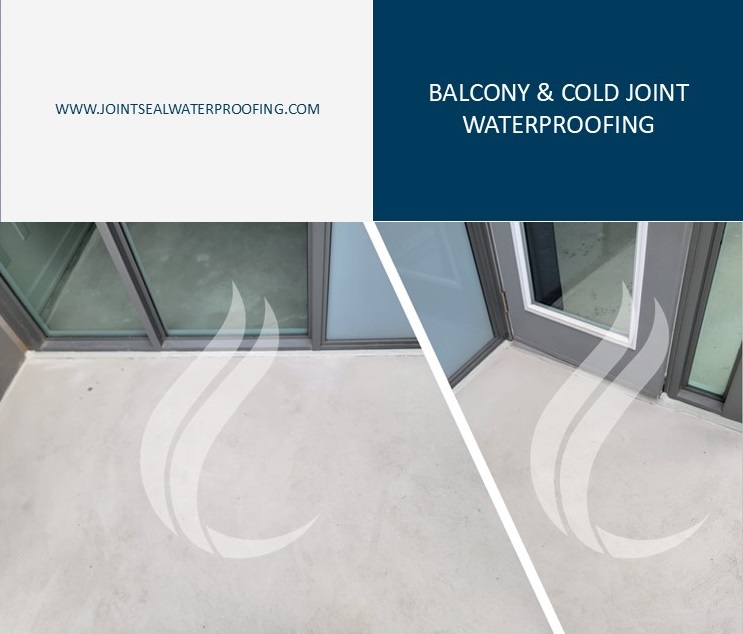
On a residential balcony project in Hamilton the defects were exactly this pair, cracks in the slab plus cold joints where the balcony floor met the wall, repaired with an industrial-strength adhesive, crack filler, fibreglass fleece, a waterproofing coating and a polyaspartic base and top coat with non-slip aggregate.
Why does a cold joint hold water rather than simply leaking?
A cold joint at a balcony holds water because the seam is enclosed on both sides, slab below and wall above, with nowhere for trapped moisture to evaporate to. It behaves the way a badly coated balcony slab does: water gets in, cannot get out, freezes, and works the seam wider every winter.
Water in that joint also travels. The seam runs under the wall and into the building line, which is why junction leaks are frequently reported as interior complaints rather than balcony complaints, and why the source is often missed on a first inspection.
What should a property manager do about the perimeter joint?
Put balcony perimeter caulking on the maintenance schedule rather than the capital schedule, and inspect it on the same cycle as the rest of the building’s sealants. You are looking for sealant that has hardened, cracked, pulled away from either face, or gone missing in sections.
Where the bead is gone and the joint is open, have it assessed before scoping a full balcony programme, because whether the building is buying sealant or buying fibreglass and injection changes the number substantially, and it changes per balcony rather than per building.
Scope the coating on the slab and the outer edge at the same time. Our balcony questions page, the balcony services page and the cold joint repair page set out how the phases fit together.
Start by checking the perimeter bead on a handful of units across different elevations, running a fingernail along it to see whether it has gone hard or lost adhesion. Fifteen minutes tells you whether this is still a maintenance item. We will walk a sample with you and mark which junctions have moved past that point.
Common questions
Frequently asked questions
How often should balcony perimeter caulking be replaced?
Balcony perimeter caulking is inspected on the same cycle as the building's other exterior sealants and replaced when it hardens, cracks or pulls away from either face, rather than on a fixed interval. Exposure varies sharply by elevation, so a sun-facing balcony needs it sooner than a shaded one on the same building.
Why is water coming into the unit rather than showing on the balcony?
Water entering at the balcony-to-wall joint travels along the seam, which runs underneath the wall and into the building line, so it often appears as an interior complaint before anything is visible outside. A dry-looking balcony does not rule out a failed perimeter joint as the source of the leak.
Is caulking a permanent fix or a temporary one?
Maintained caulking at the balcony-to-wall junction is a permanent approach rather than a stopgap, provided it is a specialty sealant, coved properly, and replaced as it ages. The fibreglass and injection build-up exists for joints left open long enough to need it, so it is the consequence of skipping maintenance.
Can the caulking be replaced without redoing the whole balcony?
Yes. Perimeter caulking is a standalone maintenance item and does not require the balcony coating to be replaced at the same time, as long as the existing coating is sound. Where the coating is already failing, doing both together avoids paying twice for access and mobilisation.
What does coving mean in a sealant application?
Coving means the caulking is run so it rounds off the corner instead of being pressed flat into a square angle. The curved profile sheds water, and it also stops moisture, dust and dirt collecting and packing into the edge. The same shape is used in food-grade facilities with a completely different material, though the cove on a balcony is much smaller in cross-section.
Does this joint appear on every balcony?
It appears on any balcony where the exterior wall bears on the balcony slab, which covers most cantilevered concrete balconies in Toronto high-rise and mid-rise construction. The seam runs the full width of the balcony at the base of the wall, so it is a continuous path rather than an isolated defect.
Related services & repair types