Project & Insights
Why can't anyone give a firm price on a pool repair before the work starts?
August 18, 2026
By Valeriy
Valeriy — Application Specialist, Joint Seal Waterproofing — concrete pool refurbishments across the GTA and Miami
Because the finish hides the damage, and the finish is soft enough to defeat the test that would find it. Marbelite deadens the sound of a hammer, so sounding through it gives unreliable results — you cannot map hollow concrete until the coating is ground off. Any contractor quoting a pool refurbishment is pricing an allowance, whether they tell you so or not.
That is an uncomfortable thing to put in writing. It is also the honest position, and a board is better served by a contractor who explains the allowance than by one who quotes a hard number and finds a way to change it on day nine.
Why doesn’t sounding work on a finished pool?
Hammer-sounding a pool through its marbelite finish gives unreliable results, because marbelite is a soft material and it deadens the sound. Sounding works by listening for the difference between sound concrete, which rings sharp, and delaminated concrete, which rings dull. Put a soft cementitious layer over the top and both start to sound the same.
Once the finish is ground off, sounding works perfectly and the whole surface can be mapped in an afternoon. Before that, it is guesswork with a hammer.
What can you read from the surface before demolition?
Where cracks and delamination exist underneath, the marbelite usually cracks or blisters over them — and a blister sounds distinctly different when tapped. That is the one real signal available on a finished pool. It is genuinely useful and it is not close to complete. Approximately, not one hundred percent. There are a lot of hidden cracks.
So a pre-demolition assessment reads the blisters, reads the visible cracking in the finish, and knows it is seeing a subset.
How do you estimate cracks you can’t see?
On a suspended condominium pool, count the cracks visible from the pool mechanical room underneath and multiply by two. That is the method, and it works because of how condo pools are built.
Nearly every condominium pool is suspended — there is a crawl area under it holding the mechanical room, even when the pool reads as a basement pool. That space is an inspection gallery. The underside of the slab and the outside face of the walls are visible, unfinished, and honest.
The logic behind the multiplier: if a crack shows on the underside, then the same crack is on the pool side, guaranteed. But there will be more on the pool side, because not every crack goes all the way through. Doubling the count is a field rule, not a formula, and it has held up.
Two things it does not cover. Patches are assessed from above — large delaminated areas are visible from inside the pool, they do not show from below, so there is no doubling factor for them. And hairline cracks that stop in the concrete cover never show from below at all. Those are the few more up top the multiplier is trying to catch.
Where cracking is present at all, the working allowance is around twenty percent of the surface area. It is very hard to say with more precision than that, and anyone who tells you otherwise has not opened many pools.
At a large institutional sports facility in Toronto, JSW worked underneath two pools on cold joints, pipes and a drain channel, with the cold joints opened out to a depth of two inches. Working from below is how you learn what a pool slab is really doing — and it is exactly the access a condominium pool gives you for free.
What happens when the original concrete was bad?
The one thing no estimating method catches is a pool whose concrete was defective from the day it was poured. On a pool in Miami, sounding after the finish came off found thirty to forty percent of the entire surface hollow.
The cause was in the original construction. Concrete has to be vibrated as it is placed, to drive the air out and let it consolidate against the forms and the rebar. On that pool it was not vibrated properly, so voids were left inside the concrete — and nobody sounded the pool before it went into service. It was commissioned with a third of its shell hollow and it stayed that way for years.
Thirty to forty percent is not normal. On a typical condominium pool the sounding turns up about two square feet of hollow concrete across the whole shell. But it is the tail that an allowance has to survive, and nothing visible from below would have predicted it.
It is also the best argument there is for sounding a pool during any condition assessment, rather than trusting a surface that looks fine.
Where does delamination start?
About ninety-nine percent of delamination in a pool shell starts at the rebar, driven by corrosion. Reinforcing steel in a pool sits roughly an inch and a half to two inches below the surface. When water reaches it, the steel corrodes, corrosion products expand, and the concrete above the bar is pushed off from behind.
That is why hollow areas are chipped back to sound concrete rather than skimmed over. Whatever pushed the first layer off is still there.
Shell thickness varies with how the pool is built: from six inches on a freestanding pool, up to twelve inches on a pool sitting over an occupied space. A condominium pool over a mechanical room is at the thick end, which is a genuine advantage — there is more cover between the water and the steel.
What most people get wrong
Treating a pool quote like a fixed price and then treating the variation as a contractor problem. The variation is a physics problem. Nobody can see through marbelite.
The fix is structural, not adversarial: price the known work firm, carry the crack and patch work as a stated allowance with a unit rate above it, and agree the sounding as a hold point that both sides attend. Then the number that changes is one line item with an agreed rate, not a renegotiation.
The other mistake is comparing two pool quotes on the bottom line. If one carries a crack allowance and the other doesn’t, the cheaper one is not cheaper. It is the same job with the risk moved onto the corporation, and it will surface in a change order.
What to do about it
Before you tender a pool refurbishment, go into the pool mechanical room with a flashlight and photograph the underside of the slab. Count what you can see. That photo set is the single most useful document in the tender package, because it lets every bidder estimate off the same evidence rather than each one guessing privately.
Then ask every bidder the same two questions: what crack allowance is carried in this price, and what is the unit rate above it. The answers tell you more about who has done this work than any reference list.
Book an inspection and we will sound what can be sounded, inspect from the mechanical room, and give you an allowance you can defend to a board.
More on swimming pool repair and waterproofing, patching and concrete surface repair, or read how long the work actually takes.
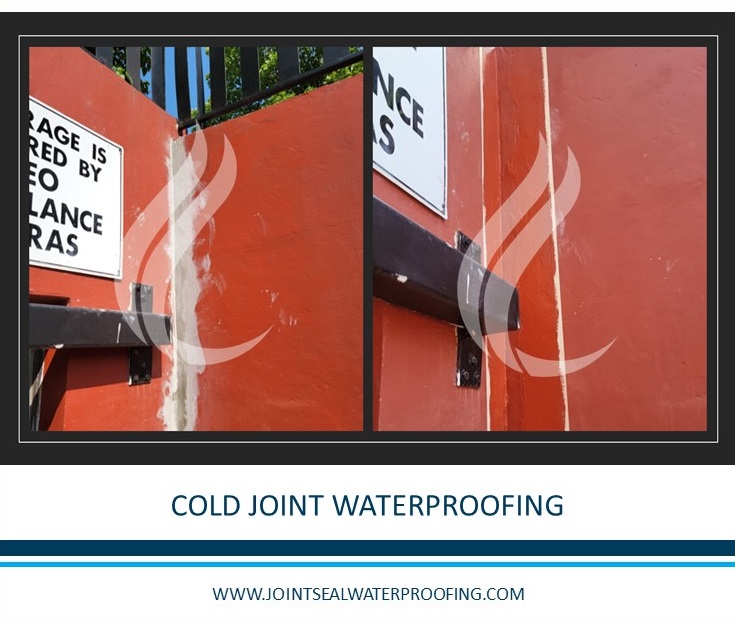
See the work. Pool projects: Cold Joint and Pipe Waterproofing at the the Sport Institute · Complete Restoration and Waterproofing Solutions for Swimming Pools. More in our projects.
Common questions
Frequently asked questions
What is a sounding test on concrete?
Sounding is tapping concrete with a hammer and listening to the response. Solid concrete rings sharp and high; concrete that has delaminated from the reinforcing steel beneath it rings dull and hollow. It is the fastest way to map damage that is not visible on the surface, and on a pool it only works once the finish has been ground off.
Why do two pool repair quotes come back so far apart?
Usually because one carries a crack and patch allowance and the other does not. The hidden work on a pool cannot be seen before the finish is removed, so a quote either prices that risk or leaves it to be discovered later as a change order. Ask each bidder what allowance is included and what the unit rate is above it before comparing totals.
Can an engineer's condition assessment tell us what is wrong without draining the pool?
Not fully. A condition assessment can read visible cracking and blistering in the finish, and on a suspended condominium pool it can inspect the slab from the mechanical room below, which is genuinely informative. What it cannot do is map hollow concrete through a marbelite finish, because the soft finish deadens the hammer.
Is hollow concrete in a pool wall a structural problem?
A small amount is a durability problem rather than a structural one — around two square feet across the whole shell is normal on an ageing condominium pool, and it gets chipped out and refilled as routine repair. Widespread hollow areas are different. On one pool, thirty to forty percent of the surface was hollow because the concrete was never properly vibrated during construction, and that is a finding an engineer should see.
Is a pool refurbishment a maintenance item or a reserve fund item?
A full refurbishment — stripping to bare concrete, new waterproofing, new finish — is a reserve fund item on any normal condominium schedule, because it is a capital renewal of the whole amenity. Localised crack repair with a partial drain is usually maintenance. The line between them is whether the finish is coming off.
How do we hold a contractor to an allowance once the pool is open?
Attend the sounding. Once the finish is ground off, the hollow areas get marked on the surface with spray paint or marker before anything is chipped out, so the extent is visible and photographable before the work happens. A marked-up pool photographed with the property manager present is the record that settles the variation.
Related services & repair types