Expansion Joints · Toronto & GTA
Expansion Joint & Ledge Beam Waterproofing
We are a Toronto-based company specialized in injecting expansion joints from the inside, which makes it unnecessary to excavate podium roofs of underground parking garages. We repair floor, wall and ceiling expansion joints, including those located behind ledge beams.
- Negative-Side Injection
- Ledge Beam Repair
- Ceiling Joints
- Wall Joints
- Floor Joints
- Zero-VOC Materials
Concrete Expansion Joint & Ledge Beam Repair
Expansion joints — the spaces between concrete slabs — play an important role by allowing concrete to expand and contract up to four inches in total. When they start leaking, it is necessary to waterproof them to prevent concrete degradation.
We repair concrete expansion joints and ledge beams, offering lasting waterproofing solutions. Parking garage expansion joint repair and joint injection at medical facilities are some of our specialties. Our industrial-strength materials have been tested to MTO standards to last 25 years.
Why Expansion Joints Leak
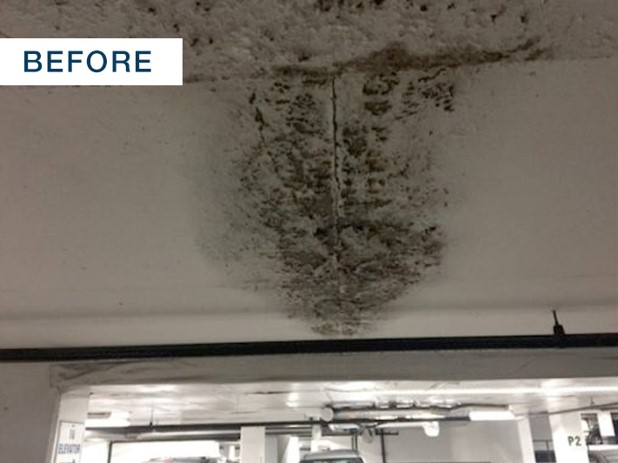
Expansion joints in podium roofs of parking garages start leaking when the waterproofing membrane fails and the roof cracks. Water runs through the cracks into the joints, making its way into the P1 level and degrading concrete surfaces. It can leak further to P2 and below if floor joints or the traffic topping have failed.
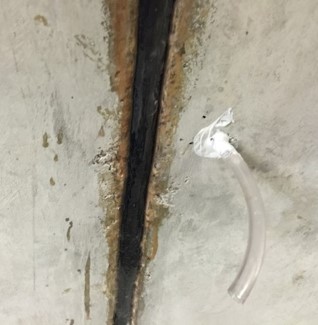
Wall expansion joints fail with age and wear, becoming less elastic and cracking. Where joints sit in external walls below grade, water from the environment leaks through the cracked joints or through cracks in the wall slab.
Efficient Repair Methods
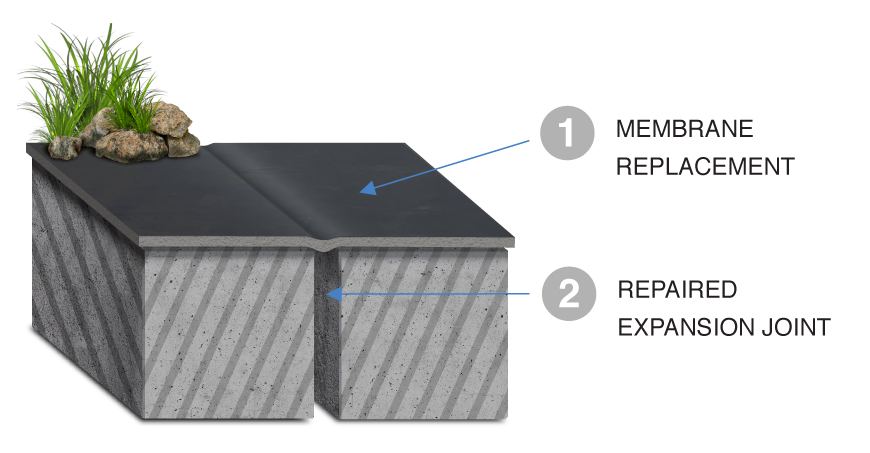
Negative-side injection: our specialized methods let us inject liquid rubber directly into the expansion joints from the bottom, ensuring efficient podium slab waterproofing. This means no excavation of parking garage podium roofs and no extensive area closures — major savings.
Ledge beam repair: by injecting the joints located behind ledge beams and restoring the beams through crack repair and patching, we prevent water from infiltrating and degrading the beams, which could otherwise lose their load-carrying capacity.
Expansion Joints in Medical Facilities
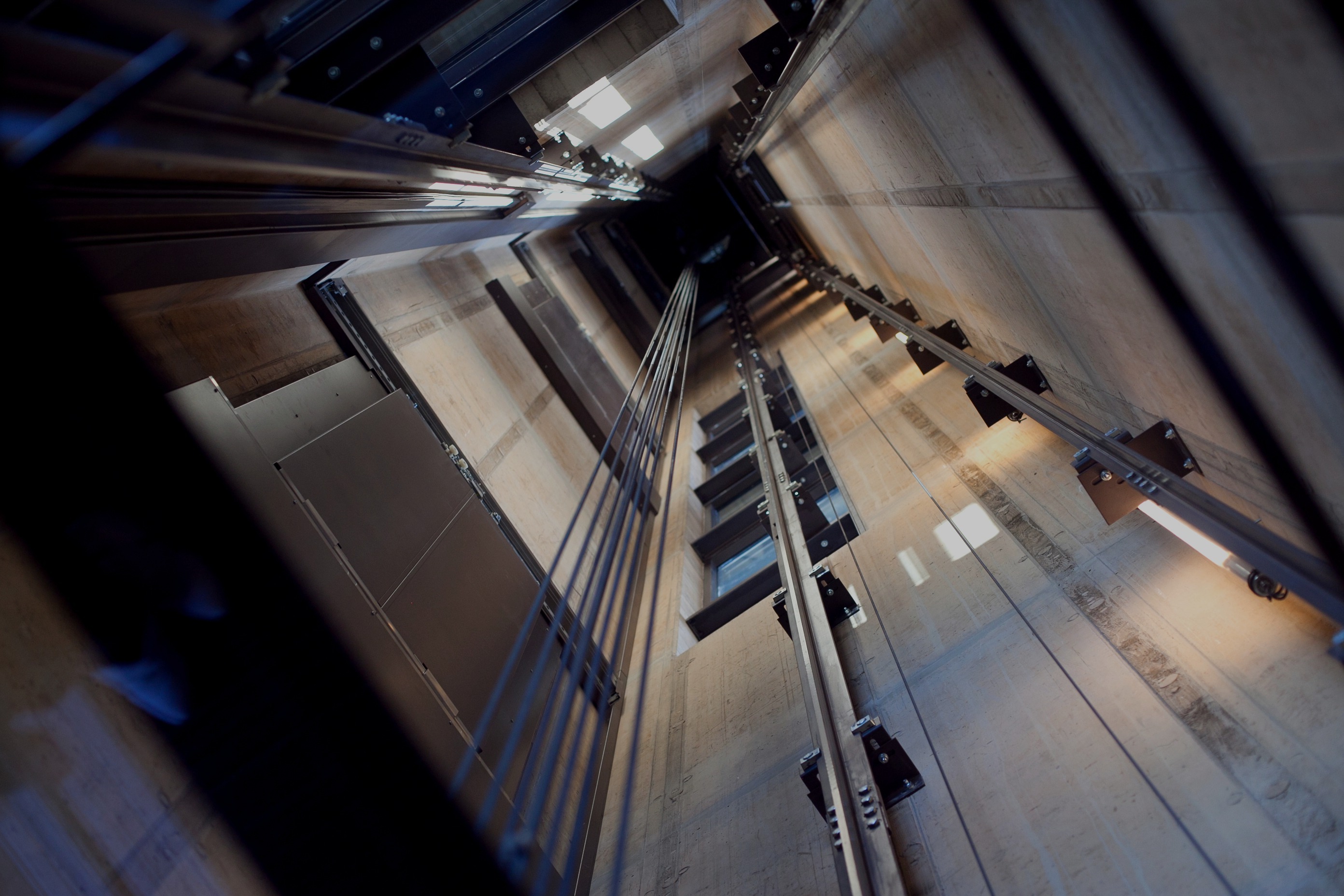
Smooth finishes on interior expansion joints are vital for patient comfort and equipment transport, and we use zero-VOC materials so no odours are emitted during the repair process.
Temporary enclosures control dust, most work is carried out during off-peak hours to minimize noise, and as a self-managed company we monitor carefully and provide continuous progress updates — keeping the impact on operations to a minimum.
Our Repair Methods
Expansion Joint Injection
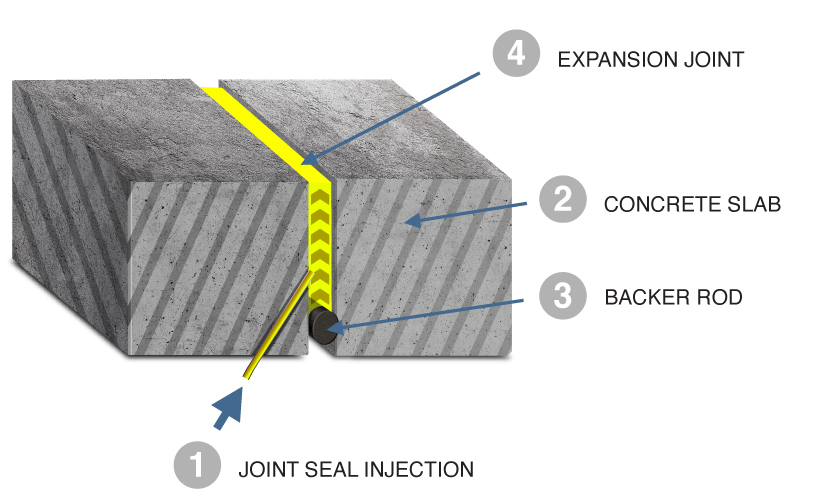
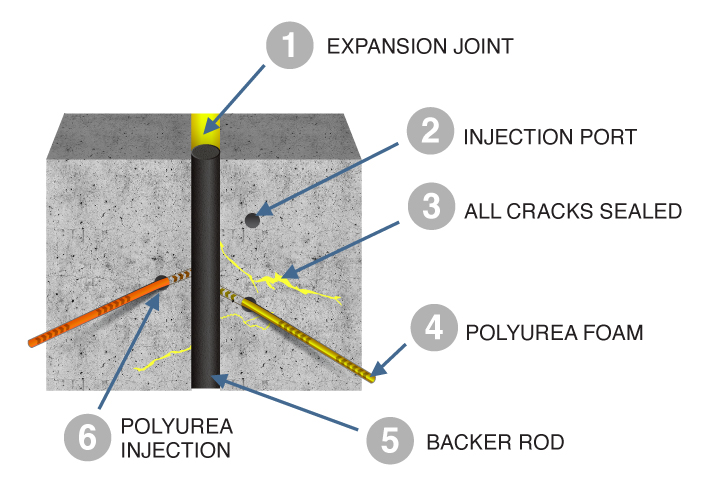
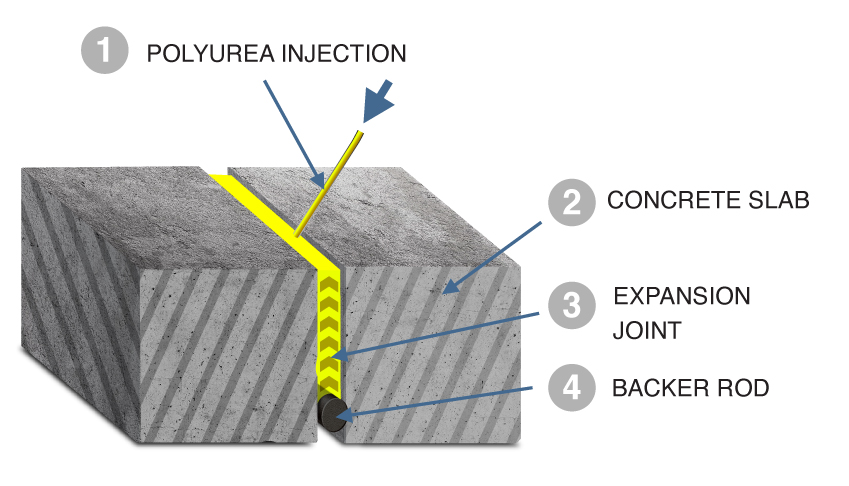
Ceiling, wall and floor expansion joints — plus joints behind ledge beams — are repaired with the same clean, injection-based approach, shown here as cross-section diagrams.
Ceiling Expansion Joints
To repair a ceiling expansion joint, a multi-step procedure is followed. It involves cleaning the joint, applying adhesive, and inserting a backer rod before the injection is done.
Wall Expansion Joints
Wall expansion joint repair requires a similar procedure, but involves two backer rods — one on each side of the joint — to ensure the injected material remains in place.
Floor Expansion Joints
Floor expansion joint injection follows a procedure similar to ceiling repair, with one minor difference — the backer rod is placed at the bottom of the joint.
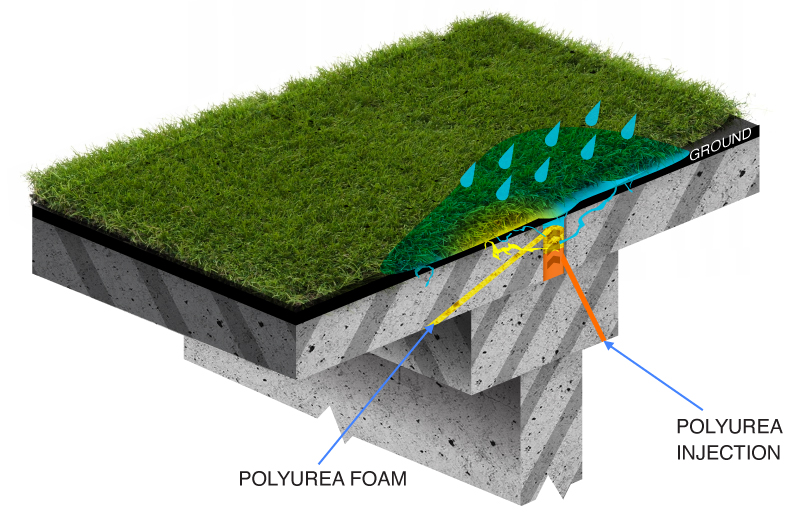
Ledge Beam Repair
First, we determine where the expansion joint is and then drill through close to 40 cm of ledge beam concrete. Once this injection port is ready, we waterproof the expansion joint through injection.
Common questions
Frequently asked questions
Why are our parking-garage expansion joints leaking?
Water infiltrates through cracks in the membrane covering the joints and garage ceiling.
Do you excavate to repair expansion joints?
No. We inject from inside the garage — no podium roof excavation.
Can ledge beams be repaired?
Yes. We drill through up to 40 cm of ledge beam to inject the joint behind it with liquid rubber.
Leaking expansion joints?
We inject expansion joints from the inside — no podium roof excavation — sealing joints and surrounding cracks with lasting, MTO-rated liquid rubber.