Project & Insights
Can Garage Joint Repairs Be Spread Across Budget Years?
August 22, 2026
By Valeriy, Application Specialist, JSW Waterproofing
A reserve fund does not fail because a repair is expensive. It fails because the repair has to happen all at once.
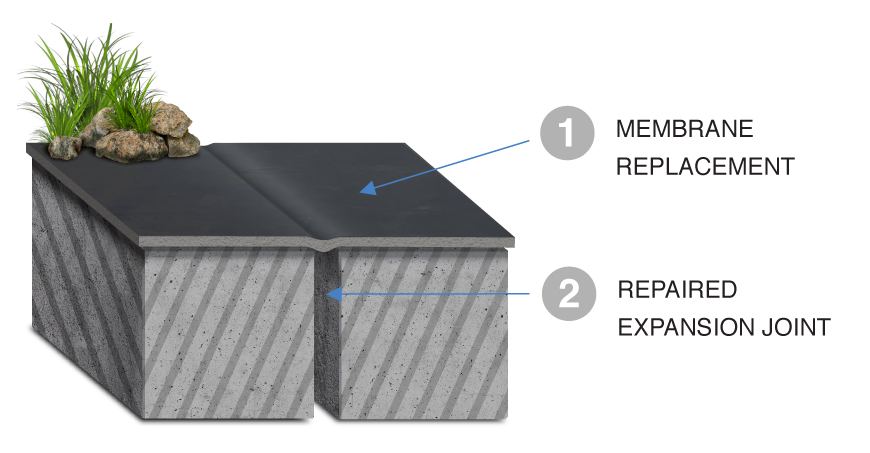
Garage expansion joint repairs stage well across budget years, and this is one of the strongest arguments for doing them from inside the garage. Each joint is a separate 20-foot slab span costing roughly six to ten thousand dollars, so a building can repair the three worst spans this year and the next three in two years without wasting a dollar of the first phase. A top-side excavation cannot be split the same way, because the deck is opened once and has to be closed back up.
That difference decides whether a garage line item is a crisis or a schedule.
Why does the 20-foot span make staging possible?
The unit of work is the reason. An expansion joint is repaired across its full slab span — typically 20 feet — because the joint moves as a single unit and a partial length simply relocates the movement.
That constraint is also the gift. A span is a complete, finished job. Inject one this year and it is done: the form comes off, the ports are patched, and nothing about it needs reopening when the joint two bays over is repaired two years later. There is no shared excavation to keep open, no membrane run to interrupt, no reinstatement to defer.
What does one staged phase look like on site?
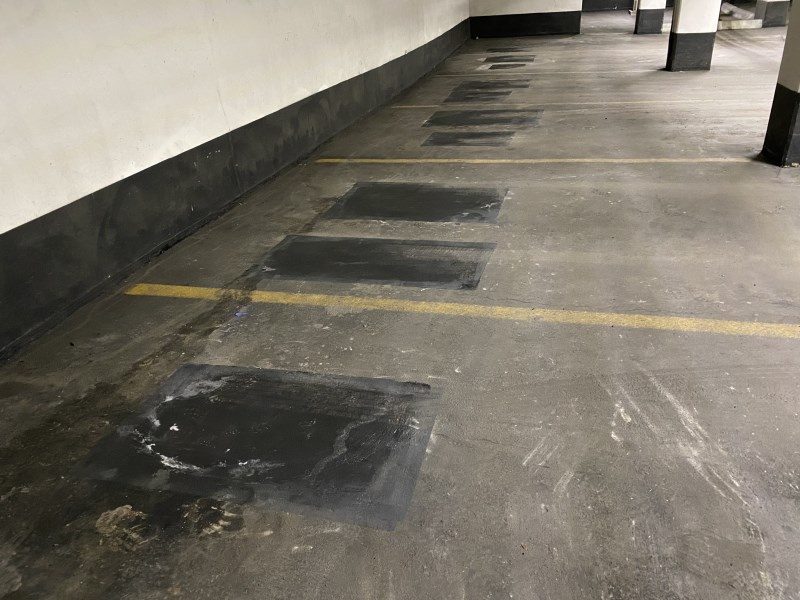
A phase is small enough to schedule around residents. One 20-foot span is about a two-day job: injection and forming on day one, form removal and cosmetic finishing on day two. The garage does not close. Roughly ten parking spots are vacated so nothing gets dripped on, and traffic carries on through the level.
Can a phase be scheduled in winter?
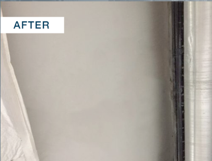
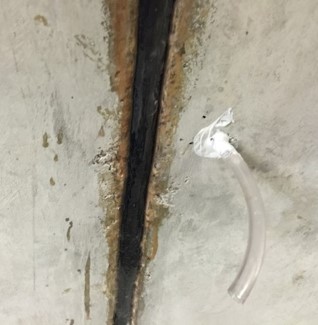
Weather is not much of a gate on this work. On a mid-rise residential building on Fairview Mall Dr in North York, a vertical expansion joint with a horizontal run at the top had to be repaired in winter, with ice sitting in the joint cavities. We worked from inside the garage: backer rods placed to hold the material, holes drilled, a 45-degree angle cut at the top along the ceiling, then cold-applied polyurea injected until it filled the cavities. The record is in the vertical expansion joint repair.
A method that works in February is a method you can put in any quarter of a budget year.
Why does this matter for a Class F estimate?
Reserve fund studies carry Class F estimates, which is the roughest estimate class, and costs are escalated forward from that starting figure. The consequence is mechanical: a line item sized as a full deck excavation keeps escalating as a full deck excavation for every year it sits in the study.
Replacing that line with a per-span number does two things. It lowers the base the escalation runs on, and it turns one unavoidable event into a series of small ones the board controls the timing of. The gap can be dramatic — on one GTA condo the two proposals for the same joints were $4 million and about $500,000, which we wrote up in how one board decided on its garage joints.
How should a board decide which joints go first?
By what the water is landing on, not by which joint gets complained about most.
Garage slabs bear on ledge beams, and expansion joints frequently run directly above them, so a joint dripping onto a beam keeps structural concrete saturated year-round. Those spans go first. A joint staining a wall or dripping into a drive aisle can usually wait a cycle. Our opinion, plainly: rank the spans by whether they are wetting structure, and accept that the noisiest complaint is often not the most urgent joint. The reasoning is in the ledge beam problem.
What if a staged span does not seal on the first pass?
It gets injected again, in the same or different locations. Each pass is relatively inexpensive, so a joint can be treated four or five times and still cost far less than a single top-side excavation.
For a staged programme this is more useful than it first sounds. A second pass on last year’s span is a small item in this year’s budget rather than a reopened capital project.
What should you bring to the next budget meeting?
A count of spans, not a count of leaks. Walk the garage, note each joint that stains or drips, note what is above it and what is below it, and price the programme per span.
Book an inspection and we will give you that count, with the spans ranked in the order we would do them.
Book a JSW inspection · More on parking garage repair, expansion joint repair and our condo maintenance guide. The FAQ covers reserve fund questions in more detail.
Common questions
Frequently asked questions
Can a garage joint programme be split across several budget years?
Yes, and this is one of its advantages for a reserve fund. Each joint is a separate 20-foot span, so a building can address the worst joints this year and others later. A top-side excavation does not stage the same way — the deck is opened once and has to be closed back up.
Does staging the work waste any of it?
No, because the unit of work is a whole 20-foot slab span. A joint injected this year is finished; nothing about it has to be reopened when the next joint is done in two years. Staging a top-side excavation is different, because the deck has to be closed back up between phases.
What is a Class F estimate in a reserve fund study?
Class F is the roughest estimate class used in reserve fund studies, and costs are escalated forward from that starting number. That matters because a line item sized as a full deck excavation keeps escalating as a full deck excavation for as long as it sits in the study, whether or not the building ever intends to excavate.
Is a much cheaper waterproofing proposal a warning sign?
A board should ask what physical work each price buys, not assume the lower number is thinner. On one GTA condo, a $500,000 injection proposal and a $4 million excavation proposal addressed the same joints with comparable success rates. The cheaper approach simply did not include digging up and rebuilding the deck.
Which joints should be repaired in the first year?
The ones putting water onto structure. A joint dripping onto a ledge beam keeps that concrete saturated year-round, and the beam carries the slabs above it, so those spans come first. Joints staining a wall or a drive aisle can generally wait a budget cycle.
Can a joint be re-injected in a later year if the first pass does not seal?
The joint can be injected again, in the same or different locations. Because each pass is relatively inexpensive, a joint can be treated four or five times and still cost far less than a single top-side excavation. That repeatability is a large part of why the approach works financially for condo boards.
Related services & repair types