Project & Insights
How thick does a concrete patch have to be?
August 18, 2026
By Boris Gopka, Owner, JSW Waterproofing — 2.5 million square feet of concrete patching across the GTA
Most concrete patch materials need a minimum of two inches of thickness to work, which is why contractors chip two inches deep even when the damage is half an inch. Below two inches, conventional patch concrete has almost no strength of its own — you can break it with a nail.
But the two-inch rule is a property of the material, not of concrete repair. With a chemically bonding adhesive and a polymer cement, patches go down at 5 mm and hold. That single difference decides how much of your slab gets demolished.
Why do most patch materials need two inches?
Conventional patch concrete needs about two inches of thickness because below that it has no meaningful strength and breaks under any point load. At half an inch you can put a nail through it. At two inches the same material is genuinely strong.
So the thickness isn’t chosen to match the damage. It’s chosen to satisfy the material. A spall that is 10 mm deep still gets chipped out to two inches, and the extra inch and a half of sound concrete that comes out is pure cost — labour, dust, noise, disposal, and a larger volume of patch material to fill it back.
What happens to the slab’s strength when you take two inches out?
Removing two inches from an eight-inch slab and replacing it with an unbonded patch leaves you with a six-inch slab, not an eight-inch one. This is the part that surprises people, and it is the strongest argument in the whole subject.
Load transfers downward through concrete. Put a tile on top of a slab and press on it: the pressure goes through the tile into the slab, the slab cracks first, and the tile follows. An unbonded patch behaves exactly like that tile.
So the arithmetic goes:
| Original slab | Repair | Bond | Effective structural depth |
|---|---|---|---|
| 8 inches | 2 inches removed and replaced | Mechanical only | 6 inches |
| 8 inches | 2 inches removed and replaced | Chemical / monolithic | 8 inches |
| 8 inches | 5 mm removed and replaced | Chemical / monolithic | 8 inches |
Two plates that are independent of each other do not share load. The six inches underneath carries the structure and the two inches on top rides along. Bond them chemically and the eight inches comes back, because there is one slab again rather than two.
The same holds at any depth — one inch over seven, or half an inch over seven and a half. The bond decides, not the thickness. That is also why a patch bonded with anchors alone tends to fail within a winter or two.
How thin can a patch actually go?
A chemically bonded patch built with an adhesive and a polymer cement goes down as thin as 5 mm and performs as part of the slab. We have jobs across the GTA sitting at that thickness: a mid-rise parking garage on Pharmacy Avenue with 5 mm patches on floors, walls and ceiling, and a mechanical room floor on Dundas Street West repaired around a drain at the same thickness across roughly 60 square feet.
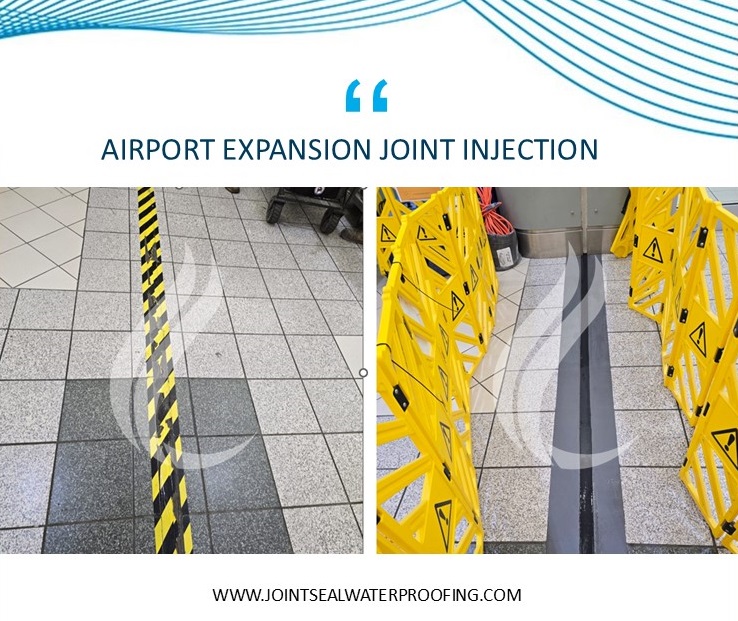
On the airside concrete at Hamilton International Airport we ran patches as thin as one inch on surfaces carrying aircraft, where the traditional method would have required a two-inch minimum demolition. That work used Polyforce Plus Adhesive with Polyforce Polymer Cement, across three phases beginning in 2017.
Which adhesive system goes on which job?
There are two systems worth knowing about and they are not interchangeable. The question they answer is different: does this repair need to let the slab breathe, or does it need to reinforce the slab?
Cementitious systems — when the concrete has to keep hydrating. Concrete hydrates continuously, and moisture moves out through the slab as part of how it works. A cementitious structural patch system uses a cementitious adhesive to bond a cementitious patch to cement, so vapour keeps moving through the repair. Where an engineer specifies structural patching, and particularly where the patch has to go overhead without sagging, this is the system. Seal that vapour path with the wrong adhesive and you work against the concrete’s own chemistry and compromise the bond at the same time. Sika makes the corrosion-inhibiting version we use on engineered overhead work.
Polyforce Plus — when the substrate is wet and needs strength. Polyforce Plus develops considerably higher strength and gets there a different way: it penetrates into the substrate rather than sitting on the face of it. On a wall that is saturated, cracked or actively leaking, that penetration reinstates the carrying capacity of the wall itself. It also cures in four hours, in wet conditions, which matters more than it sounds — the slab you are repairing is dry and the patch you are putting on it is wet, and the adhesive has to cure in exactly that.
Most of our concrete patching runs on Polyforce Plus with polymer cements, because most of what we repair is saturated or leaking. Polymer cements are the pairing for two reasons: they work in very thin layers, and they cure far faster than traditional cement.
What does less demolition change for a building?
Less demolition changes the schedule and the disruption more than it changes the material cost. Chipping two inches out of a garage deck is jackhammer work — noise through the building, dust control, a level closed to residents, debris out, and days of it.
On a floor, a two-inch chip-out doesn’t feel dramatic; you make a shallow basin and fill it. On a stair nosing or an overhead slab it changes what is possible at all. Repairing concrete stairs instead of recasting them depends entirely on being able to feather a patch to under a quarter inch across the tread, which no two-inch material can do.
What to ask a contractor about patch thickness
When a patching quote arrives, ask two questions: how deep are you chipping, and what bonds the patch to the slab. If the answer is two inches and mechanical anchors, you know what you are buying — more demolition, more disruption, a perimeter that needs caulking on a cycle, and a slab that is structurally thinner than it started.
That is a legitimate method and sometimes the right one. It should be a decision rather than a default. We are happy to walk a level and mark up the actual damage depth before anyone specifies a repair depth; that is a normal part of parking garage concrete repair and it usually changes the scope.
Common questions
Frequently asked questions
Is a 5 mm patch as strong as a two-inch one?
A 5 mm chemically bonded patch is as strong as the slab it is bonded to, because it acts as part of that slab rather than as a separate layer. A two-inch mechanically bonded patch is strong in itself but structurally independent, so it does not restore the slab's original depth. The bond decides the strength, not the thickness.
Why does one contractor want to chip two inches and another only 5 mm?
The difference is the bonding system, not the severity of the damage. Conventional patch concrete has no strength below about two inches, so a contractor using it must chip to two inches regardless of how deep the spall actually is. A contractor using an adhesive and polymer cement can match the repair depth to the damage.
Does removing concrete to patch it weaken the slab?
Removing concrete to install an unbonded patch reduces the slab's effective structural depth for as long as the patch stays independent — take two inches out of eight and the structure works as six. A chemically bonded patch restores the full depth, because the two pours behave as one piece. Worth raising with your engineer on any thick repair.
Can a thin patch be used on a parking garage ceiling?
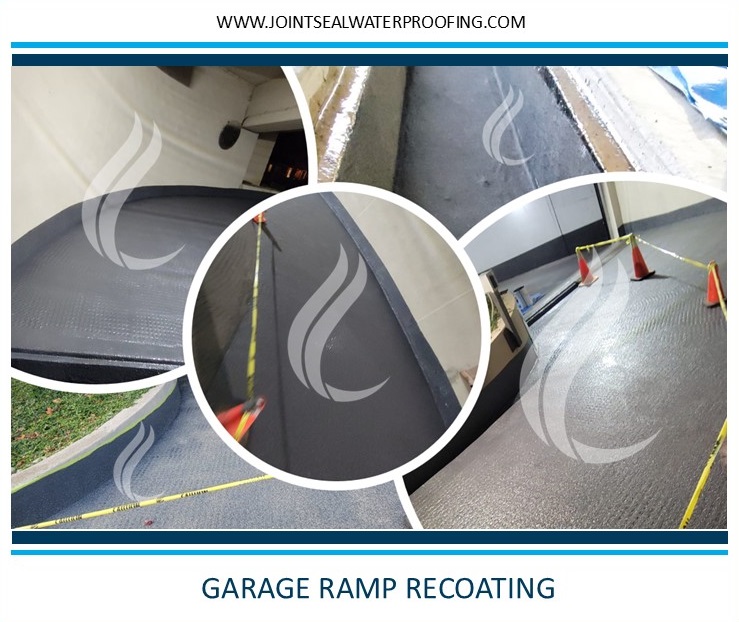
Thin patching works overhead as well as on floors and walls, but the material has to hold its shape against gravity while it cures. Structural patch materials with a clay-like consistency are made for this and will not sag or drip off a soffit. We have patched garage ceilings, walls, floors and ramps in a single campaign with one system.
How long before a thin patch can be walked on or driven on?
Polymer cement patches with Polyforce Plus adhesive cure in roughly four hours, comparable to how long conventional concrete takes to set, so most repairs take foot traffic the same day. Temperature affects it, and whatever coating goes over the patch usually governs the return-to-service date rather than the patch itself.
Related services & repair types