Project & Insights
Will Injection Pressure Lift My Waterproofing Membrane?
August 22, 2026
By Valeriy, Application Specialist, JSW Waterproofing
Every consulting engineer who reviews this method asks the same question first. It is a fair question and it has a short answer.
Injection pressure will not lift your waterproofing membrane. The pressure used to inject a garage expansion joint is enough to displace water out of the joint cavity and travel back up the path the water was using — nothing more. It is the first question we get from consulting engineers reviewing a negative-side proposal, and the answer has not changed in fifteen years of doing the work.
What follows is what the pressure is actually for, and how the crew knows it is doing its job.
Why do engineers ask about the membrane first?
Consulting engineers ask about the membrane because the membrane is the asset. A deck membrane is the expensive, hard-to-reach layer in the assembly, and an engineer who has specified one does not want a repair below the slab compromising it. That is a reasonable instinct.
The concern usually pictures injection as high-pressure grouting — the kind of pressure that moves structure. Expansion joint injection is not that. It is a low-pressure fill of a cavity that is already open, already wet, and already connected to a path back out.
What is the pressure actually doing?
Injection pressure has one job in a garage expansion joint: moving water out of the way so resin can take its place.
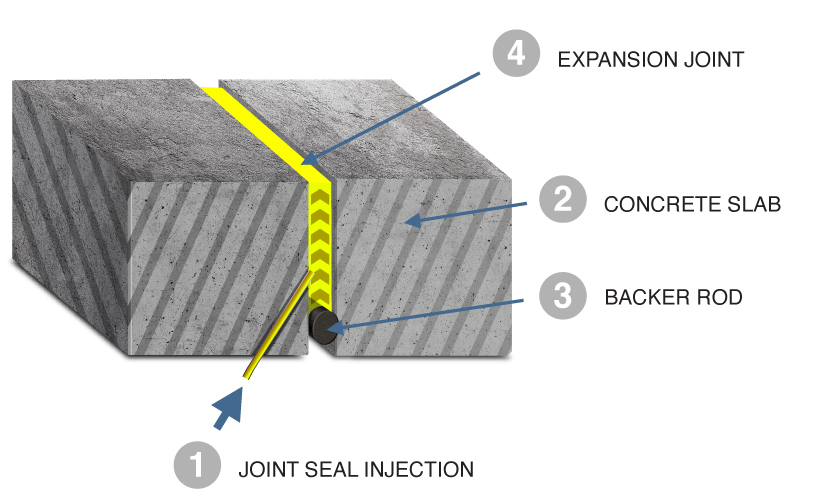
The resin we use is Joint Seal Flex, a hydrophobic polyurethane injection resin manufactured in the United States. It is heavier than water and does not react with it, so it settles under whatever is standing in the joint and pushes that water ahead of itself as more material is pumped in. The pressure supplies the push. Once the joint is full, the resin follows the path of least resistance — which is the same route the water was using — and travels back along it.
That is the whole mechanism, and we have written it up in detail in how the resin chases water in reverse.
How does the crew know when to stop?
The pressure gauge is the instrument, not a guess.
If resin is still escaping into the structure, the pressure keeps moving. If the joint is filling and holding, the pressure climbs and stays high. That reading is the operator’s read on whether there is somewhere left for material to go. Stopping is a decision made on a number, which is the part boards tend to be surprised by.
What does the resin push against?
The joint has to be closed off before anything is pumped, or the pressure has nothing to work against.
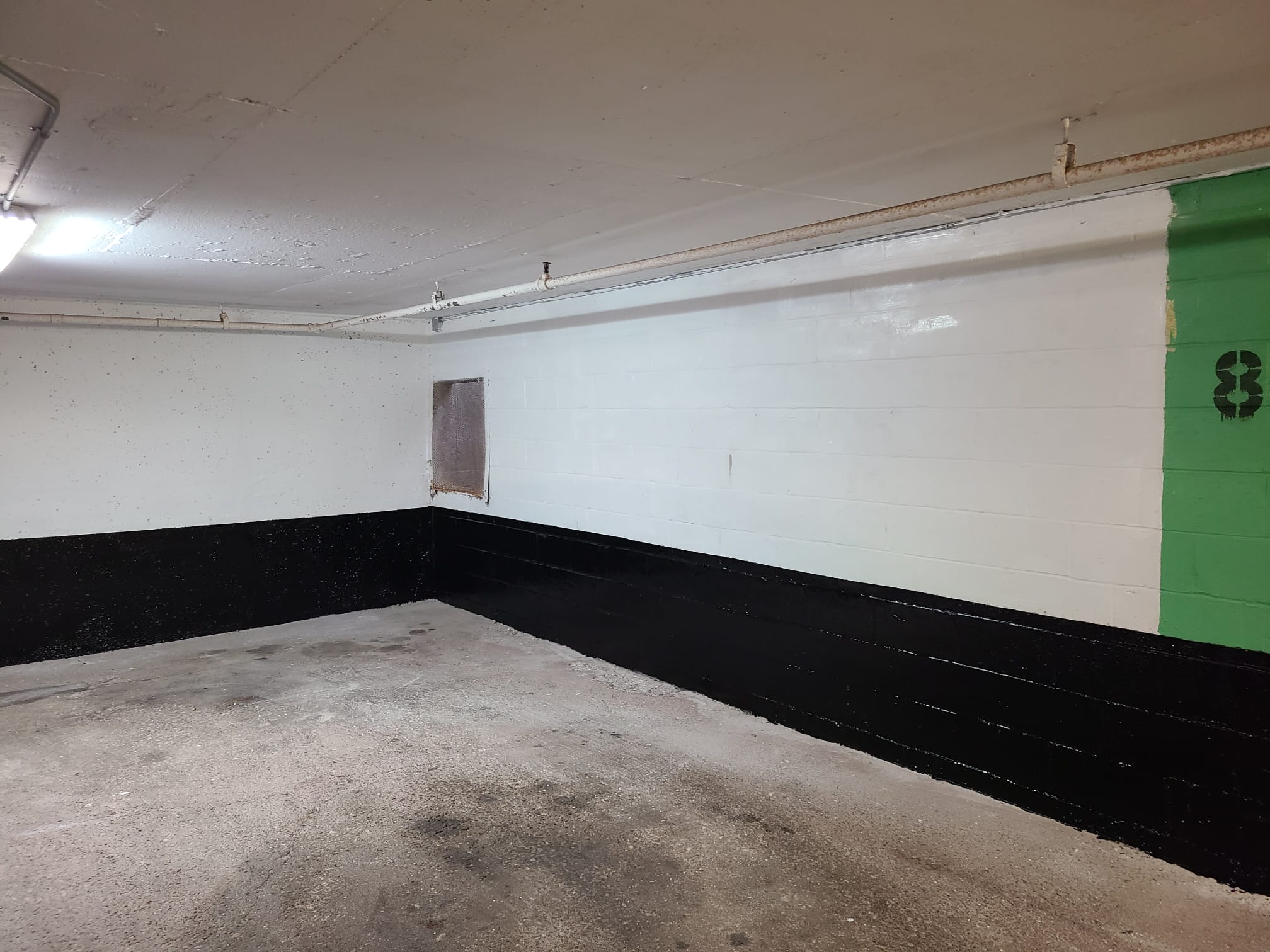
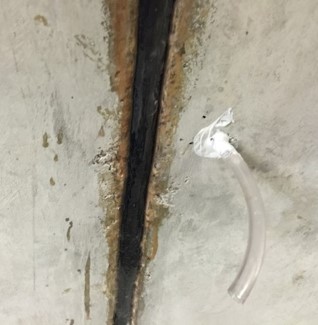
On a high-rise residential building on Dupont St in Toronto, a ceiling expansion joint in the parking garage was leaking, and the hard part of injecting a ceiling joint from underneath is knowing the joint is completely filled and the material retained. The repair ran two days. Day one built the chamber: insulation removed, the joint cleaned and dried, leak sources patched with industrial-strength adhesive and polymer cement, then two backer rods installed two inches apart, ports drilled, and the chamber sealed with fiberglass coated in polyurea. Day two was the injection itself, the ports sealed and patched, and a final coat of waterproofing over the joint. The record is the Dupont St ceiling joint repair.
Why does a second backer rod matter?
That second rod, set two inches below the first, is the detail that makes the pressure useful. One rod gives resin a cavity to escape from. Two rods with the space between them sealed give it a chamber — a defined volume with a known top and bottom, which is what the gauge is reading against. It is also the reason a ceiling joint injected from below can be judged filled at all, and that is the objection this method has to answer.
Is the membrane at risk in any other way?
The membrane is not at risk from the injection. It is already the reason the joint is leaking.
Water reaches a joint because the membrane above debonded somewhere — often 20 feet or more away — and injecting the joint neither helps nor harms that layer. Our opinion is that the more useful engineering question is not whether the pressure lifts the membrane, but how much of the membrane is left. If it is failing across the whole deck, injection is treating symptoms and the honest advice is to compare it against excavation properly.
What should you ask a contractor about pressure?
Ask what the target pressure range is, what closes the joint off, and what the operator does when the pressure will not climb. A contractor who cannot answer the third one is not reading the gauge.
Then ask what happens if the joint needs a second pass, because it sometimes does, and re-injection is inexpensive relative to anything else on the table.
Book an inspection and we will walk the joint with you and explain what the gauge will be telling us.
Book a JSW inspection · More on parking garage repair, expansion joint repair and crack injection. Our FAQ collects the technical questions engineers raise most.
Common questions
Frequently asked questions
Is injection pressure strong enough to lift a deck membrane?
No. This is the most common question from consulting engineers, and the injection pressure is not strong enough to lift the deck membrane. It is enough to displace water out of the joint and travel back along the path the water was using, which is all the repair requires.
What does the pressure reading tell the crew during an injection?
By watching the injection pressure the operator knows what the joint is doing. If resin is still escaping into the structure, the pressure keeps moving. If the joint is filling and holding, the pressure climbs and stays high. That reading tells the operator whether to keep pumping or stop.
What does the resin build pressure against?
A form or a sealed chamber at the underside of the joint. On a ceiling joint we set backer rods to hold the material, coat the joint with adhesive, and close the chamber off before drilling the injection ports. Without something to close the joint off, resin escapes instead of filling.
Can a joint be injected a second time if the first pass does not seal?
The joint can be injected again, in the same or different locations. Because each pass is relatively inexpensive, a joint can be treated four or five times and still cost far less than a single top-side excavation. That repeatability is a large part of why the approach works financially for condo boards.
Why does a hydrophobic resin behave predictably in a wet joint?
Hydrophobic resins like Joint Seal Flex do not foam or react when injected into a cavity full of moisture, which keeps the behaviour predictable in a wet joint. Because the resin is also heavier than water, it settles beneath standing water and pushes it ahead as more material is pumped in.
Related services & repair types