
Overhead Concrete Repair · Toronto & GTA
Overhead Concrete Repair
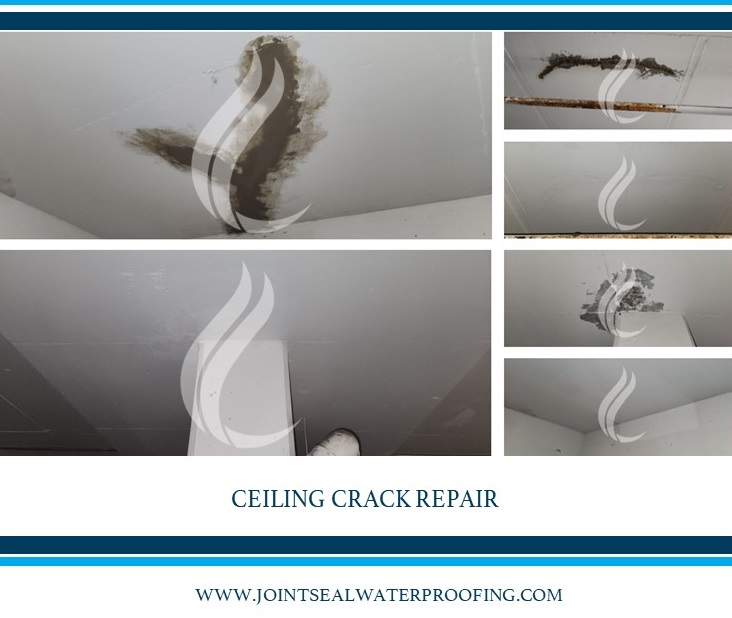
Overhead repair is not floor work turned upside down. The patch has to bond on contact and hold its own weight for the whole cure, and the reason the concrete came off is usually corroding steel behind the cover. We rebuild ceilings and soffits from below, as thin as 5 mm, without forming.
- Spalling Ceilings
- Delaminated Soffits
- Exposed Rebar
- Balcony Undersides
- Ceiling Expansion Joints
- No Forming Required
Why Concrete Falls Off a Ceiling
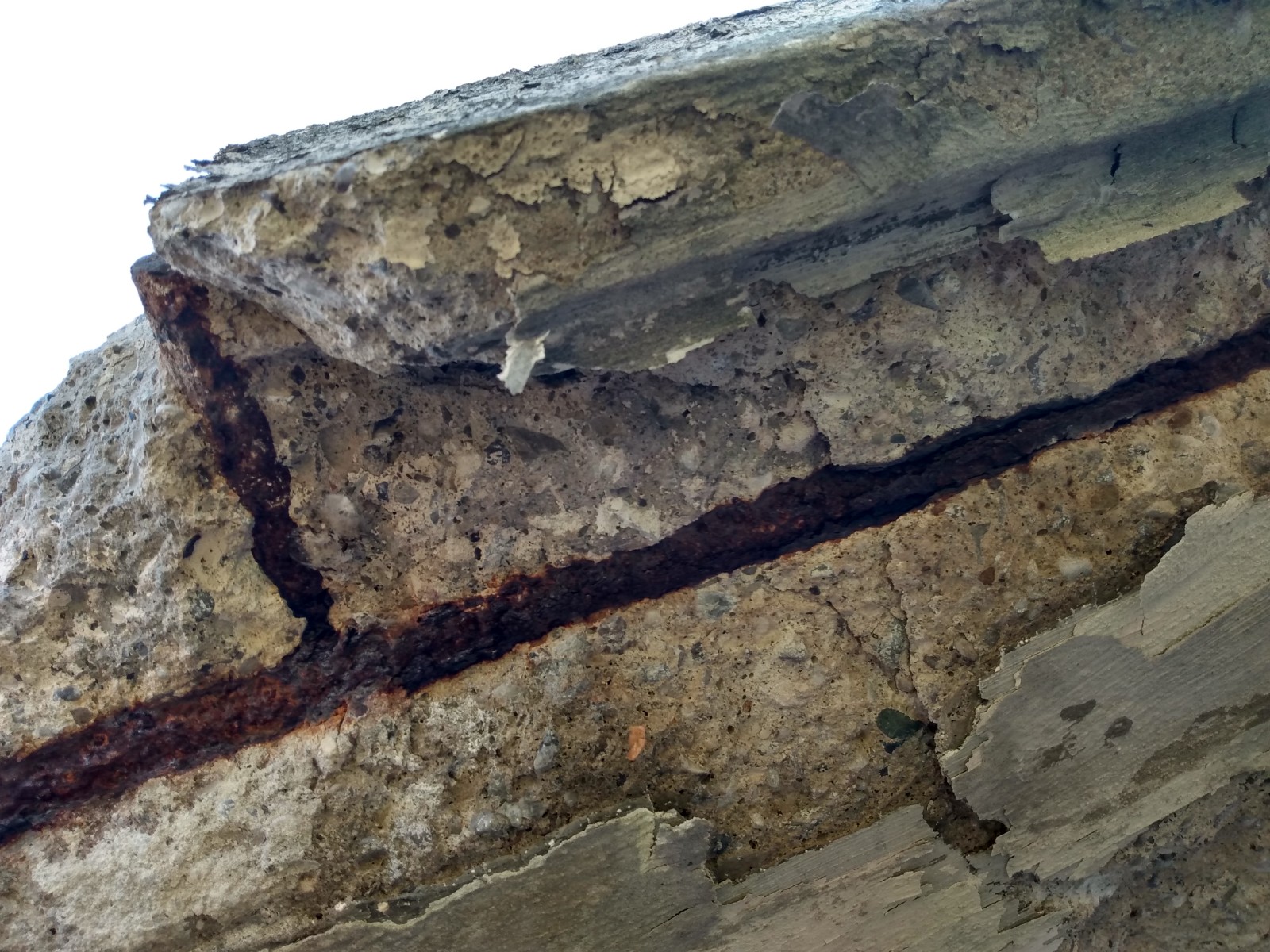
Concrete falls off a parking garage ceiling because water carrying road salt has reached the reinforcing steel, and the corroding steel expands and pushes the concrete cover off from behind. The spalling is the last stage of a process that began at the deck above, not the first.
That is why coating a spalled soffit achieves nothing. Corrosion continues behind the new finish and the cover keeps breaking away. Treating the exposed steel is part of the repair; painting over it is not.
Gravity Is the Constraint
On a floor a patch stays where it is put. Overhead there is nothing underneath it, so the material has to hold its own shape for the entire cure. Ordinary patch mortar slumps, drips and falls off a soffit, which is why conventional overhead repair means forming and propping.
Instant-bonding industrial adhesives change the sequence. Polyforce Plus Adhesive grips the prepared concrete on contact and Polyforce Polymer Cement keeps its shape while it cures, so nothing has to be braced against the ceiling. Our materials are tested to MTO standards to last 25 years.
Ceiling Joints and Balcony Soffits
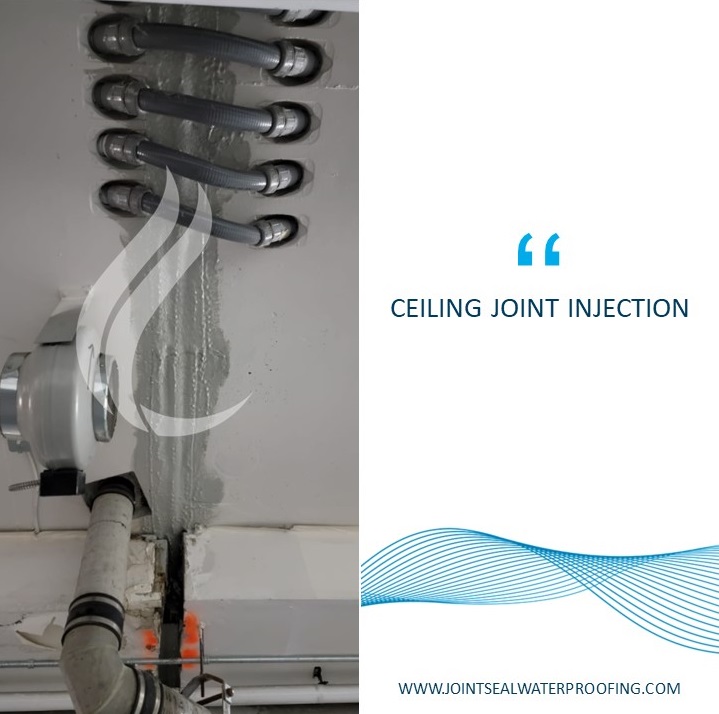
A ceiling expansion joint has to be injected from underneath, which is harder than filling one from the top because the material must be held in the joint while it goes in. At a high-rise on Dupont St in Toronto we did exactly that over two days, installing a second backer rod two inches below the first to form an injection chamber, sealing it with fibreglass, then injecting the joint and patching the ports.
Balcony soffits are the other overhead surface residents notice, because pieces land on the balcony below. The underside of a slab is where the concrete cover is thinnest and where salt-laden water reaches the steel first.
Our Repair Methods
How an Overhead Repair Is Built
The sequence runs from finding the loose concrete to protecting the finished surface. Each step is chosen so nothing has to be formed, shored or propped against the slab.
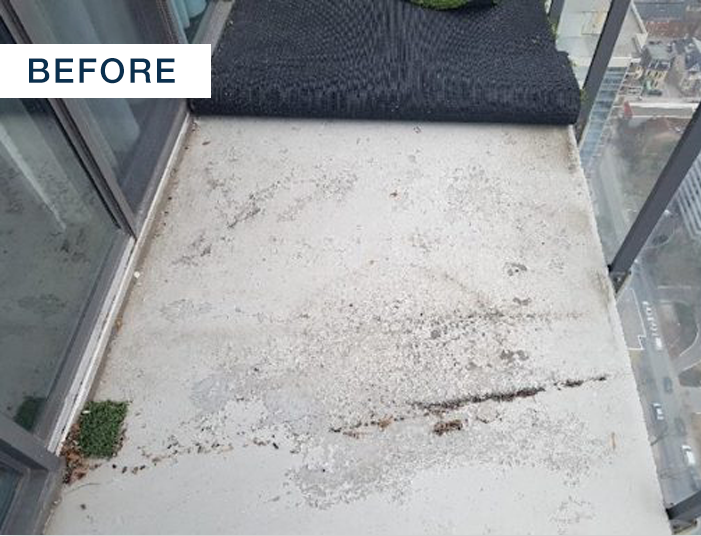
Sound and Remove
The ceiling is tapped with a specialised hammer or a metal rod and listened to. Solid concrete rings; delaminated concrete sounds hollow, and the hollow area is nearly always larger than the piece that has already come down.
All loose and unsound material is taken off until there is something solid to bond to. The sounding decides the area, so the scope comes out of the test rather than out of an estimate.
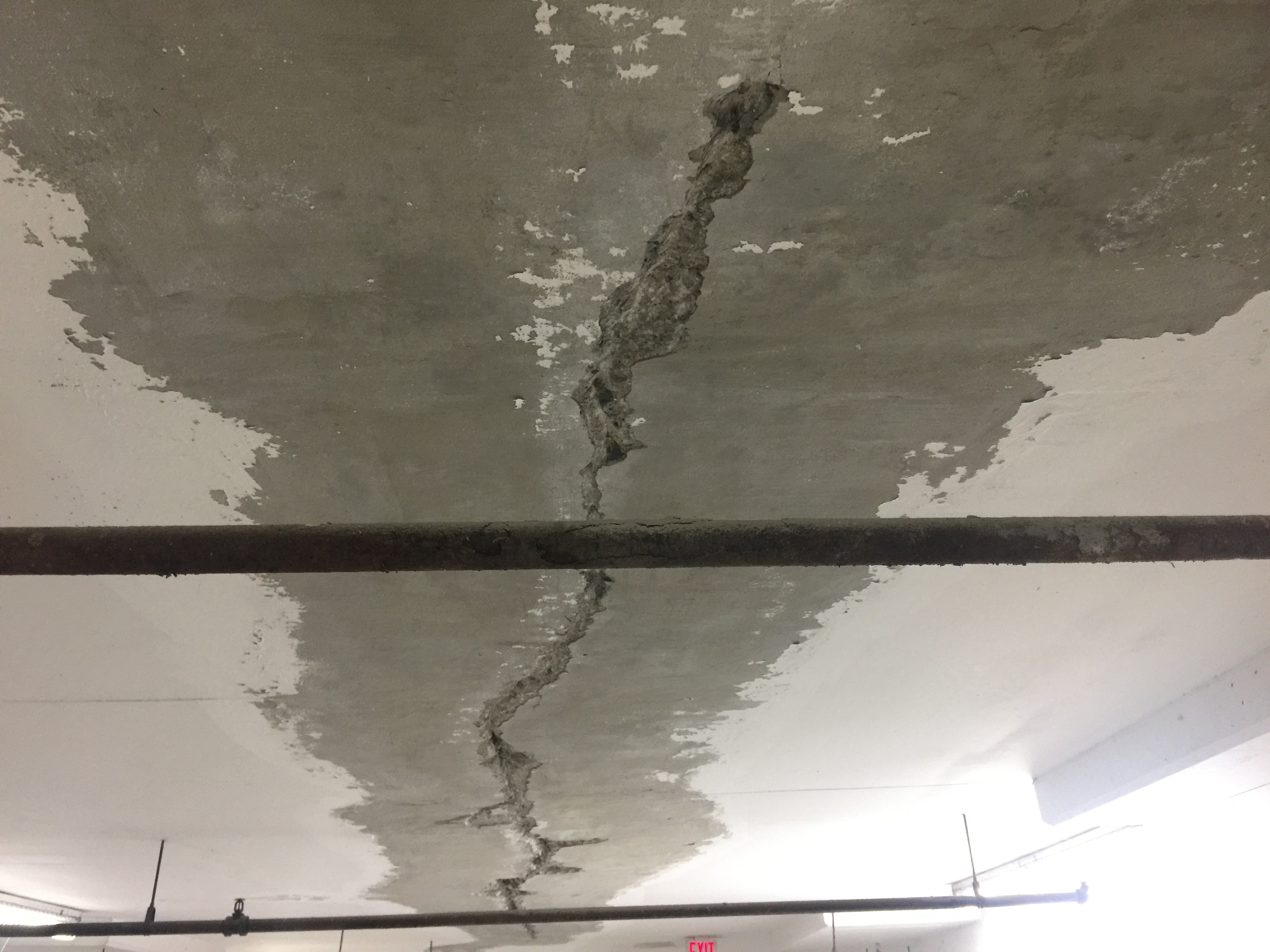
Treat the Exposed Steel
Where reinforcing steel is exposed it is cleaned and treated before anything goes over it. Patching over corroding rebar puts a new surface on an active problem, and the new patch comes off the same way the original cover did.
On engineered overhead work a corrosion-inhibiting treatment is applied to the prepared concrete first, and the adhesive goes over that. The order matters as much as the materials.
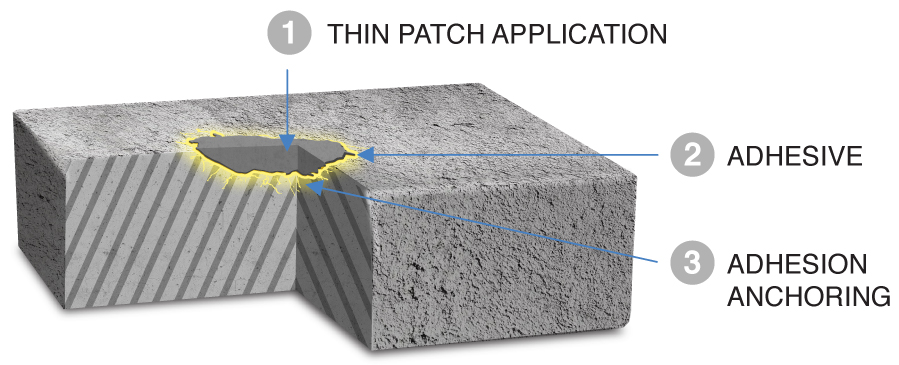
Bond and Build the Patch
Industrial-strength adhesive goes onto the prepared surface and the patch is built into it while the bond is live. Patches as thin as 5 mm hold overhead because the bond is chemical rather than mechanical, so the patch acts as part of the slab instead of as a separate layer hanging off it.
Conventional patch concrete has no strength below about two inches, so a contractor using it has to chip two inches out of the underside of a structural slab to fix a shallow spall. That is more demolition than repair, and on a soffit it also means forming.
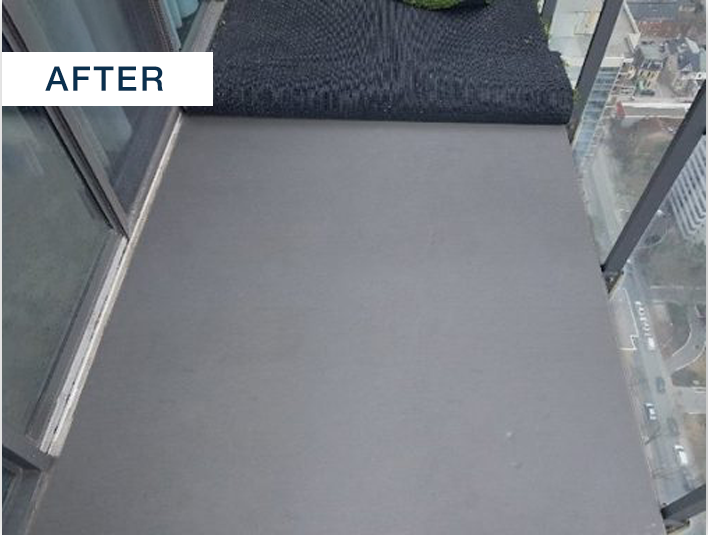
Reinforce and Coat
Where the slab needs strengthening beyond what the patch alone provides, woven fibreglass is run across the full ceiling rather than only over the patched areas. That produces one continuous reinforcement layer instead of stiff patches sitting in a softer field.
A waterproofing layer and a protective finish coat complete the assembly. The coating is the last layer of a system, applied after the loose material is removed, the steel treated and the profile rebuilt.
Common questions
Frequently asked questions
Why is concrete falling off my parking garage ceiling?
Concrete falls off a parking garage ceiling because water carrying road salt has reached the reinforcing steel, and the corroding steel expands and pushes the concrete cover off from behind. The spalling is the final stage of a process that began at the deck above. Treating the exposed steel is part of the repair; patching over it is not.
Can concrete be patched on a ceiling without forming or propping it?
Concrete can be patched overhead without formwork, using a structural patch material with a clay-like consistency that holds its shape against gravity while it cures. It does not drip, sag or change shape on a soffit. This is a property of the specific material — ordinary patch concrete will fall off a ceiling.
Can you paint or coat over a spalled ceiling instead of patching it?
Coating over spalled concrete without repairing it hides the symptom and does nothing about the corroding steel underneath, so the coating fails as the cover continues to break away. Any coating is the last layer of a system, applied after the loose material is removed, the steel treated and the profile rebuilt.
Is fibreglass reinforcement needed on every ceiling repair?
Fibreglass reinforcement is not needed on every ceiling repair, and it is specified where the slab needs strengthening beyond what the patch alone provides. Where it is used, running it across the entire ceiling rather than only over the patches produces one continuous reinforcement layer instead of stiff patches in a softer field.
Does the whole garage have to close for ceiling repairs?
A parking garage does not usually close for ceiling repair, because the work is staged in sections with cars moved out of the affected bays only. Patch materials cure in around four hours, so a section is rarely out of service long, and the coating over the top generally sets the schedule rather than the patch.
Can a ceiling expansion joint be injected from underneath?
Yes, and that is how the joint is sealed when there is no access from above. The difficulty is holding the material in the joint while it goes in, which we solve by installing a second backer rod two inches below the first to form an injection chamber and sealing it with fibreglass before injecting. At a high-rise on Dupont St in Toronto the repair ran over two days.
Is concrete coming off your ceiling or soffit?
We sound the slab, treat the exposed steel and rebuild the profile from below with patches as thin as 5 mm. No forming, no propping, and materials tested to MTO standards to last 25 years.