Project & Insights
Negative-side injection vs digging up the garage deck: which repair does your building need?
August 13, 2026
By Valeriy, Application Specialist, JSW Waterproofing
There are two ways to fix a leaking garage expansion joint. One takes two days and about ten parking spots. The other takes five months and removes everything on the deck above.
A leaking parking garage expansion joint can be repaired one of two ways: from the top by excavating the deck above it, or from inside the garage by injecting the joint from below. JSW’s interior method — negative-side injection — takes about two days on a 20-foot joint span, keeps the garage open, and runs roughly six to ten thousand dollars per span. A top-side excavation of the same joint is a five- to six-month project.
Both methods work. They just don’t cost the same, and they don’t disrupt the building the same way.
Which repair does your situation call for?
| Your situation | Likely approach | Why |
|---|---|---|
| One or two joints leaking, deck otherwise sound | Negative-side injection | Targeted, ~2 days, no excavation |
| Leak location unknown, drip 20 ft from any visible damage | Negative-side injection | The resin follows the water’s path back; no need to locate the breach first |
| Membrane failing across the whole deck, multiple leaks everywhere | Top-side excavation | Injection would be treating symptoms indefinitely |
| Landscaping or asphalt above being replaced anyway | Top-side excavation | Excavation cost is already being spent for other reasons |
| Budget must be spread across years | Negative-side injection | Each 20 ft joint is its own job; a dig can’t be staged |
| Playground or park above that can’t be lost for a season | Negative-side injection | Nothing on the deck is disturbed |
What does top-side excavation actually involve?
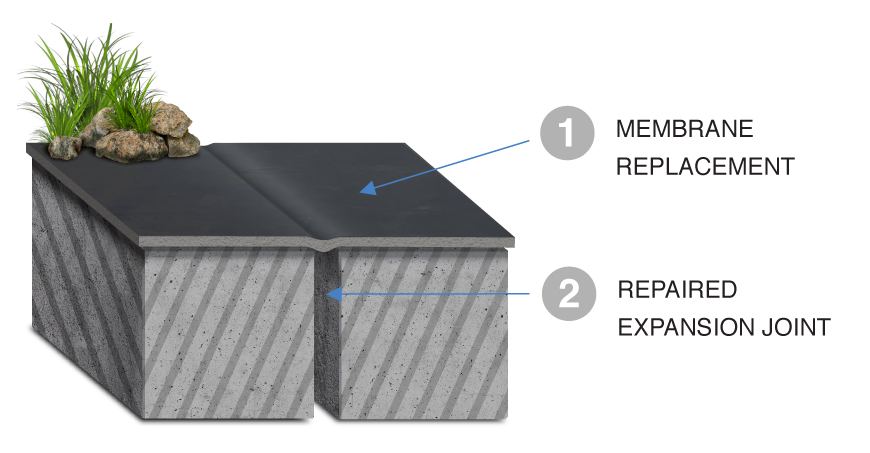
A top-side repair of a garage expansion joint means removing everything sitting on the deck to reach the waterproofing membrane. On a condo, that’s usually soil and grass, and often a playground, planters, or a park. Sometimes it’s asphalt walkways and drive lanes.
The sequence: excavate a large area, haul the material somewhere, blast the old membrane off the slab, apply a new membrane, then restore the surface — the sod, the traffic topping, the decorations, all of it.
The area gets excavated wide because nobody knows exactly where the failure is. Water travels under a debonded membrane before it exits at the joint, so the entry point can be 20 feet from the drip. You dig broad and hope you caught it.
All of that work — the digging and the putting-back — is roughly two-thirds of the total cost. Around 70 percent of the money goes to reaching the membrane and restoring what was on top, before anyone has waterproofed anything.
What does negative-side injection involve?
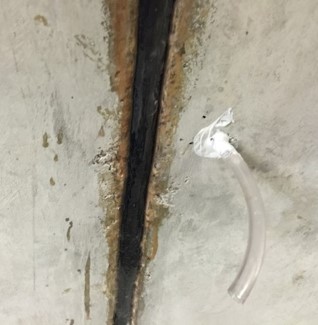
Negative-side injection repairs a garage expansion joint from inside the parking garage, working at the underside of the slab. Negative-side means the interior face — the opposite side from where the water is coming.
A form is set against the joint from below and a hydrophobic polyurethane resin is injected behind it. The resin is heavier than water and doesn’t react with it, so it displaces the water in the joint and pushes it back toward the point where it entered, then cures in place. Nothing on the deck above is touched.
We’ve explained how the resin behaves inside the joint separately — it’s the part engineers want detail on.
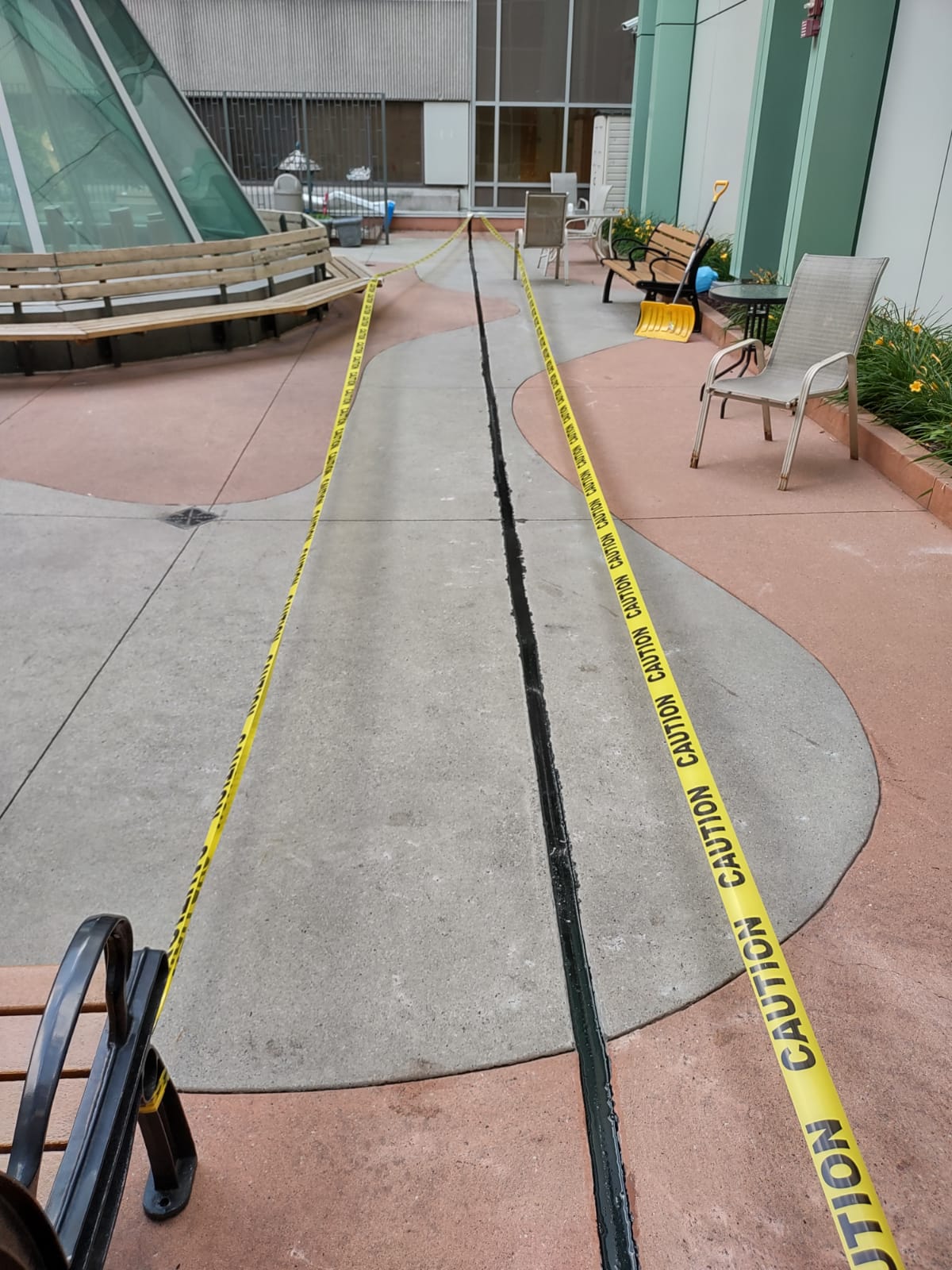
How disruptive is each one — two days versus five months
This is where the two approaches stop being comparable.
A negative-side injection runs on a 20-foot span, which is the length of a slab span and the smallest unit an expansion joint can sensibly be repaired in. You can’t fix a joint in short lengths; you do the whole run. Traffic management is straightforward. The garage stays open, roughly ten spots get vacated so nothing drips on them, and cars keep moving. The area is closed for about two days: injection and forming on day one, form removal and cosmetic cleanup on day two.
A top-side excavation on the same joint is a five- to six-month project with the area fully closed. The landscaping is gone. If there’s a playground, it’s gone for the season. Residents live beside heavy construction for most of a year.
| Negative-side injection | Top-side excavation | |
|---|---|---|
| Where the work happens | Inside the garage, at the ceiling | On the deck above |
| Typical duration | About 2 days per 20 ft joint | 5–6 months |
| Garage access | Stays open, ~10 spots vacated | Area fully closed |
| Landscaping above | Untouched | Removed and rebuilt |
| Share of cost that is excavation and restoration | None | About 70% |
| Can be repeated in stages | Yes | Not practically |
When is top-side excavation still the right call?
Top-side excavation makes sense when the membrane itself is at the end of its life across a broad area, not failing at one or two joints. If the deck is being replaced anyway, or the landscaping is due for redesign, the excavation cost is already being spent for other reasons and the waterproofing rides along with it.
The mistake is spending it on a localized joint leak. A single leaking joint doesn’t justify removing a park.
What does this mean for a reserve fund?
A negative-side injection is good news for a reserve fund, because it removes a large planned expenditure and the escalation that rides on it. Reserve fund studies carry Class F estimates, which is the roughest estimate class — costs get escalated forward from there. A line item sized for a full deck excavation escalates as a full deck excavation for as long as it sits in the study.
Injection also stages well. Because each joint is its own 20-foot job, work can be spread across budget years rather than landing as one number.
There’s a real example of a board weighing exactly this, where the two proposals were $4 million and $500,000, and what the consulting engineer conceded about his own method.
What should you do before budgeting either one?
Find out where the water is actually entering. The repair method should follow the diagnosis, not the other way around, and a drip in the ceiling doesn’t tell you where the membrane failed.
If you have a joint leaking in your garage, book an inspection and we’ll tell you what caused it and which of these two approaches your building actually needs.
Book a JSW inspection · More on expansion joint repair and parking garage repair
Common questions
Frequently asked questions
Is negative-side injection as effective as digging up the deck?
In practice the success rates are comparable, and a consulting engineer on one GTA condo board conceded that a top-side dig is not 100 percent effective either — because nobody knows every place the membrane and joint have cracked. Injection also addresses the leak directly at its exit point rather than working across a broad excavated area.
How long does the garage have to close for an injection repair?
The garage does not close. A 20-foot joint span typically requires about ten parking spots to be vacated for roughly two days so nothing gets dripped on, while traffic continues normally. A top-side excavation on the same joint usually means the area is fully closed for five to six months.
Why does excavation cost so much more than injection?
About 70 percent of a top-side repair is not waterproofing at all. It is excavating a wide area, hauling the material away, blasting off the old membrane, then restoring the sod, traffic topping, playground, or asphalt that was on top. Injection skips all of that by working from inside the garage.
Can expansion joint injection be done in stages across budget years?
Yes, and this is one of its advantages for a reserve fund. Each joint is a separate 20-foot span, so a building can address the worst joints this year and others later. A top-side excavation does not stage the same way — the deck is opened once and has to be closed back up.
When is digging up the deck the better option?
Top-side excavation makes sense when the deck membrane is failing broadly rather than at one or two joints, or when the landscaping above is being replaced anyway. If the excavation cost is already being spent for other reasons, redoing the membrane at the same time is sensible. For a localized joint leak, it rarely is.
Related services & repair types