Project & Insights
$5 a Foot or $300 a Foot: What a Crack in Your Asphalt Actually Costs
August 13, 2026
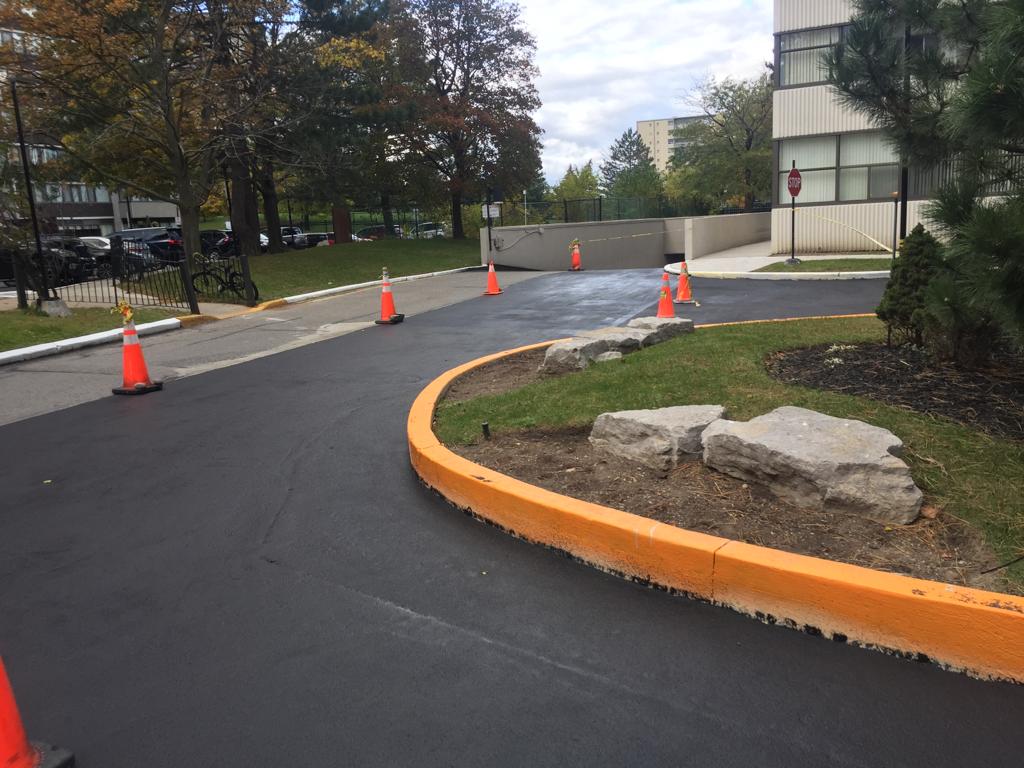
Valeriy — Application Specialist, Joint Seal Waterproofing — fifteen years injecting expansion joints across the GTA
Sealing a crack in the asphalt over a parking garage deck costs in the range of $5 a foot. Letting that crack work through to the membrane and concrete underneath puts you around $300 a foot. Same crack, same building, roughly sixty times the cost — and the only variable is how long it was left open.
Those are order-of-magnitude figures from GTA condo work. The ratio is the point.
Why asphalt over a deck cracks
Asphalt is excellent at cracking. It was never really meant to sit over a hard structural surface, and on a condo property it’s doing exactly that — walkways, drive lanes, and visitor parking laid over a garage deck with membrane and concrete beneath.
Toronto freeze-thaw opens those cracks a little further every winter. That much is expected.
What actually does the damage
A crack in asphalt over a garage deck causes damage below because tires turn trapped water into a pressure hammer.
Water sits in the crack. A car rolls over it. The tire pressurizes that water instantly and it has nowhere to go — a hydraulic pocket. Every vehicle repeats the impact.
That pounding works both directions. Upward, it breaks the asphalt apart from below, turning a crack into a pothole and then a hard knife edge. Downward, it hammers the waterproofing membrane under the asphalt until that fails too. Then water reaches the concrete, and the concrete starts taking damage of its own.
The crack in the surface isn’t the problem. It’s the delivery mechanism.
Why the cost jumps so far
Sealing an asphalt crack is cheap because it’s surface work. Injecting any soft, flexible material into the crack stops the hydraulic pocketing — that’s genuinely all it needs. No excavation, no membrane, no closure worth mentioning.
Once the membrane below has failed, the repair changes character. Now you’re removing asphalt, replacing membrane, repairing concrete, and restoring the surface. That’s full top-side work, where roughly 70 percent of the cost is digging and putting things back rather than waterproofing.
Water flowing through concrete doesn’t hold steady either. Flow creates a void, and a void invites more flow, so the damage compounds instead of sitting still.
The connection to your expansion joints
Expansion joints don’t leak for no reason. Something above them broke the membrane.
Where a joint runs near asphalt, cracked asphalt is a leading suspect. So when we find a leaking joint under a paved area, the advice is the same every time: seal the asphalt as well. Otherwise the source keeps working while the symptom gets treated.
What to do this spring
Walk the paved areas over your garage deck after the thaw, when cracks are widest and the winter’s damage is fresh. Note every crack in asphalt that sits over structure — not the lot at grade, the paving over the deck.
Then get it sealed before summer traffic spends three months pumping water through it.
If you’re not sure which paved areas sit over structure, that’s worth establishing once. Book an inspection and we’ll walk it with you.
More on traffic surface repair and crack repair, or read why garage expansion joints leak.
See the work. Examples of traffic surface and asphalt-area repairs: Ramp Crack Repair \u2013 Lasting Waterproofing Solutions · Trench Drain Repair and Ramp Coating - Durable Waterproofing Results. More in our projects.
Related: traffic toppings and deck repair · podium deck waterproofing · expansion joint repair · overhead expansion joint injection · documented projects · common questions
Common questions
Frequently asked questions
How much does it cost to seal a crack in asphalt over a garage deck?
Crack sealing over a GTA condo deck runs in the range of five dollars a foot, because it is surface work with no excavation. Repairing the membrane and concrete after the crack has worked through runs in the range of three hundred dollars a foot. Both are order-of-magnitude figures, not quotes.
What kind of material is used to seal asphalt cracks over a deck?
A soft, flexible material injected into the crack, which stops water sitting in it and eliminates the hydraulic pocketing that pounds the membrane below. The material needs to stay flexible through freeze-thaw movement rather than setting rigid and cracking again at the same line.
Is cracked asphalt connected to leaking expansion joints below?
Often, yes. Expansion joints do not leak without something above breaking the membrane first, and where a joint runs near paved areas, cracked asphalt is a common cause. Sealing the joint without sealing the asphalt treats the symptom while the source keeps working.
Why does cracked asphalt damage the waterproofing membrane underneath?
Water collects in the crack, and each passing tire pressurizes it into a hydraulic pocket with nowhere to escape. That repeated impact breaks the asphalt apart from below and hammers the membrane beneath it. The crack itself is not the damage — it is the route the pressure travels.
When is the best time to inspect asphalt over a parking garage?
After the spring thaw. Freeze-thaw cycling over a Toronto winter opens cracks to their widest and the damage is fresh and visible. Sealing before the summer means traffic is not pumping water through open cracks for the busiest months of the year.
Why does excavation cost so much more than injection?
About 70 percent of a top-side repair is not waterproofing at all. It is excavating a wide area, hauling the material away, blasting off the old membrane, then restoring the sod, traffic topping, playground, or asphalt that was on top. Injection skips all of that by working from inside the garage.
Related services & repair types