
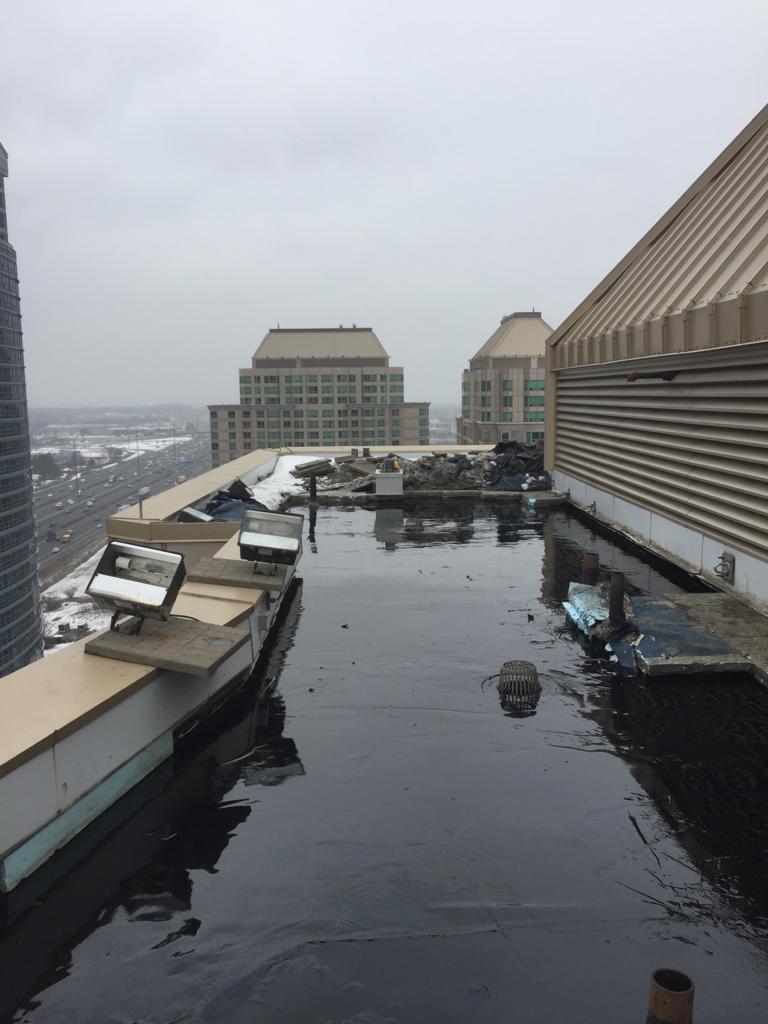
Podium Decks · Toronto & GTA
Podium Deck Waterproofing
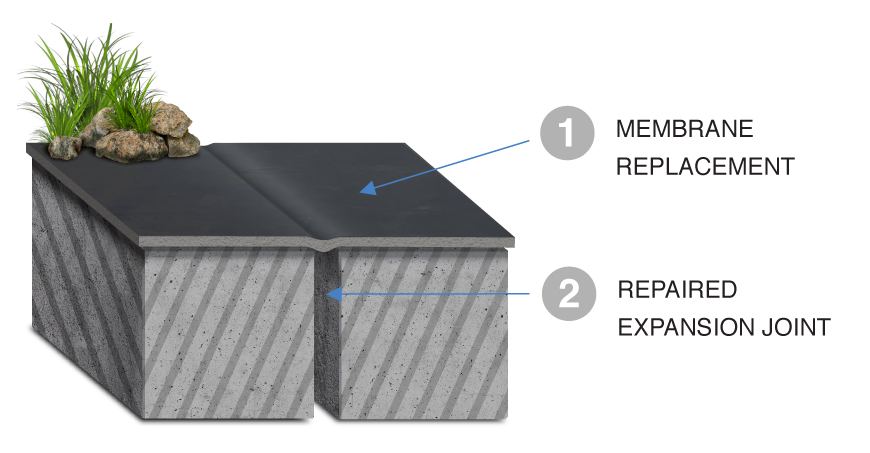
A podium deck is the landscaped or paved slab over an underground parking garage. When its membrane fails, the water shows up on a garage ceiling below, and the traditional fix is to dig up everything sitting on top. We repair the joint from underneath instead, from inside the garage.
- Plaza & Landscaped Decks
- Negative-Side Injection
- Expansion Joint Leaks
- Roof Planters
- Asphalt Over Deck
- No Excavation
The Most Expensive Membrane in a High-Rise
A podium deck carries everything residents actually see: soil, sod, pavers, planters, a play area, asphalt, sometimes the driveway a fire truck has to reach. The waterproofing membrane sits underneath all of it, on top of the garage slab, and it is the one layer nobody can look at.
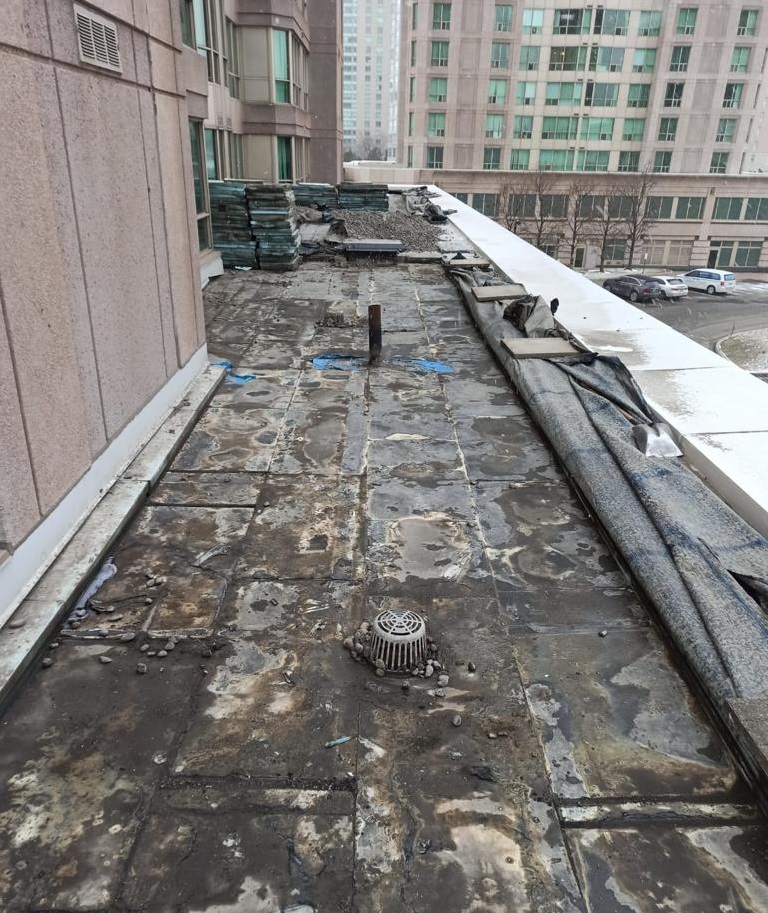
That is why a podium deck failure is the most expensive waterproofing failure in a high-rise. The membrane is a small part of the bill. Roughly 70 percent of a top-side repair is excavating a wide area, hauling the material away, blasting off the old membrane, then rebuilding the sod, traffic topping, playground or asphalt that was on top.
Where the Water Gets In, and Where It Comes Out
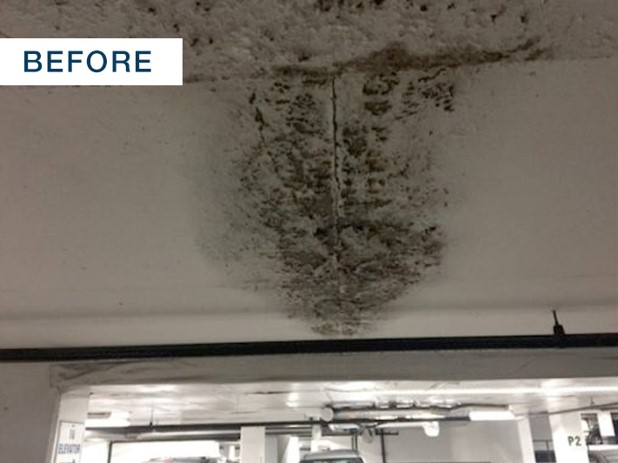
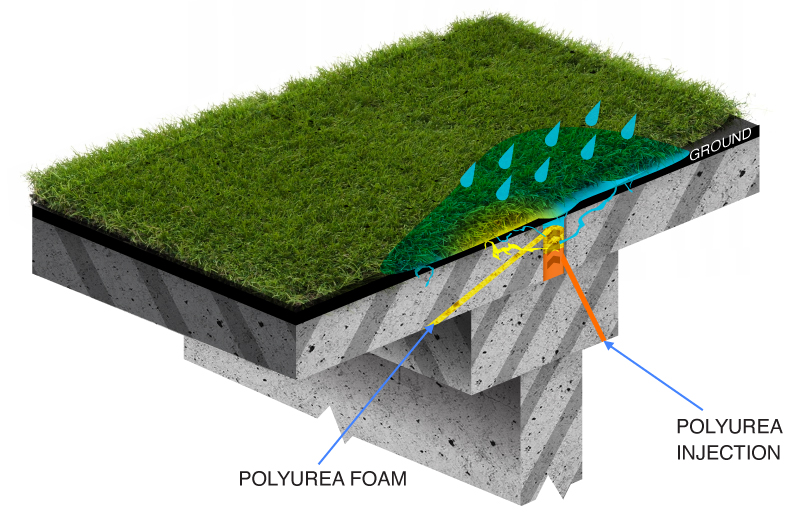
Water that gets under a debonded deck membrane does not drop straight through. It runs along the concrete slab until it reaches an expansion joint and exits there. On one downtown Toronto garage we measured roughly 20 feet between the crack in the membrane and the visible drip inside.
That distance is why digging directly above a drip so often misses the failure, and why the leaking joint is usually the exit rather than the cause. Cracked asphalt on the deck above is a common source: water sits in the crack, and every passing tire pressurises it into a hydraulic pocket that hammers the membrane below.
Planters, Asphalt and Driveways on the Deck
Roof planters and podium landscaping are recurring work for us, because a planter is a permanently wet box sitting on a deck. At a mid-rise residential building on Stewart Street in Oakville the planters had cracked and were letting moisture into the parking garage below, deteriorating concrete as it went. We removed the planter soil, filled the cracks, primed and sprayed a waterproofing membrane before the soil went back.
Asphalt over a deck can often be rehabilitated in place rather than torn out. At a high-rise residential building on Antibes Drive in Toronto we pressure-washed the exterior parking deck and driveway, filled the existing cracks with cold-applied polyurea, primed with a water-based epoxy primer, then installed two membrane layers with an aluminum oxide broadcast — around 30,000 SQF in the first stage, with no removal and repaving.
Our Repair Methods
Repairing a Podium Deck From Underneath
Almost all of this work is carried out from inside the parking garage. The landscaping stays where it is, the garage stays open, and the joint is filled through ports drilled from below.
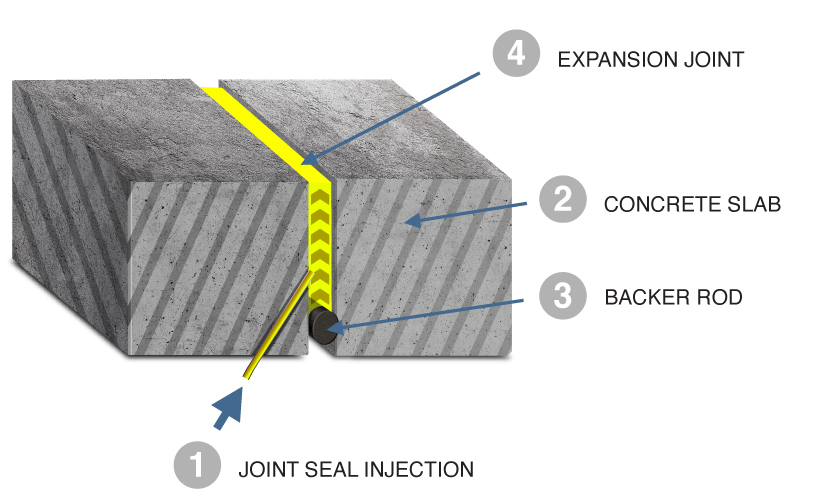
Negative-Side Joint Injection
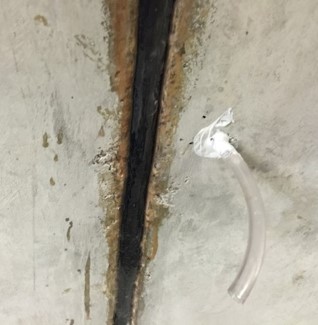
Injection ports are drilled into the joint from inside the garage and a hydrophobic resin is pumped in. Joint Seal Flex does not react with water and is heavier than it, so the resin settles beneath whatever is standing in the joint and pushes it ahead as more material goes in.
The resin then follows the path of least resistance, which is the route the water was already using, so it travels back toward the entry point on its own. Nobody has to locate the crack in the membrane first. A 20-foot span takes about two days and needs roughly ten parking spots vacated rather than a closure.
Joints Behind Ledge Beams
Where a top-slab joint sits above a ledge beam it cannot be reached directly. We drill through close to 40 centimetres of beam concrete on a guided rail, calculated so the port lands between the slabs at the top of the joint opening.
The detail matters beyond the leak. Garage slabs bear freely on ledge beams, and a joint dripping onto a beam keeps that concrete saturated year-round, which is a structural concern rather than a cosmetic one.
Sealing the Deck Surface Above
A joint does not leak until something above has broken the membrane, so where cracked asphalt or paving is the source we seal it as part of the same programme. A soft, flexible material is injected into the crack so water cannot sit in it and no hydraulic pocket forms under the next tire.
Crack sealing over a deck runs in the range of five dollars a foot, because it is surface work with no excavation. Repairing the membrane and concrete after the crack has worked through runs in the range of three hundred dollars a foot. Both are order-of-magnitude figures, not quotes.
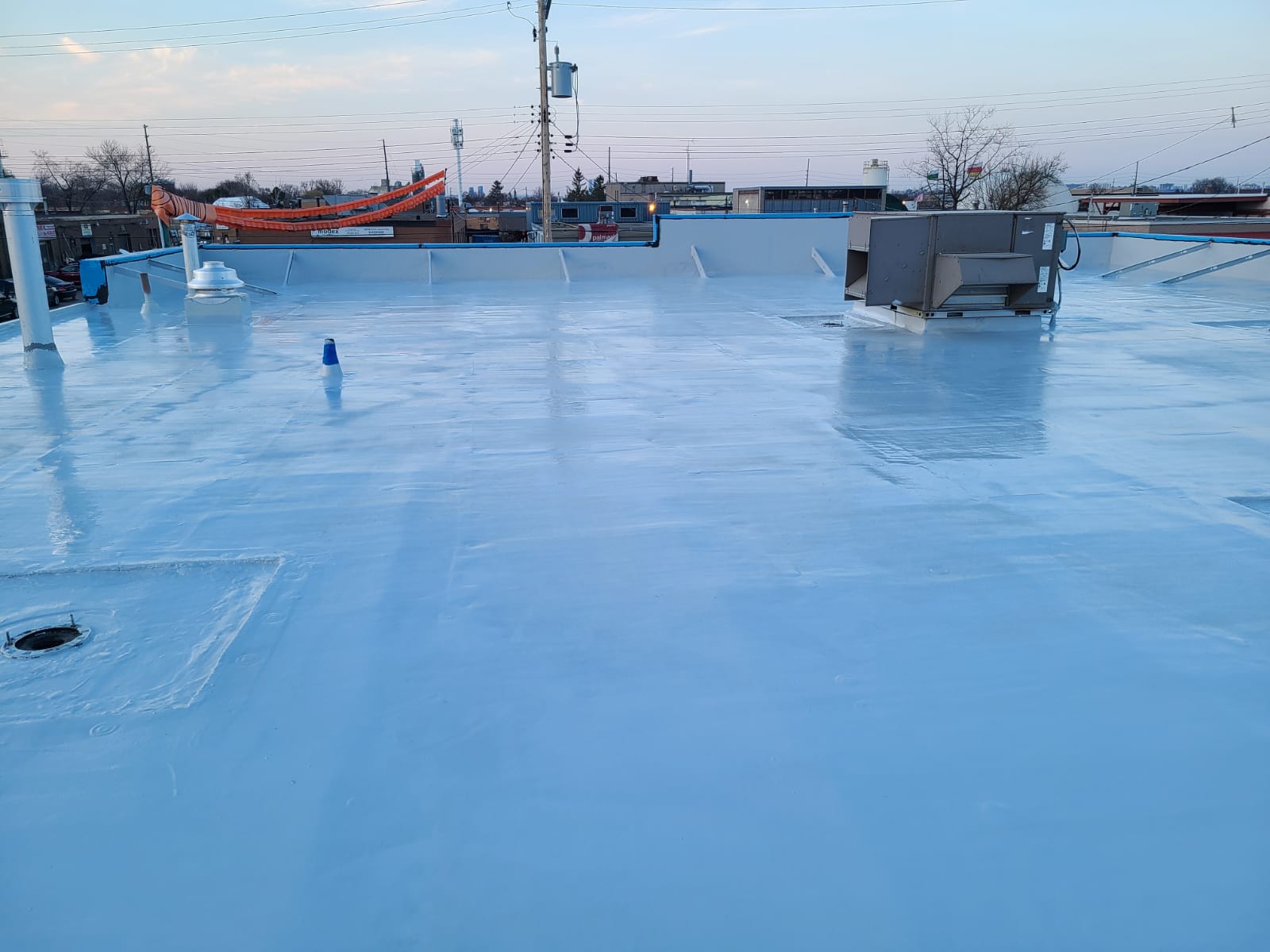
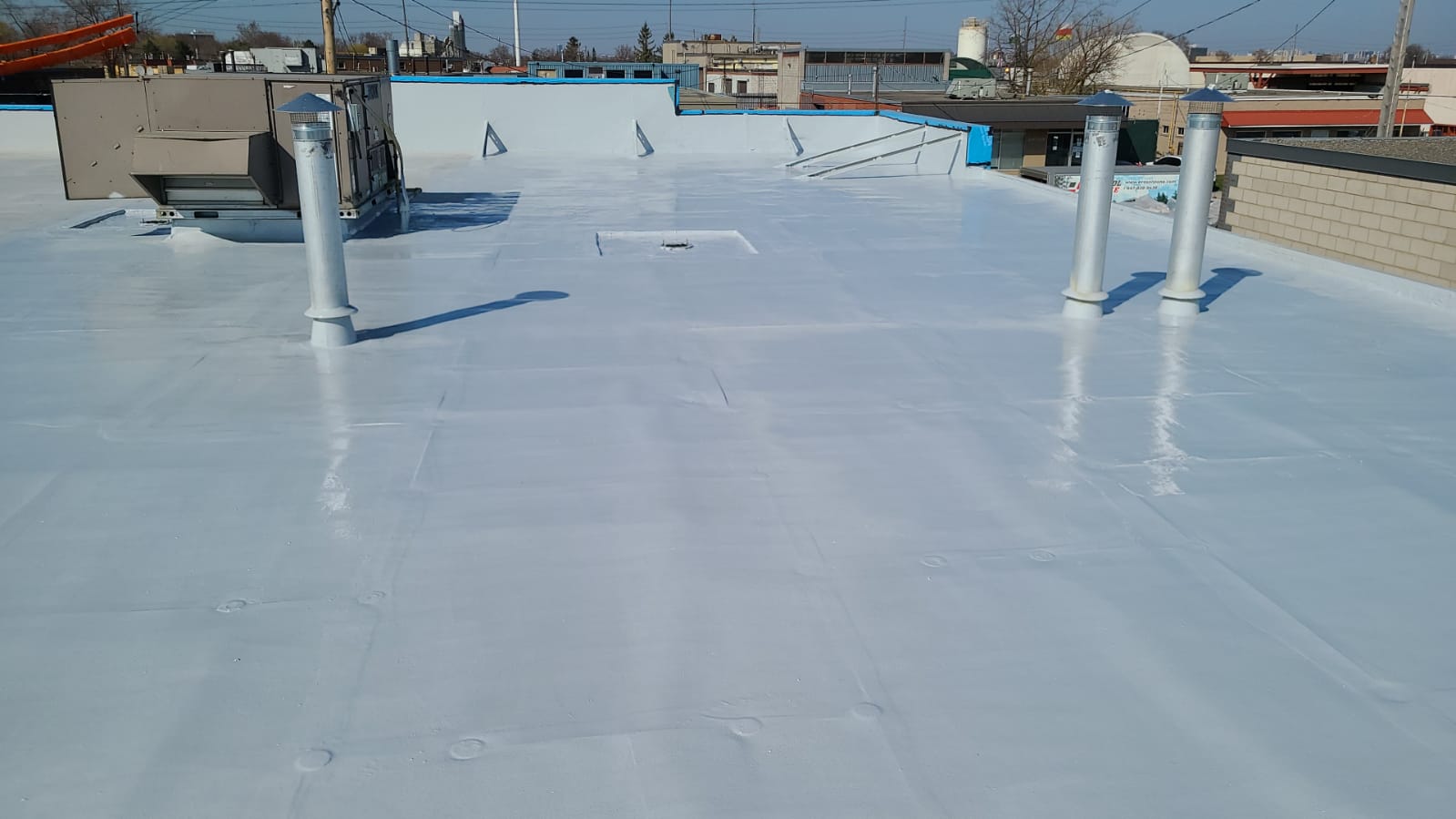
Membranes Where the Deck Is Already Open
When a deck is being rebuilt anyway, a planter is emptied, or asphalt is being overlaid rather than replaced, we spray a seamless polyurea-based membrane over the prepared surface. It is cold-applied, cures fast, and can go down at temperatures as low as -5°C.
On trafficked areas the top coat takes an aluminum oxide broadcast, which keeps the surface skid-resistant and does not polish under daily wear. Our materials are rated to Ministry of Transportation Ontario standards for a service life of about 25 years.
Common questions
Frequently asked questions
Can a leaking garage expansion joint be repaired without digging up the landscaping above it?
In most cases, yes. Negative-side injection seals the joint from inside the parking garage, with no excavation of the soil, playground, or asphalt on the deck above. A typical 20-foot joint span takes about two days and requires roughly ten parking spots to be vacated, rather than a full closure.
Why does the leak appear in a different place than where the water gets in?
Water that gets under a debonded deck membrane runs along the concrete slab until it reaches the expansion joint, then exits there. On one downtown Toronto garage we measured roughly 20 feet between the crack in the membrane and the visible drip inside. This is why digging directly above the drip often misses the failure.
Why does excavation cost so much more than injection?
About 70 percent of a top-side repair is not waterproofing at all. It is excavating a wide area, hauling the material away, blasting off the old membrane, then restoring the sod, traffic topping, playground, or asphalt that was on top. Injection skips all of that by working from inside the garage.
Is cracked asphalt connected to leaking expansion joints below?
Often, yes. Expansion joints do not leak without something above breaking the membrane first, and where a joint runs near paved areas, cracked asphalt is a common cause. Sealing the joint without sealing the asphalt treats the symptom while the source keeps working.
What is the difference between a top-slab and a mid-slab expansion joint?
A top-slab joint sits at the ceiling of P1, under the deck that carries landscaping or asphalt at grade. A mid-slab joint sits between parking levels — the floor of P1 and the ceiling of P2 — with nothing buried above it. The difference determines how the joint can be accessed and repaired.
When is digging up the deck the better option?
Top-side excavation makes sense when the deck membrane is failing broadly rather than at one or two joints, or when the landscaping above is being replaced anyway. If the excavation cost is already being spent for other reasons, redoing the membrane at the same time is sensible. For a localized joint leak, it rarely is.
Water coming through your podium deck?
We inject podium deck expansion joints from inside the parking garage and seal the deck surface above, so the landscaping stays where it is. Assessments and quotes are free.