Project & Insights
Can you use crystalline waterproofing in an elevator pit?
August 18, 2026
By Boris Gopka, Owner, JSW Waterproofing — elevator pit waterproofing across Toronto and the GTA
Crystalline waterproofing is the wrong system for an elevator pit, and the clearest argument against it sits in the material’s own application requirements. Crystalline needs a substrate with no oil in it, ground open to its pores, kept saturated for days, then left to cure before anything else happens in the shaft. A working elevator pit is oil-soaked, wet at the wrong times, vibrating, and has to go back into service fast. We use a polyurea or polyaspartic membrane instead.
That is not an attack on the material. Crystalline is very good on the structures it was made for. A pit is not one of them.
What does crystalline waterproofing actually do?
Crystalline waterproofing is a cementitious treatment that penetrates concrete and reacts with moisture and free lime to grow insoluble crystals inside the pores and capillaries, blocking water from passing through. It becomes part of the slab rather than a layer sitting on top of it. It also stays reactive: if water finds a new path years later, the chemistry restarts and seals that too.
The self-sealing is real, and it is why engineers specify it. The published limit is hairline cracks up to around 0.4 mm (0.015”), and static ones. Both halves of that sentence decide whether it belongs in your building.
Why is an elevator pit different from a foundation wall?
An elevator pit has to keep water out and keep oil in, and the second job is the one crystalline cannot do. You are not only trying to keep the outside from getting in. You are trying to keep the inside from getting out at the same time, and crystalline only does one of those.
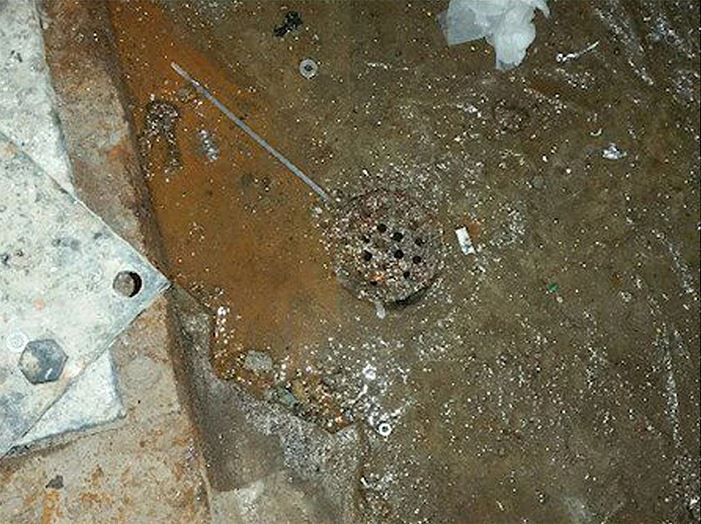
Hydraulic oil off the elevator equipment lands on that floor for years. It is aggressive to concrete, and you cannot really clean concrete once it has gone in, because the oil is absorbed into the slab rather than sitting on it. On a mid-rise on Elm St in Toronto in 2025 we opened a pit that had accumulated both oil and water, with active leaks running at the cold joints. All of it had to come out mechanically before a drop of coating went down.
A membrane puts a barrier over the concrete and works in both directions. Crystalline treats the concrete and then leaves its surface exposed to whatever the equipment drips onto it.
Can you coat over crystalline waterproofing?
You cannot put a protective membrane over crystalline waterproofing, and that alone rules it out of an elevator pit. Crystalline is not a coating base. The manufacturers’ own answer to its rigidity is a flexible latex topping from the same product family, which is a movement layer rather than oil and chemical protection.
In a pit that leaves you choosing between waterproofing the concrete and protecting the concrete. There is no good reason to pick one.
Does crystalline bridge a moving crack?
Crystalline waterproofing does not bridge a moving crack, because the crystals are brittle. It is sort of like glass. A pit wall in a working shaft moves every time the car runs, so a crack that opens and closes with that movement keeps reopening. Crystalline does grow back into it over time, but it is chasing the crack rather than covering it.
Crack bridging is a requirement of any coating in this application, and it is worth spelling out what it means. When concrete develops microcracks and you have something elastic stretched across them, the coating keeps protecting the concrete instead of letting water and debris get down into a microcrack and work it open into a much larger one. A soft material does that. A crystal cannot.
Why does crystalline struggle at a cold joint?
Crystalline performs badly at a cold joint because a cold joint moves and crystalline has no give in it. A cold joint is the seam formed where fresh concrete was poured against concrete that had already begun to set, and in an elevator pit it runs the entire floor-to-wall perimeter. That seam is where most pits leak, which is why how a concrete elevator pit gets waterproofed is largely a story about one joint.
The one place we used crystalline ourselves was patching on parking garages, a long time ago. Those attempts went bad quickly and we stopped. That experience is a good part of why it does not go near a shaft now.
What do we use in an elevator pit instead?
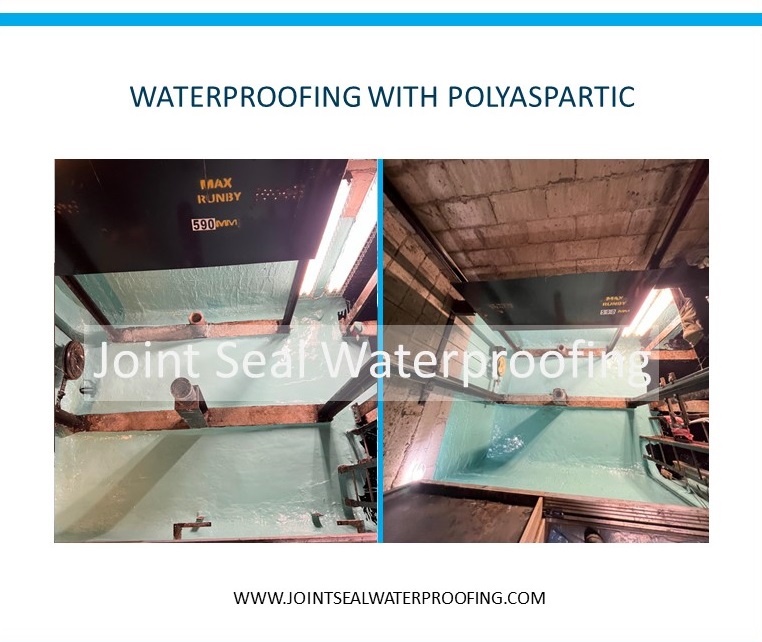
Our elevator pit waterproofing starts at the cold joint. We chip it open, rebuild it as a continuous patch cut at a 45-degree chamfer around the full perimeter, then run a polyurea or polyaspartic membrane across the floor and up the walls as an upturn, one to two feet as standard and higher where water is coming in high.
That system cures in about four hours, moves with the substrate, bonds mechanically to the concrete, can be patched locally years later without redoing the pit, and takes the oil. On a mid-rise on Grandview Way in North York in 2022 we ran exactly that sequence: cracks chipped and filled, parging to get an even surface, a continuous 45-degree cold-joint patch around the whole pit, then a pigmented polyaspartic over the floor and part of the wall.
The pigment is not decoration. A turquoise floor against white walls means any new crack, stain or seepage shows up immediately instead of hiding in grey concrete.
Crystalline against a membrane, in a pit
| Crystalline | Polyurea / polyaspartic membrane | |
|---|---|---|
| How it works | Grows crystals inside the concrete pores | Flexible barrier over the surface |
| Cure before the next step | 24 hours minimum, after days of hydration | About 4 hours |
| Cracks handled | Static hairline, to about 0.4 mm | Bridges movement, including working cracks |
| Cold joints | Poor — no movement tolerance | Rebuilt, then covered |
| Vibration | Brittle, cracks reopen | Designed for it |
| Overcoating | Not with a protective membrane | Can be topped and pigmented |
| Local repair | Usually needs the area re-treated | Patch the spot |
| Oil resistance | Concrete left exposed | Barrier over the slab |
| Surface prep | Ground open to the pores, oil-free, kept saturated | Ground and cleaned of contaminants |
Where is crystalline the right product?
Crystalline waterproofing is a good choice on damp below-grade concrete where nothing is going over it: tanks, foundation walls, structures that stay still and stay clean. It is beautiful material in that setting and it is highly effective on damp walls, as long as you are not planning to apply any kind of membrane. The conditions it needs are the opposite of the conditions inside a working elevator pit.
If crystalline has already been specified for your pit, that is a conversation worth having before the job is tendered rather than after the first invoice. We will walk the pit with you and put in writing what the conditions there actually allow — the oil load, the state of the cold joint, and how long the car would be out.
Book a JSW inspection · More on elevator pit waterproofing and polyurea membranes
Common questions
Frequently asked questions
Our engineer specified crystalline waterproofing for the elevator pit — what should we do?
Ask the engineer to confirm the specification against the pit's actual conditions before the work goes out to tender. Crystalline waterproofing needs a substrate free of oil and days of controlled hydration, and it cannot be overcoated with a protective membrane. An elevator pit is oil-contaminated and needs that oil protection. The specification is often carried across from below-grade or transportation work, where those conditions are met.
Can you put a protective membrane over crystalline waterproofing?
Crystalline waterproofing is not a base for a protective membrane, and in an elevator pit that matters because the concrete needs protecting from hydraulic oil as well as from water. The manufacturers' answer to crystalline's rigidity is a flexible latex topping from their own product family, which adds movement tolerance rather than oil and chemical resistance. The concrete itself is left exposed to what the elevator equipment sheds.
Does crystalline waterproofing bridge cracks?
Crystalline waterproofing does not bridge cracks. It seals static hairline cracks up to around 0.4 mm by growing crystals into them, and the crystals are brittle, so a crack that keeps moving keeps reopening. In an elevator shaft the wall moves every time the car runs. That is why a flexible membrane that stretches across a microcrack works there and a rigid treatment that fills it does not.
Is crystalline waterproofing cheaper than a membrane in an elevator pit?
Crystalline waterproofing rarely works out cheaper in an elevator pit once labour is counted. It needs the concrete ground open to its pores rather than to the ordinary profile a membrane bonds to, then kept hydrated for days afterwards. That is a much heavier prep bill, and the elevator is out of service for the whole sequence instead of a single day.
Why is there oil in the water in our elevator pit?
Oil in an elevator pit comes from the elevator equipment itself, most often hydraulic oil, and it accumulates on the pit floor over years. It matters for two reasons: oil is heavier than water, so it settles and clogs the bottom half of the pit drain, and it soaks deep into the concrete pores and has to be ground out before any coating will bond.
Related services & repair types