Project & Insights
How Much Does It Cost to Repair One Garage Expansion Joint?
August 22, 2026
By Valeriy, Application Specialist, JSW Waterproofing
The number most property managers have in their head for a garage joint repair came from a deck-replacement proposal. One joint is a much smaller conversation than that.
One garage expansion joint span repaired by negative-side injection runs in the range of six to ten thousand dollars in the GTA. The unit is a 20-foot slab span, because that is the smallest length of expansion joint that can sensibly be repaired. If a proposal on your desk reads in the hundreds of thousands, it is covering many spans, not one.
That is the whole answer. The useful part is what sits behind the range.
What is the unit being priced?
A garage expansion joint is priced by the slab span, not by the linear foot of leak. A span is typically 20 feet, and the entire span gets repaired.
The reason is movement. An expansion joint exists so the two slabs either side of it can open and close with temperature, and it moves as a single unit along its full length. Repair a five-foot stretch and the remaining fifteen feet stay in their existing condition while the movement concentrates somewhere along the untouched run. You have not shortened the job. You have relocated it.
What is included in six to ten thousand dollars?
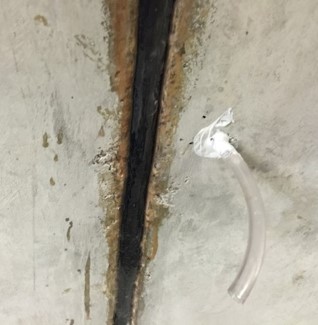
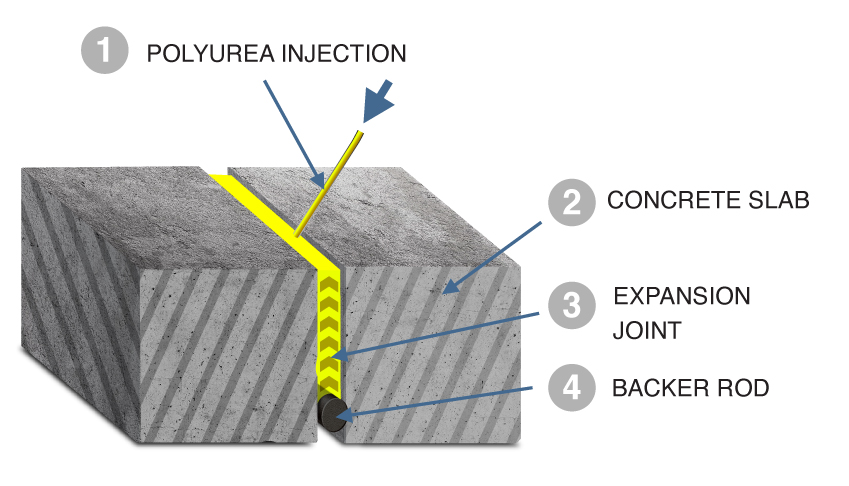
The range covers a two-day negative-side injection on one span: setting the form or chamber at the underside of the joint, drilling and installing injection ports, injecting Joint Seal Flex, then stripping the forms and finishing the area cosmetically on day two.
It also covers the traffic management, which is modest. About ten parking spots get vacated so nothing is dripped on. The garage stays open and cars keep moving through. Nothing on the deck above is touched, which is the reason the number is what it is.
What is not included in that price?
Anything happening above the slab. Sealing the asphalt, replacing the membrane, or repairing concrete around the joint are separate lines with separate numbers, and a proposal that folds them in silently is the one worth reading twice. The materials themselves are tested to MTO standards for a service life in the region of 25 years, which is a material service-life rating rather than a statement about any particular building.
What moves the number up or down?
Four things, in rough order of impact.
Access. A joint with both faces exposed — the floor of P1, ceiling of P2 — is cheaper, because material can be gravity-fed from above and mechanical joint profiles can be installed directly. A joint buried under soil or asphalt has one workable face.
Condition of the concrete around it. If the joint edges are spalled or the ledge beam below has been wet for years, concrete repair is a separate scope on a separate line.
Number of spans. Mobilisation is spread across whatever is done in one visit, so five spans in one trip price better per span than five single visits.
Whether the source above is being addressed. Sealing the asphalt crack that broke the membrane is cheap surface work — around five dollars a foot — and skipping it is the most common false economy we see.
Why is a top-side quote eight times higher?
Because it is a different scope. A top-side repair includes removing everything on the deck, stripping the membrane and restoring the surface, and roughly 70 percent of that cost is excavation and restoration rather than waterproofing. Injection skips all of it.
It is a scope difference, not a quality difference, and boards should ask what physical work each price buys rather than assuming the cheaper number is thinner. We laid the two approaches side by side in negative-side injection versus digging up the deck.
When does the cheap option stop being available?
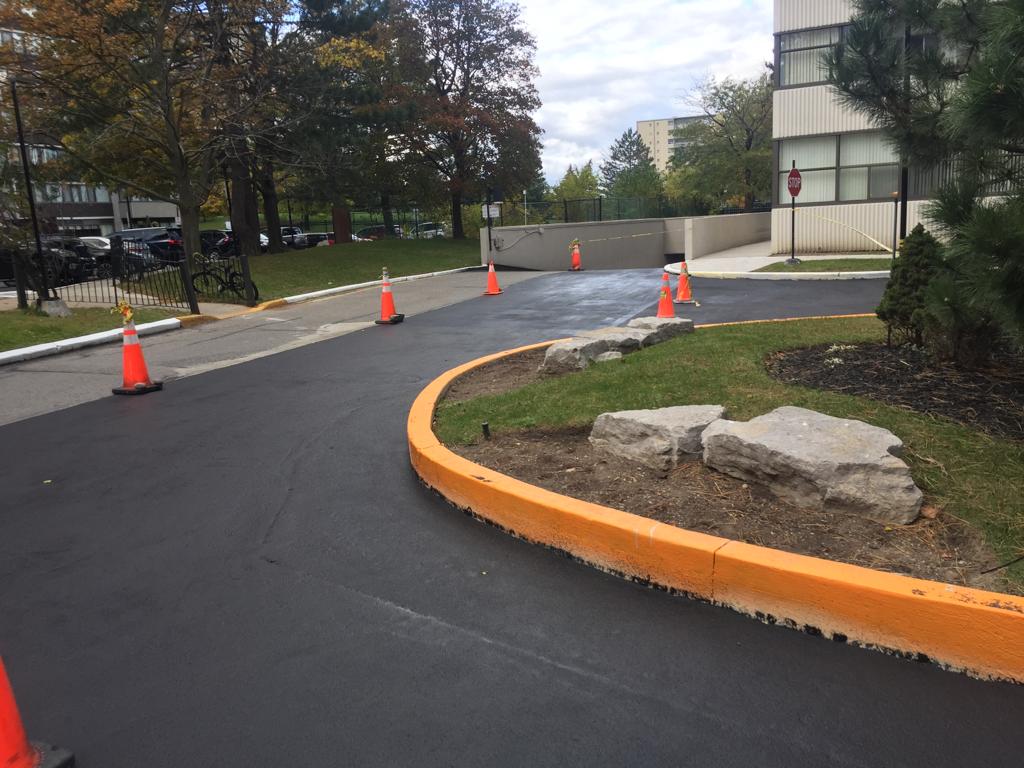
When there is nothing to reach the joint from. On a high-rise residential building on Lee Centre Drive in Scarborough, a section of exterior expansion joint could not be reached from the garage below, so we cut the asphalt surface to access 20 feet of joint, exposed and cleaned part of the podium roof, filled the cracks around the joint and replaced the joint itself. The traditional, more invasive method was the only route available — and even then the road reopened to traffic in a day. The record is in the roof capping and exterior joint repair.
Our opinion: pay the six to ten thousand while the joint is still the whole job. Once the ledge beam below needs structural repair, an engineer is involved and the budget line is no longer waterproofing.
What should you ask before comparing two prices?
Ask how many 20-foot spans each proposal covers. Ask which spans. Ask what happens to the surface above, and who pays to put it back.
Book an inspection and we will count the spans in your garage and tell you which of them are actually leaking.
Book a JSW inspection · More on parking garage repair, expansion joint repair and traffic surface repair. Our FAQ has the cost questions boards ask most.
Common questions
Frequently asked questions
What does a single 20-foot garage expansion joint span cost to repair?
A single 20-foot expansion joint span repaired by negative-side injection runs in the range of six to ten thousand dollars in the GTA. Much larger figures quoted for garage joint work usually cover many joints across a large section of the structure, so it is worth asking how many spans a proposal actually includes before comparing two numbers.
Why can a shorter length of expansion joint not be repaired on its own?
An expansion joint is repaired across its full slab span, typically 20 feet, because the joint moves as a single unit. Repairing a short length leaves the rest of the run at its existing condition and the movement simply concentrates elsewhere along the joint.
Why are two quotes for the same garage joints so far apart?
On expansion joints the gap is almost always excavation. A top-side repair includes removing everything on the deck, stripping the membrane, and restoring the surface — roughly 70 percent of the cost. Negative-side injection works from inside the garage and skips all of it. It is a scope difference, not a quality difference.
Which garage expansion joints cost the least to repair?
Joints with both faces exposed. Because nothing has to be excavated to reach a mid-slab joint, material can be gravity-fed from the top instead of pressure-injected from below, and mechanical joint systems can be installed directly. Access is not the constraint, so the method is chosen on movement and traffic rather than reachability.
Is sealing the crack above the deck cheaper than repairing the joint below?
By roughly two orders of magnitude. Crack sealing over a GTA condo deck runs in the range of five dollars a foot, because it is surface work with no excavation. Repairing the membrane and concrete after the crack has worked through runs in the range of three hundred dollars a foot. Both are order-of-magnitude figures, not quotes.
How long is a garage out of service for one joint repair?
The garage does not close. A 20-foot joint span typically requires about ten parking spots to be vacated for roughly two days so nothing gets dripped on, while traffic continues normally. A top-side excavation on the same joint usually means the area is fully closed for five to six months.
Related services & repair types