Project & Insights
Trench Drain Repair and Ramp Coating - Durable Waterproofing Results
December 4, 2024
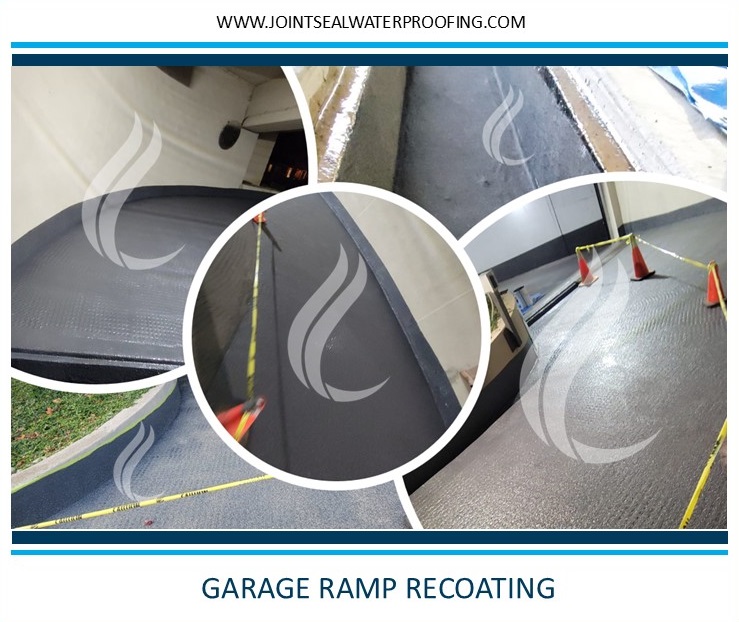
This week Joint Seal Waterproofing has successfully completed the full scope of repairs at a mid-rise residential building on Queen St E in Toronto, addressing two critical elements: the trench drain at the bottom of the ramp and the coating of the entire 840-square-foot ramp surface after completing cold joint waterproofing earlier. These repairs were essential to ensure effective water management and long-term durability for the ramp and its adjoining features, both of which are vital for maintaining safety and preventing future structural damage.
Trench Drain Repair
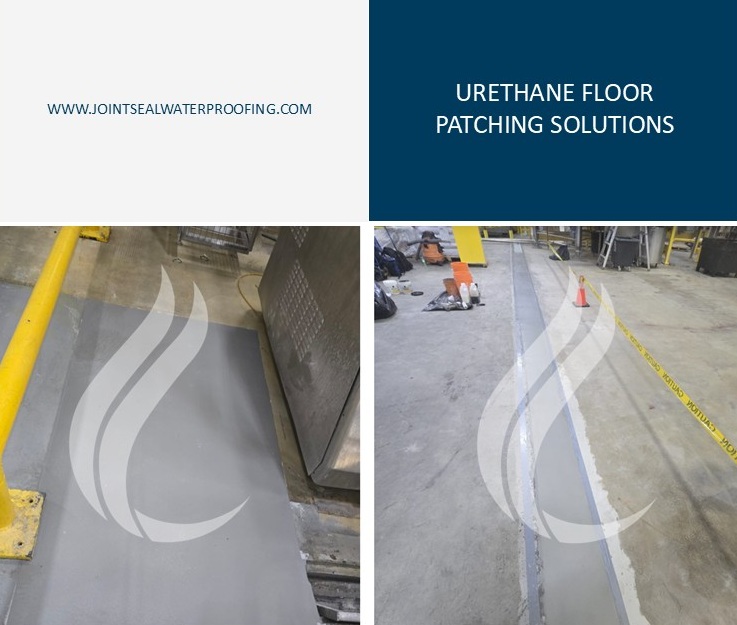
The trench drain at the bottom of the ramp was waterproofed to eliminate the risk of water infiltration. We began by thoroughly cleaning and preparing the surface to remove dirt and debris, ensuring optimal adhesion for the waterproofing material. Using a polyurethane-based waterproofing coating, we created a watertight seal around the drain, offering robust protection against future leaks and ensuring the drain functions efficiently even under heavy water flow.
Ramp Surface Coating
The ramp repair involved a multi-step process to create a durable, slip-resistant surface. The perimeter curbs were first ground and sealed with a waterproofing-geotextile membrane, creating a protective upturn to keep water away from the ramp edges. The ramp itself underwent surface grinding to prepare it for the application of a polyurethane-based membrane. A double coating system was used: the first layer sealed the surface while broadcasting non-slip aggregates for added traction, and the second layer locked in the aggregate, creating a smooth yet textured finish.
Benefits of Comprehensive Repairs
Check this page of our wide variety of concrete repair and waterproofing solutions for parking garages: /garages
Related: traffic toppings and deck repair · parking garage repair · floor coating systems · garage floor repair and traffic topping · documented projects · common questions
Common questions
Frequently asked questions
Why do trench drain edges break before the rest of the floor?
The drain edge is the only part of the floor with nothing supporting one side of it. A loaded forklift or vehicle wheel crossing the grating lands on an unsupported lip, and that same lip sits in whatever runs down the channel all day. Concentrated load and constant wetting attack the same twelve inches of concrete, so the edge fails years before the slab around it shows anything.
How far back from a trench drain does the repair have to go?
Where heavy wheel traffic crosses, plan on twelve to eighteen inches either side of the channel, taken below slab level to a compacted stone base. On a recent sixty-foot edge rebuild we broke back roughly a foot to a foot and a half and dug down more than a foot before reaching sound material. The width is set by where good substrate starts, not by how wide the damage looks.
Why does water pond on a floor that used to drain properly?
Usually the floor did not change, the room did. Partition walls get added, a line moves, one room becomes two, and drains that were correctly placed for the original layout end up somewhere the water never reaches. The slab still falls exactly the way it was poured. It just no longer falls towards a drain.
Is it cheaper to move a floor drain or to re-slope the floor?
Re-sloping is almost always cheaper and less disruptive. Relocating a trench or point drain means breaking the slab, cutting into the drainage line and re-tying it, which is a far bigger excavation and a much longer shutdown. In a two thousand square foot production room with three drains in the wrong places, we re-sloped the floor rather than move any of them.
How soon after patching can cars go back on a garage level?
Most of our patching in occupied parking garages is back under traffic the same day or the next, because the adhesive and polymer cements cure in about four hours rather than the days conventional concrete needs. On one Scarborough garage floor repair the self-levelling material cured in under thirty minutes and the level reopened within a few hours.
How long before a thin patch can be walked on or driven on?
Polymer cement patches with Polyforce Plus adhesive cure in roughly four hours, comparable to how long conventional concrete takes to set, so most repairs take foot traffic the same day. Temperature affects it, and whatever coating goes over the patch usually governs the return-to-service date rather than the patch itself.
Related services & repair types