Project & Insights
Exterior Parking Deck and Driveway Waterproofing
October 27, 2021
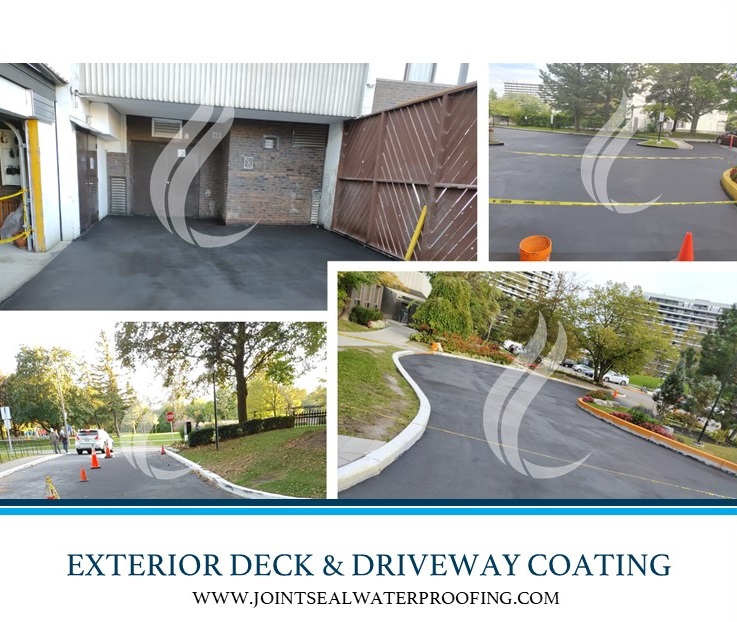
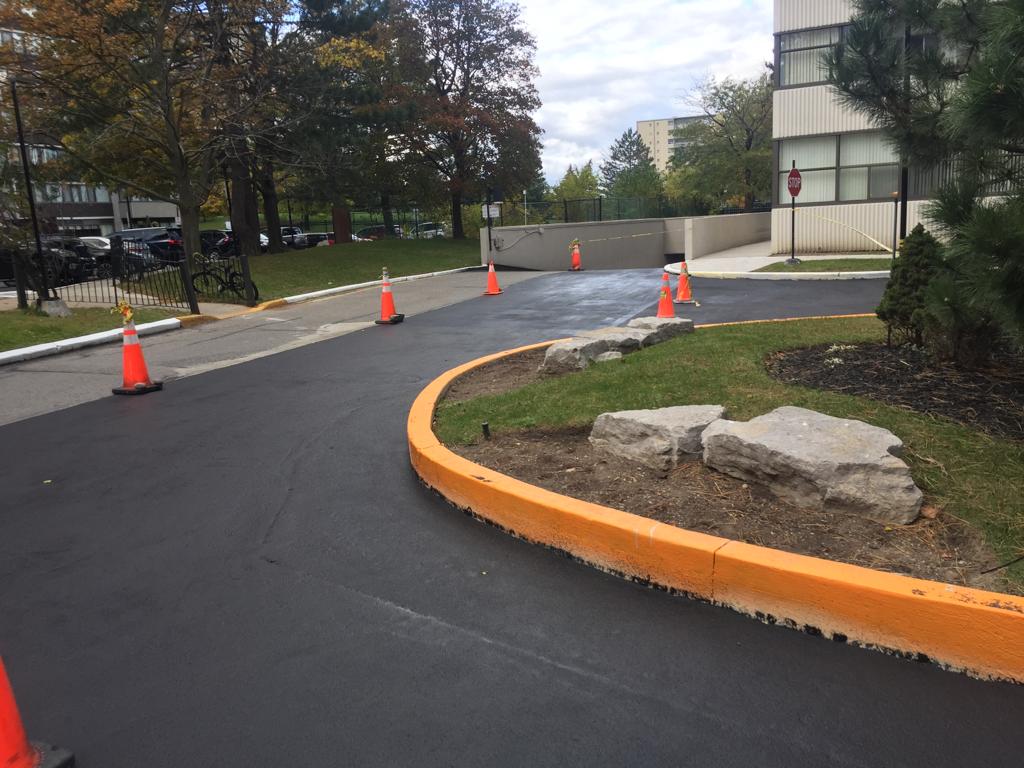
Over the last few weeks, we have gone back to continue asphalt rehabilitation on the exterior parking deck and adjoining areas of a high-rise residential building located on Antibes Dr. in Toronto. We also did the same repair at the building next door.
The first stage, completed in August, consisted of restoring and waterproofing the asphalt surface by applying a durable polyurea-based membrane on top, covering an area of approximately 30,000 SQF. The second stage comprises approximately 8,000 SQF at one building (exterior parking deck, driveway, and garbage area) plus over 4,500 SQF of the circular driveway coating at the second building.
An Efficient Waterproofing Alternative
Installing the polyurea membrane on top of the existing surface means avoiding the major disruption and a much higher cost that would be incurred if the traditional repair method were followed: removing the existing asphalt, installing a waterproofing membrane, and then covering it with a new asphalt layer.
The Repair Method
Proper surface preparation is essential in ensuring proper membrane installation and durable waterproofing results. The entire surface which was to be coated with polyurea was first cleaned with a pressure washer. Any existing cracks were then filled with cold-applied polyurea material, and the whole surface was coated with a water-based epoxy primer. Next, the first layer of a polyurea-based membrane was installed, followed by the second layer which included an aluminum oxide broadcast. This type of aggregate is ideal for surfaces that require longevity and skid resistance, as it does not get polished by the daily wear-and-tear.
Learn more about the benefits of waterproofing polyurea applications by visiting our website at /polyurea-membranes.
Related: podium deck waterproofing · traffic toppings and deck repair · parking garage repair · garage floor repair and traffic topping · documented projects · common questions
Common questions
Frequently asked questions
Is cracked asphalt connected to leaking expansion joints below?
Often, yes. Expansion joints do not leak without something above breaking the membrane first, and where a joint runs near paved areas, cracked asphalt is a common cause. Sealing the joint without sealing the asphalt treats the symptom while the source keeps working.
Why does cracked asphalt damage the waterproofing membrane underneath?
Water collects in the crack, and each passing tire pressurizes it into a hydraulic pocket with nowhere to escape. That repeated impact breaks the asphalt apart from below and hammers the membrane beneath it. The crack itself is not the damage — it is the route the pressure travels.
When is the best time to inspect asphalt over a parking garage?
After the spring thaw. Freeze-thaw cycling over a Toronto winter opens cracks to their widest and the damage is fresh and visible. Sealing before the summer means traffic is not pumping water through open cracks for the busiest months of the year.
How much does it cost to seal a crack in asphalt over a garage deck?
Crack sealing over a GTA condo deck runs in the range of five dollars a foot, because it is surface work with no excavation. Repairing the membrane and concrete after the crack has worked through runs in the range of three hundred dollars a foot. Both are order-of-magnitude figures, not quotes.
What kind of material is used to seal asphalt cracks over a deck?
A soft, flexible material injected into the crack, which stops water sitting in it and eliminates the hydraulic pocketing that pounds the membrane below. The material needs to stay flexible through freeze-thaw movement rather than setting rigid and cracking again at the same line.
Is negative-side injection as effective as digging up the deck?
In practice the success rates are comparable, and a consulting engineer on one GTA condo board conceded that a top-side dig is not 100 percent effective either — because nobody knows every place the membrane and joint have cracked. Injection also addresses the leak directly at its exit point rather than working across a broad excavated area.
Related services & repair types