Project & Insights
Turnkey Solutions for Residential Condo Buildings
December 14, 2022
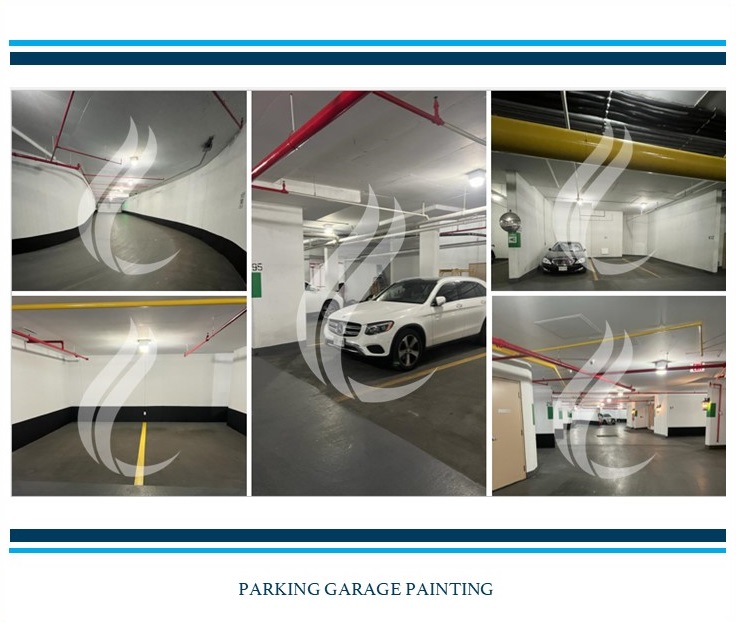
In July 2021 we started with our first project at a high-end condominium in the Bayview-Steeles area which had an issue with ground erosion – it is located on a ravine lot where the ground washes away as it rains, exposing the waterproofing membrane. A new retaining wall was built, and waterproofing was done. Since then, we were asked to provide more solutions, including ceiling crack repair and patching, as well as painting in their underground parking garage. Over the last several weeks, our crews have been painting garage walls, columns, and ceilings.
Concrete Patching
Our patches are monolithic – the new concrete bonds to the existing substrate forming a surface that is even stronger than the original. This allows us to fully restore the structural integrity of the repaired concrete slab.
Crack Repair
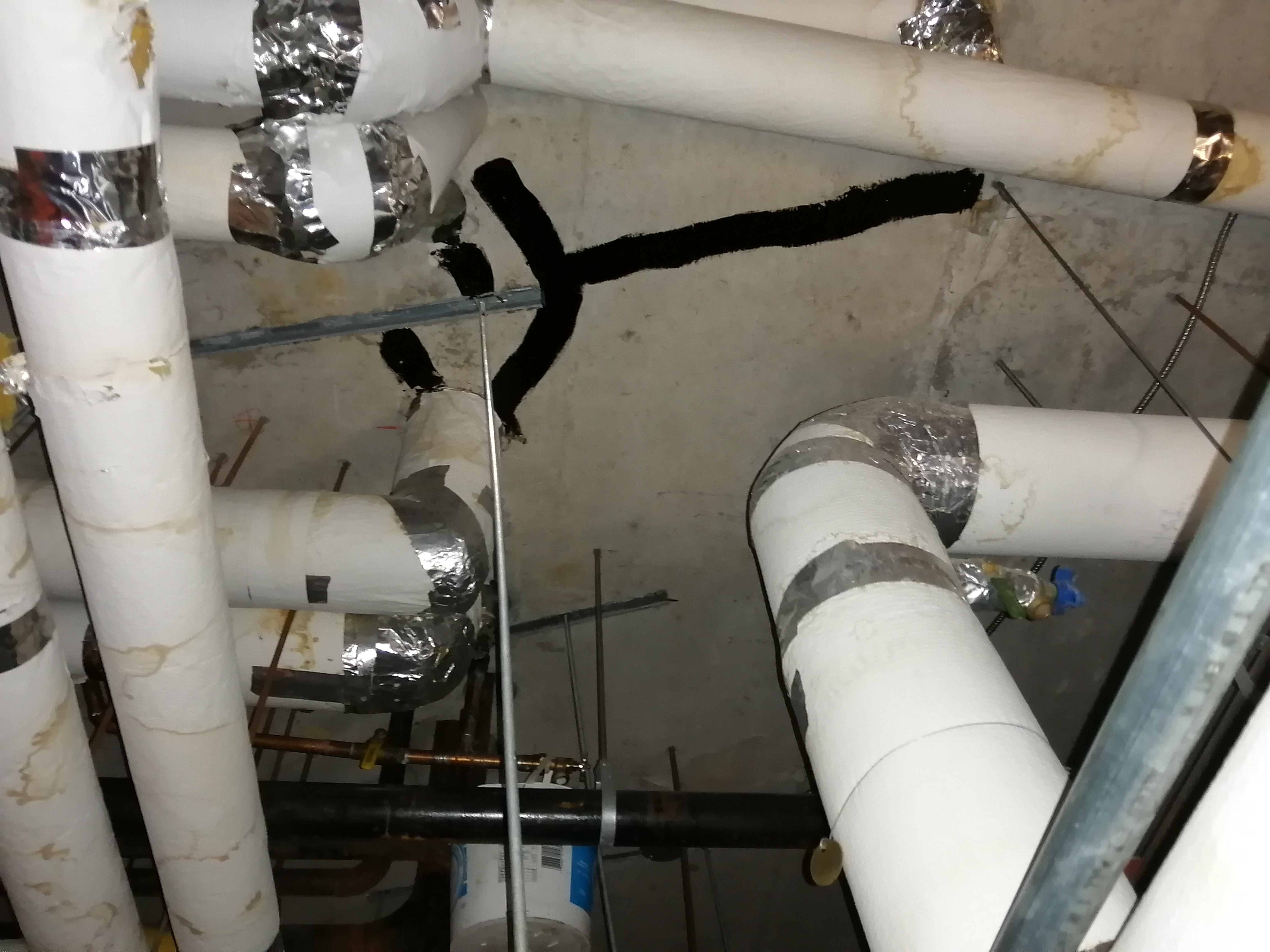
A durable solution would not be possible if traditional methods were followed: once a concrete surface cracks, the two parts of the slab cannot be fused together properly – the repair will not last. The use of specialised materials, however, provides a monolithic 1.85 MPa adhesion which allows for efficient crack filling – the material will remain in place and bond instantly to the substrate, fusing the two concrete slabs.
To repair a crack, the following steps are taken: chipping or grinding is done to remove any loose concrete and clean out the crack, an industrial-grade adhesive is applied next, to be followed by a crack-filling material which will bond immediately to the substate. Just like with patching, once the repaired area cures, it is painted over to match the surrounding surface.
Garage Painting
Once all the repairs were completed, we were asked to paint all the surfaces with the corresponding colour: black or white, with areas in green. Walls, columns, and ceilings were painted at the three levels of the parking garage.
Learn more about our wide range of concrete repairs and waterproofing solutions by visiting this page: /garages
Related: waterproofing for property managers · balcony repair and waterproofing · parking garage repair · condo maintenance guide · documented projects · common questions
Common questions
Frequently asked questions
How often should a condo parking garage be inspected for leaks?
A walkthrough every three to twelve months, set by the age and condition of the garage. Most garage leaks are reported by a resident rather than found by the superintendent or property manager, which means the problem is already dripping on someone's car by the time anyone hears about it. A scheduled condition assessment moves that discovery forward.
What should we do with the parked cars while we wait for a garage leak repair?
Relocate the affected vehicles and tape off the bays underneath the leak. On a Vaughan condominium garage we inspected this month, the management company had already moved the affected residents into visitor parking and closed off the drive aisle section, which stopped further staining while the source was traced. It costs nothing and removes the complaint that drives everything else.
Who pays if water in the parking garage damages a resident's car?
In most GTA condominiums the resident is directed to claim on their own auto insurance first, and some management companies will cover the deductible as a goodwill measure. Responsibility varies between corporations and between management companies, so it is worth confirming the position with the property manager and the corporation's insurer before residents start asking.
Can expansion joint injection be done in stages across budget years?
Yes, and this is one of its advantages for a reserve fund. Each joint is a separate 20-foot span, so a building can address the worst joints this year and others later. A top-side excavation does not stage the same way — the deck is opened once and has to be closed back up.
Why would one garage repair quote be eight times another?
On expansion joints the gap is almost always excavation. A top-side repair includes removing everything on the deck, stripping the membrane, and restoring the surface — roughly 70 percent of the cost. Negative-side injection works from inside the garage and skips all of it. It is a scope difference, not a quality difference.
Is it cheaper to fix the joint or wait and repair the concrete later?
Fixing the joint is far cheaper. A negative-side injection on a 20-foot joint span is about a two-day job. Repairing a saturated, spalling structural beam is a larger scope on a separate budget line and usually involves an engineer, because at that stage it is structural work rather than waterproofing.
Related services & repair types