Maintenance Guide
Roof inspections: three times a year
A flat roof is your building's first defence against water — and Ontario's climate is hard on it. Here's the inspection cadence that keeps small problems small, and why the timing matters.
Industry best practice for a flat or commercial roof is a minimum of two scheduled inspections a year — spring and fall — plus one after any major storm. In Ontario's freeze-thaw climate, treating that third, post-event check as routine is what separates a cheap repair from an interior flood.
1. Spring (after thaw)
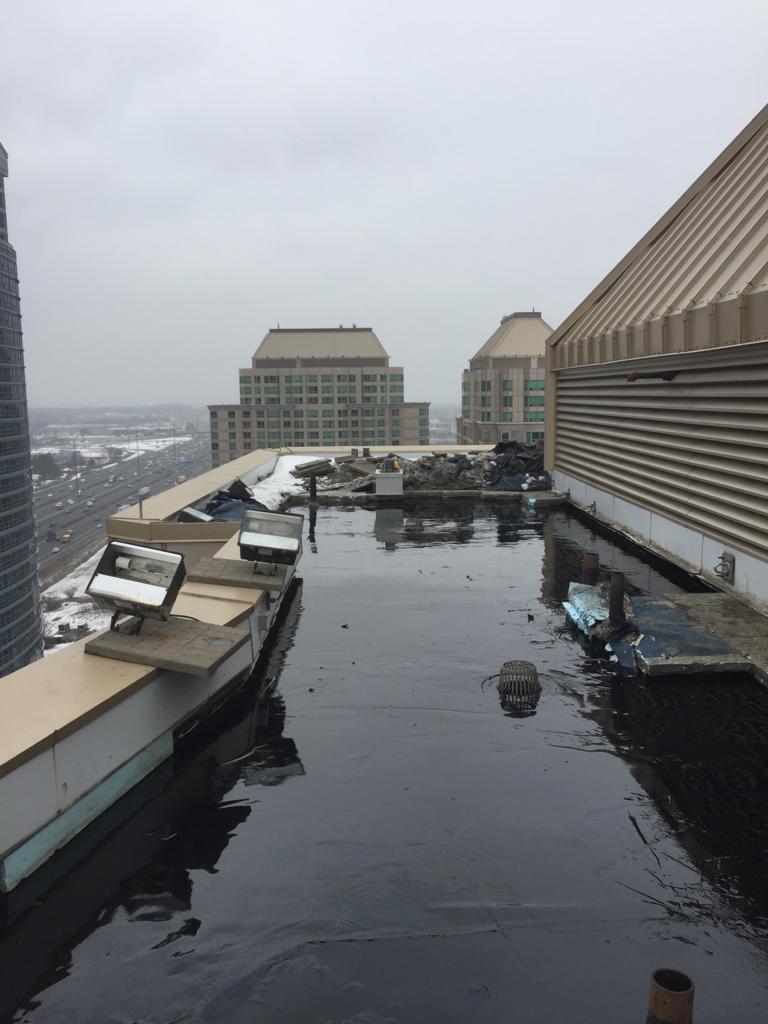
Why this timing: Winter is the hardest season on a flat roof. Freeze-thaw cycles, ice damming, and the weight of snow load open small cracks and lift seams. A spring inspection finds that damage before spring rains drive water into it.
What to check
- Membrane splits, blisters and lifted seams from freeze-thaw
- Ponding water that failed to drain over winter
- Cracked or pulled flashing at parapets and penetrations
- Clogged or ice-damaged drains and scuppers
2. Fall (before winter)
Why this timing: This is the most important inspection of the year. Anything left open — a hairline crack, a lifted seam, a clogged drain — becomes a freeze-thaw failure once winter water gets in and expands. Sealing and clearing in fall prevents the majority of winter roof leaks.
What to check
- Clear all drains, scuppers and gutters before leaf-fall and snow
- Seal any open cracks, seams and penetrations
- Confirm flashing is sound at parapets, curbs and equipment
- Check that the membrane is fully adhered with no lifting edges
3. After any major storm
Why this timing: High winds, hail and heavy rain cause sudden damage that will not wait for the next scheduled visit. A post-event inspection catches storm damage while it is still a small, cheap repair — and documents it for insurance if needed.
What to check
- Wind-lifted or torn membrane and displaced flashing
- Hail bruising or punctures
- New ponding or blocked drainage after heavy rain
- Debris that could puncture the membrane or block drains
The cost of skipping it
Nearly every expensive roof failure starts as a small, visible issue — a lifted seam, a clogged drain, a hairline crack. Left through a single winter, that same issue lets water into the insulation and deck, turning a minor sealing job into a partial or full replacement. Regular inspection is the cheapest line item on a roof's whole-life cost.
FAQs
Roof inspection questions
How many times a year should a flat or commercial roof be inspected?
The industry standard is a minimum of twice a year — once in spring and once in fall — plus an additional inspection after any major storm. In practice that works out to about three inspections a year for most Ontario buildings. Spring catches winter freeze-thaw damage, fall prepares the roof for winter, and post-storm checks catch sudden wind, hail or rain damage before it spreads.
Why is roof inspection so important for a condo or commercial building?
A flat roof is the building’s first line of defence against water. Small membrane failures spread quickly under Ontario’s freeze-thaw cycles, and a minor crack left unaddressed can become interior leaks, insulation damage, and structural deterioration. Regular inspection turns a large emergency repair into a small, planned one — and protects the reserve fund from surprise costs.
What is the most important roof inspection of the year?
The fall inspection, before winter. Any crack, open seam or clogged drain left going into winter becomes a freeze-thaw failure once water gets in and freezes. Clearing drains and sealing openings in fall prevents the majority of winter roof leaks.
Can a leaking flat roof be repaired instead of replaced?
In most cases, yes — especially when the problem is caught early. A spray or roll-on polyurea membrane can be applied over the existing surface to create a seamless, fast-curing repair, avoiding a full and costly tear-off. Full replacement is usually only needed when damage has been left long enough to compromise the deck or insulation below.
Book a roof assessment
We'll inspect your flat roof, flag anything at risk, and give you a clear repair plan and price — free, across Toronto & the GTA. Related: flat roof repair & waterproofing.