Project & Insights
Waterproofing and Restoration Solutions for Garbage Rooms
December 9, 2021
Updated: Dec 22, 2021
After a successful completion of a large restoration and waterproofing project at a high-rise residential building located on Antibes Dr. in North York – close to 43,000 SQF of polyurea-based membrane application on their parking deck – we were asked to provide a lasting waterproofing solution for their garbage and compactor rooms.
Concrete floors in such rooms undergo a lot of wear-and-tear – large garbage bins are regularly dragged across their surface. Therefore, a solution that will protect these floors against such mechanical intrusions is required.
Repair Method
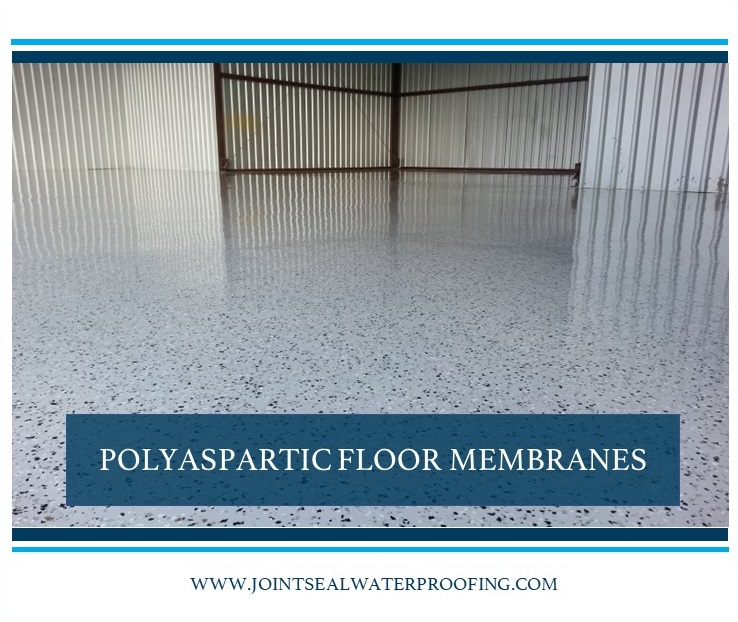
As usual, the firs step is surface preparation – grinding was done, followed by crack repair and patching. Afterwards, primer was applied before installing a polyurea-based membrane. Polyaspartic coating (broadcast with sand, to ensure a non-slip surface) followed.
The total area repaired was 300 SQF in the compactor room and 150 SQF in the garbage room.
Benefits of Polyurea
Such membranes provide lasting waterproofing results on a variety of surfaces thanks to their exceptional chemical and mechanical properties. Polyurea-based membranes are ideally suited for applications with demanding requirements in weather, chemical, mechanical, abrasion, UV and aging resistance.
Lean more about these versatile waterproofing membranes by visiting our page: /polyurea-membranes
Related: utility and mechanical room waterproofing · floor coating systems · mechanical room floor coating · concrete repair and restoration · documented projects · common questions
Common questions
Frequently asked questions
Why does water pond on a floor that used to drain properly?
Usually the floor did not change, the room did. Partition walls get added, a line moves, one room becomes two, and drains that were correctly placed for the original layout end up somewhere the water never reaches. The slab still falls exactly the way it was poured. It just no longer falls towards a drain.
Is it cheaper to move a floor drain or to re-slope the floor?
Re-sloping is almost always cheaper and less disruptive. Relocating a trench or point drain means breaking the slab, cutting into the drainage line and re-tying it, which is a far bigger excavation and a much longer shutdown. In a two thousand square foot production room with three drains in the wrong places, we re-sloped the floor rather than move any of them.
What is coving, and how big does it need to be?
Coving is a sloped fillet formed where the floor meets the wall, typically up to about three inches at roughly forty-five degrees. It removes the sharp internal corner entirely, so water runs out instead of sitting and dirt has nowhere to lodge. It is formed in the same system as the floor rather than installed as a trim, so there is no seam at the junction.
Why is a 90-degree wall-to-floor corner a problem in a wash-down room?
Because it holds what the hose cannot reach. Dirt and water collect in the sharp internal corner and pressure washing pushes material into it about as often as it removes material from it. The corner becomes a contamination trap in a room that is otherwise cleaned properly, which is why coving is standard in food and process areas and increasingly common in garbage rooms.
How is dust controlled when grinding inside an occupied facility?
With HEPA-filtered vacuum extraction on the grinding and chipping, plus containment of the work area set up before any tool is switched on. In a food plant the cleanliness requirement is absolute, so there is no version of the job where dust gets dealt with afterwards. The same approach applies in hospitals and other occupied buildings.
Can a cheaper coating be used in the non-production areas of a plant?
In genuine office and administrative space, yes. The trap is that some rooms look administrative and are not. We were once asked to use a cheaper epoxy in what was described as an office area, and on walking it we found the micro testing lab where quality control work is done. We flagged it, the engineers agreed, and it was finished in food-grade material.
Related services & repair types