Project & Insights
How a Concrete Balcony Is Waterproofed | Joint Seal
October 13, 2021
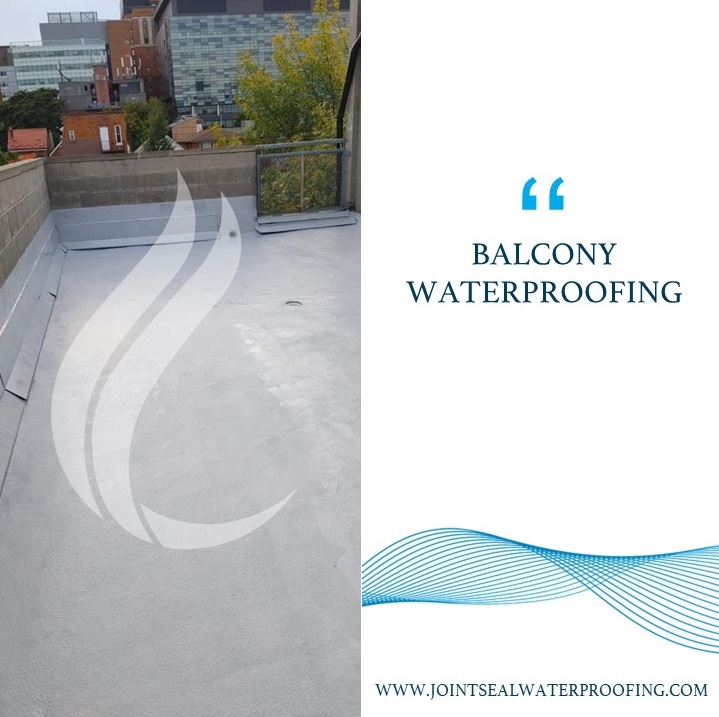
A balcony repair is five operations, in a fixed order: crack repair, patching, slope reversal, membrane, top coat. Leave out the slope and the membrane sits in a puddle. Leave out the crack repair and the membrane bridges a moving crack until it tears. The order is not negotiable, and it is the part of the quote worth reading.
Why balconies fail
A balcony is a cantilevered slab with water on it, exposed on five sides, freezing and thawing all winter. Three things go wrong.
The slope reverses. Slabs deflect over decades. A balcony that was poured to drain outward ends up flat, or falling back towards the door. Water then stands on the slab instead of leaving it, and standing water finds every crack.
Cracks open. Once water is standing, freeze-thaw does the rest. Water gets into a hairline crack, freezes, expands, and the crack widens every winter.
The edge and soffit spall. Water tracking to the underside reaches the reinforcing steel, the steel rusts, rust occupies more volume than steel, and the concrete is pushed off from inside. That is the concrete that lands on the balcony below.
The repair, step by step
1. Crack repair. Cracks are opened and cleaned so the filler bonds to sound concrete rather than to dust, then filled. A membrane over an unrepaired moving crack will tear along the crack.
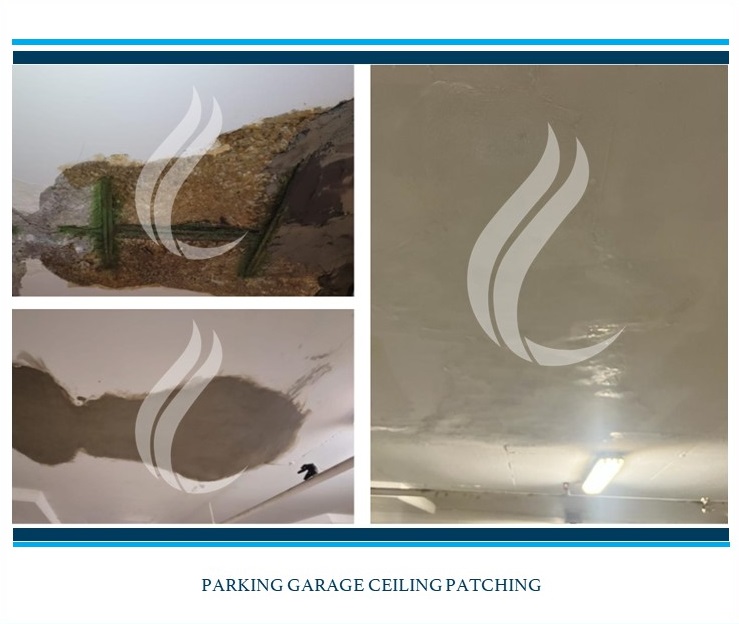
2. Patching. Broken and delaminated areas are rebuilt. Our patching materials bond in sections as thin as 5 mm — against the two-inch minimum chip-out conventional demolition-and-recast repair requires. On a balcony that difference decides whether the slab has to be partially demolished.
3. Slope reversal. This is the step thin-patch material makes possible. Because we can place extensive patches at 5 mm, an inverted or flat balcony slope can be built back to fall towards the drain edge without recasting the slab. A balcony that drains is a balcony that stops needing repairs.
4. Membrane. The surface is covered with geotextile, then a polyurea-based waterproofing membrane is applied over it. The geotextile is the reinforcement layer — it lets the membrane bridge minor movement instead of splitting at it.
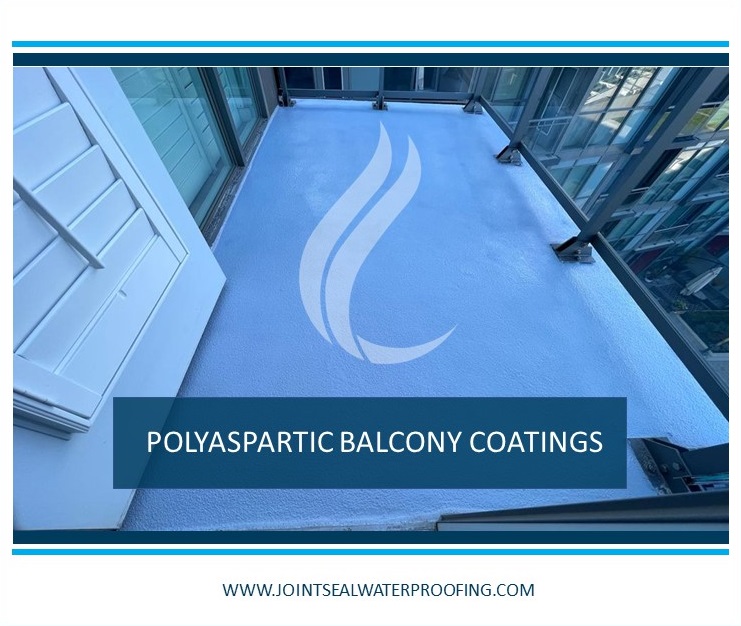
5. Top coat. A polyaspartic coating fully seals the repaired surface and takes UV, foot traffic and furniture. It is available in a range of colours, so the finished balcony is a specification rather than whatever the membrane happened to be.
Parging and edge detailing are added where the slab edge or soffit has spalled.
What the materials are rated for
The systems we install carry a Ministry of Transportation Ontario rating for roughly a 25-year service life. That figure is a material service-life rating, not a warranty term, and it assumes the slab underneath was repaired rather than covered.
Most repaired areas are back in use within 24 hours.
A real example
A low-rise commercial building on Augusta Ave. in Toronto. Crack repair and slope reversal came first, then geotextile, then the polyurea membrane, then a polyaspartic top coat in a colour the client selected. The slope work was possible only because the patches could be placed thin.
What we do not do
Joint Seal does concrete repair, restoration and waterproofing. We do not replace railings, glazing or doors, and we do not take general trades work. Where a railing post is set into a slab we are repairing, the penetration around it is waterproofed as part of the system — but the railing itself is somebody else’s scope.
The opinion, stated plainly
If a balcony quote lists a membrane and a coating but says nothing about slope, it is a quote to re-waterproof the same puddle. Ask where the water is supposed to go when the job is finished. On a balcony that has been standing water for ten years, slope reversal is the repair and everything else is protection for it.
Related: balcony repair and waterproofing · thin-patch concrete repair · concrete crack repair · polyurea membranes · overhead and soffit repair · documented projects · common questions
Common questions
Frequently asked questions
Is spalling on exterior concrete steps a safety issue?
Spalling on the nosing of a concrete step is a tripping hazard and a safety violation, because the walking edge is exactly where people put their weight. It is also where water and road salt reach the reinforcing steel. Deferring the repair means the rebar corrodes and the scope grows from a surface repair into a structural one.
Can you paint or coat over a spalled ceiling instead of patching it?
Coating over spalled concrete without repairing it hides the symptom and does nothing about the corroding steel underneath, so the coating fails as the cover continues to break away. Any coating is the last layer of a system, applied after the loose material is removed, the steel treated and the profile rebuilt.
What is slope reversal on a balcony?
Rebuilding the fall of the slab so water runs to the drain edge again. Balconies deflect over decades until they are flat or falling back towards the door, and water then stands on the slab. Because our patching material bonds in sections as thin as 5 mm, the slope can be built back without recasting the slab.
Why is geotextile installed under the membrane?
It is the reinforcement layer. The geotextile lets the polyurea membrane bridge minor movement in the slab instead of splitting along it, which matters most over repaired cracks and at the slab edge.
Can we choose the colour of the finished balcony?
Yes. The polyaspartic top coat that seals the repaired surface comes in a range of colours, so the finish is specified rather than left as whatever colour the waterproofing membrane happens to be.
Does the balcony have to be emptied?
The working area does. Furniture, planters and storage have to come off the slab before preparation starts, because the repair needs access to the full surface including the edges and the drain. Most repaired areas are back in use within 24 hours.
Related services & repair types