Project & Insights
Utility Room Surfaces Waterproofed in Medical Facilities
September 7, 2022
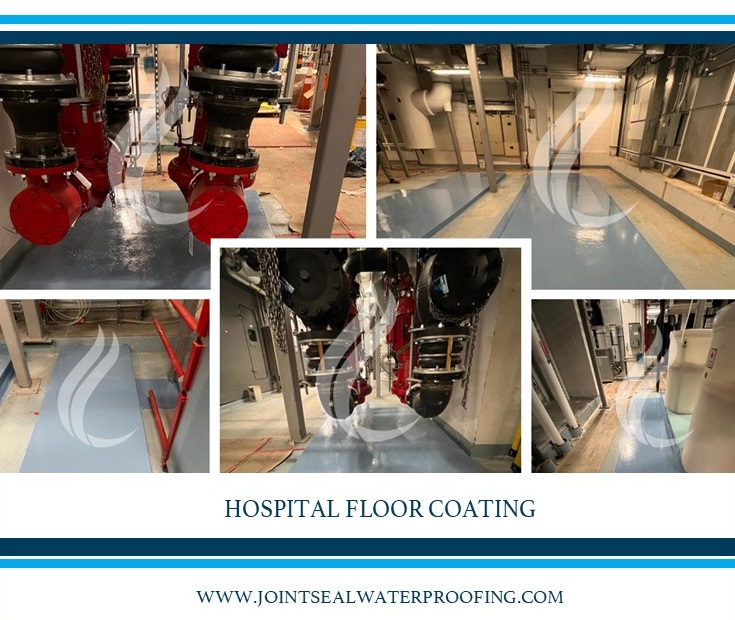
Carrying out any kind of concrete repair or waterproofing project at a medical facility requires strict adherence to their health and safety protocols, as well as careful coordination with the client to ensure that their normal operations are not affected. Extra care must also be taken to control the dust and use zero-VOC materials in such sensitive environments.
Mechanical Equipment Pads
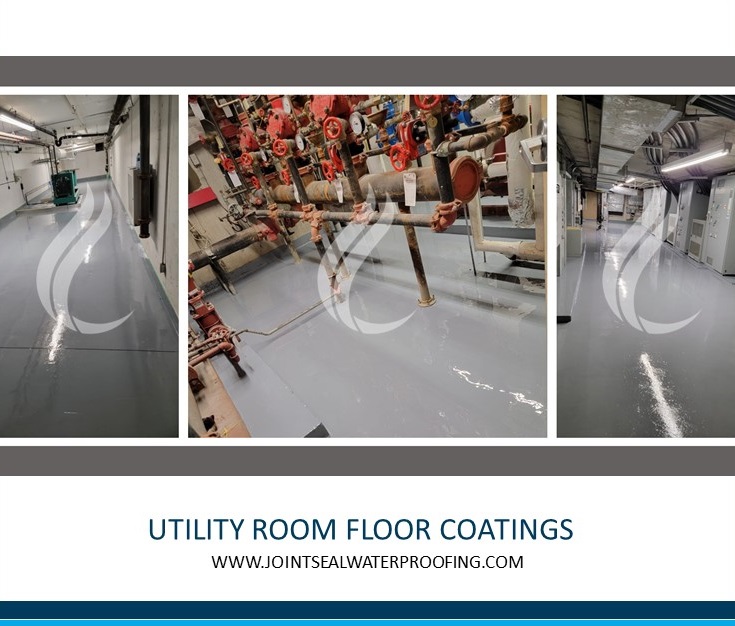
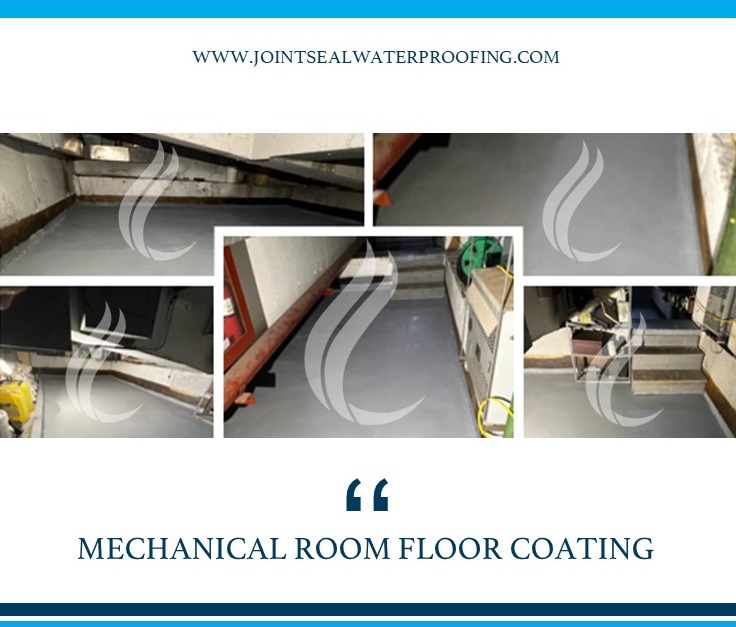
We were hired by a well-established construction company to waterproof newly built housekeeping pads in a hospital facility located on Bay Street in Toronto. There were a number of raised concrete pads to coat, with a total surface of approximately 400 SQF.
Utility room floors and raised concrete pads used for equipment can degrade quickly if not protected by a specialised waterproofing membrane because of the acidic substances released by the machinery.
Waterproofing Method
This time, coating was done with the materials specified for this project by the engineers, and we helped in making sure the correct waterproofing membrane was purchased within the established timelines.
To ensure proper adhesion and lasting waterproofing results, the surface was prepared first: any minor cracks were filled, and slight grinding was done. Two layers of a Sika 100% solid epoxy coating were applied.
Learn more about our waterproofing solutions for any type of utility room – mechanical rooms, garbage rooms, pool equipment rooms, etc. – by vising this page: /utility-rooms
Related: hospital and medical facility waterproofing · utility and mechanical room waterproofing · floor coating systems · mechanical room floor coating · documented projects · common questions
Common questions
Frequently asked questions
How is dust controlled when grinding inside an occupied facility?
With HEPA-filtered vacuum extraction on the grinding and chipping, plus containment of the work area set up before any tool is switched on. In a food plant the cleanliness requirement is absolute, so there is no version of the job where dust gets dealt with afterwards. The same approach applies in hospitals and other occupied buildings.
Why does water pond on a floor that used to drain properly?
Usually the floor did not change, the room did. Partition walls get added, a line moves, one room becomes two, and drains that were correctly placed for the original layout end up somewhere the water never reaches. The slab still falls exactly the way it was poured. It just no longer falls towards a drain.
Is it cheaper to move a floor drain or to re-slope the floor?
Re-sloping is almost always cheaper and less disruptive. Relocating a trench or point drain means breaking the slab, cutting into the drainage line and re-tying it, which is a far bigger excavation and a much longer shutdown. In a two thousand square foot production room with three drains in the wrong places, we re-sloped the floor rather than move any of them.
What is coving, and how big does it need to be?
Coving is a sloped fillet formed where the floor meets the wall, typically up to about three inches at roughly forty-five degrees. It removes the sharp internal corner entirely, so water runs out instead of sitting and dirt has nowhere to lodge. It is formed in the same system as the floor rather than installed as a trim, so there is no seam at the junction.
Why is a 90-degree wall-to-floor corner a problem in a wash-down room?
Because it holds what the hose cannot reach. Dirt and water collect in the sharp internal corner and pressure washing pushes material into it about as often as it removes material from it. The corner becomes a contamination trap in a room that is otherwise cleaned properly, which is why coving is standard in food and process areas and increasingly common in garbage rooms.
Why seal around the feet of tanks and machines?
Levelling feet leave a gap between the plinth and the floor, and that gap is dark, permanently damp and impossible to clean or inspect. Sealing around the foot closes it, so nothing can get underneath and a glance is enough to confirm the area is clean. We have done close to forty of these at one plant and none has failed, against a previous detail that was not lasting four months.
Related services & repair types