Project & Insights
Lasting Waterproofing Solutions for Water Features
June 5, 2024
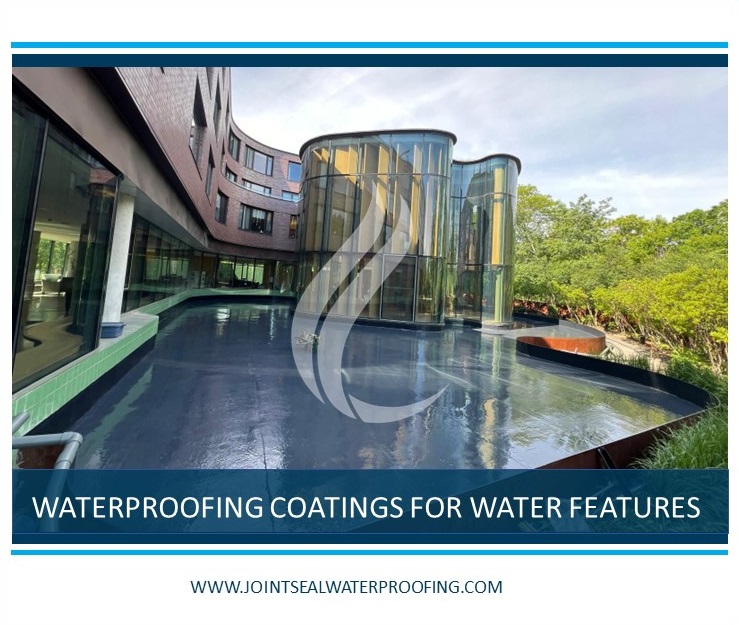
Waterproofing work at a private residence on O’Connor Dr. in Toronto has been completed: the decorative pond, totalling over 3,200 SQF, has received the final coating and can be filled with water for the summer season.
This project had begun last fall, after a successful completion of other repairs performed, including elevator pit waterproofing and concrete crack repair in the mechanical room and other areas.
Phase 1 – Repair and Waterproofing
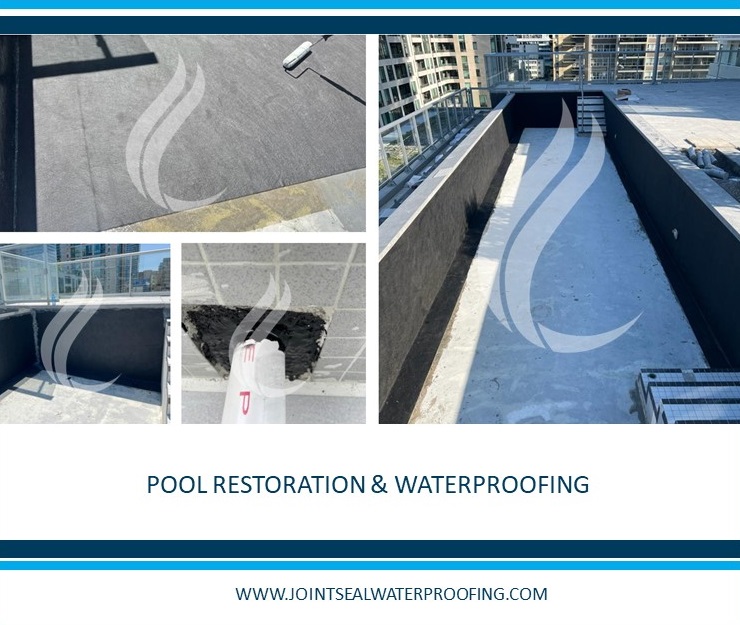
The project began with the removal of the old, bubbled-up membrane to ensure proper adhesion of the new waterproofing coating. We meticulously ground the concrete substrate, uncovering cracks that were initially unsuccessfully repaired with crack filler. We then reopened these cracks, applied a high-performance waterproofing material, and patched them, effectively resolving the issue. Next, we thoroughly cleaned the 3,220 square feet pond floor with specialised solvents, prepared it for the epoxy coating, and added a layer of geotextile followed by an additional epoxy coat, significantly enhancing the durability of the waterproofing system.
The second phase had to be postponed till this spring because of the weather conditions.
Phase 2 – Waterproofing Membrane Top Coat
This month, with improved weather conditions, we resumed work to apply the final decorative layer of the waterproofing system. This essential step guarantees both the durability and visual appeal of the waterproofing, offering strong protection against water infiltration. The pond walls were coated last week, while the pond floor surface was completed yesterday.
Benefits of Specialised Coatings
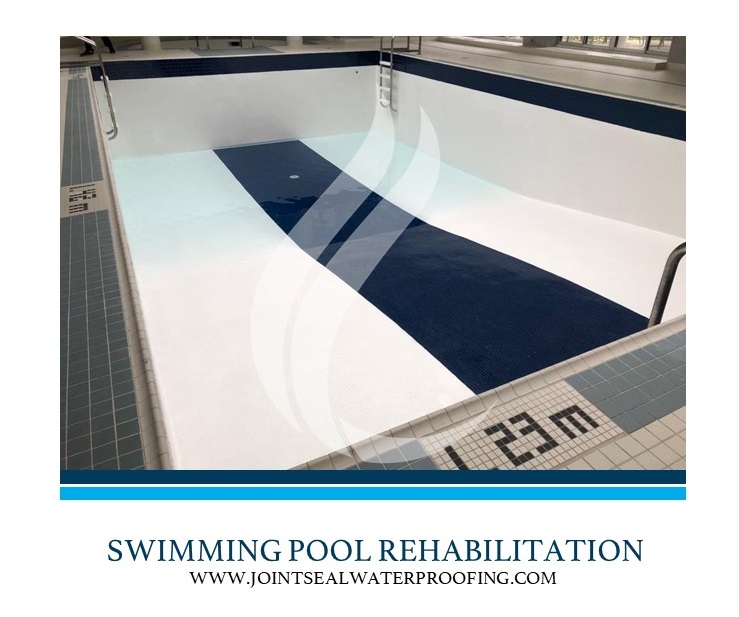
For this project, we used a specialised two-component coating specifically designed for pool applications. This advanced coating offers several significant benefits:
Chemical Resistance: The coating is formulated to withstand exposure to pool chemicals, ensuring long-term durability and preventing degradation that could compromise the waterproofing.
Abrasion Resistance: It provides excellent resistance to wear and tear, making it ideal for surfaces subjected to constant water movement and human activity.
UV Stability: The coating maintains its integrity and appearance when exposed to sunlight, preventing fading and deterioration over time.
These properties make the two-component coating an excellent choice for waterproofing applications in pool environments, ensuring both functional and aesthetic benefits. This system works well even in harsh pool environments where it is exposed to a variety of chemicals. For water features like this decorative pond, it will provide even more durable waterproofing results.
For more information about the wide range of concrete repairs and waterproofing solutions we offer, please visit the different pages on this website.
Related: swimming pool repair and waterproofing · polyurea membranes · concrete crack repair · what is polyurea waterproofing · documented projects · common questions
Common questions
Frequently asked questions
Why is a pool perimeter joint water-tested before the paving goes back?
The perimeter expansion joint is flood-tested the moment it is rebuilt, before any paving is relaid, because a defect found afterwards means lifting the paving again — which is most of the labour in the job. Testing an open joint costs an hour. It is the only formal quality hold point in a pool repair.
How are pool cracks estimated before the pool is opened up?
On a suspended condominium pool, count the cracks visible from the mechanical room underneath and multiply by two. Any crack showing on the underside is certainly on the pool side as well, and there will be a few more up top because not every crack passes right through. Where cracking is present, the working allowance is around twenty percent of the surface area.
Why does a pool finish have to be flooded the same day it is applied?
Marbelite has to cure under water, so the pool is filled the same day the finish goes on. Leave it dry overnight and the finish cracks. The same rule applies at small scale: a localised marbelite floor patch starts refilling about fifteen minutes after the last trowel.
Why does a drained pool wall turn yellow?
On an epoxy-coated pool, physical contact with the dry wall can stain it permanently. At one Bayview Avenue building a drained pool had a wall wiped down with a towel, and the wiped areas turned yellow while untouched walls stayed clean. It is a reaction between bromine, the epoxy coating and oxygen, triggered by the contact, and it cannot be cleaned off.
How much hollow concrete is normal in an ageing pool?
About two square feet across the entire shell is normal on a typical ageing condominium pool, and those areas get chipped out and refilled as routine repair. Widespread delamination is a different finding: on one pool, thirty to forty percent of the surface was hollow because the concrete was never properly vibrated when it was placed.
What is a sounding test on concrete?
A sounding test is tapping concrete with a specialised hammer or a metal rod and listening to the response. Solid concrete rings; delaminated concrete sounds hollow. It is the test that decides whether a crack gets injected or the surrounding area gets removed and patched, and it finds damage that looks completely sound to the eye.
Related services & repair types