Project & Insights
Concrete Crack Repair on Various Surfaces
November 11, 2020
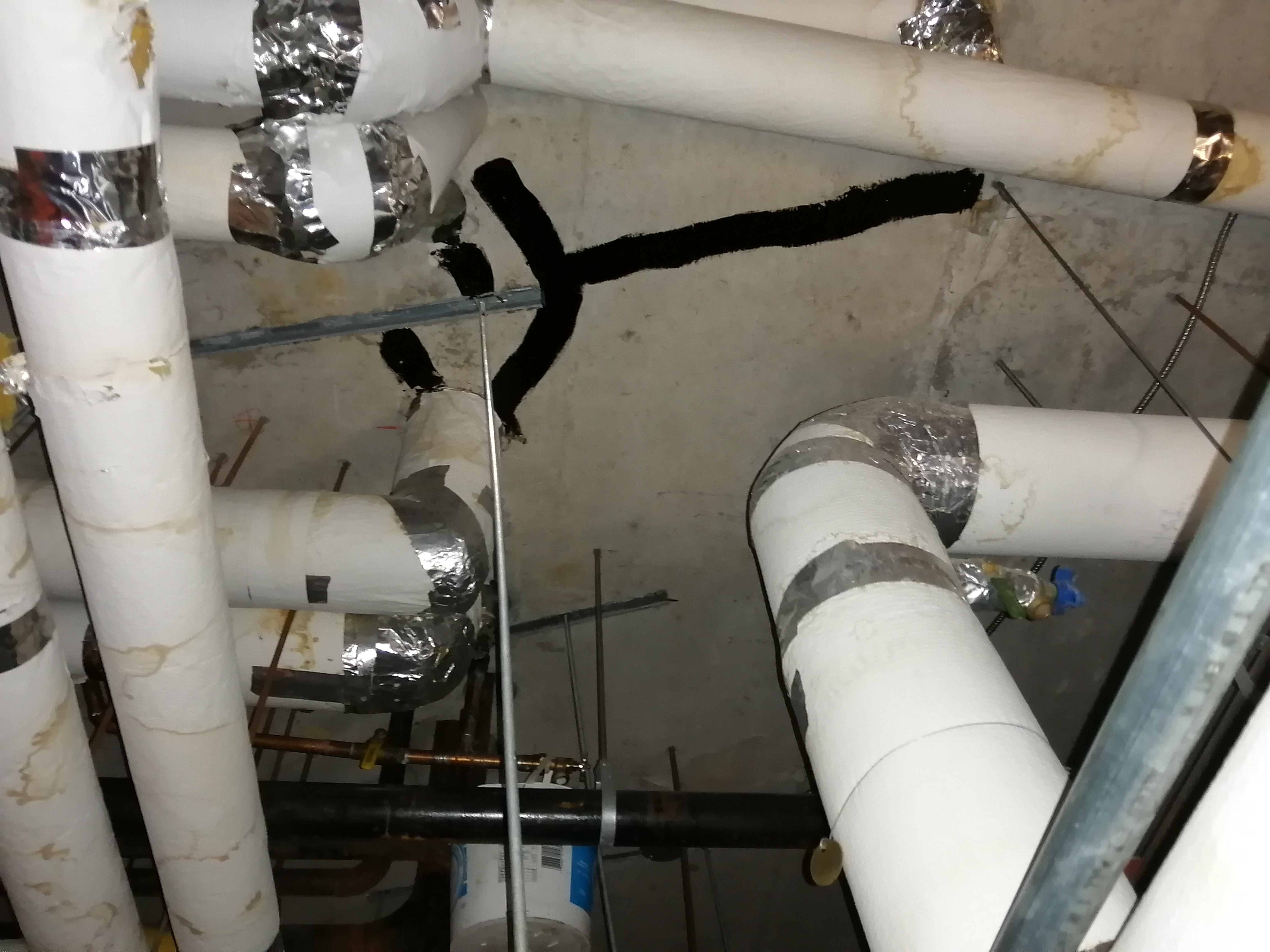
Throughout the six years during which we have offered waterproofing solutions in a high-rise residential building on Lee Centre Drive, we have done extensive concrete crack repair and patching in different parts of the building, on a variety of surfaces – ceilings, walls, and floors.
Lobby Ceiling Crack Repair
A particularly challenging surface to repair was the lobby ceiling. Multiple pipes run above the suspended ceiling, making access to the concrete ceiling slab a challenge.
Durable Waterproofing Solutions
The use of specialized materials allows for efficient repairs even on ceiling and wall surfaces thanks to instant bonding – the material does not run out of the crack. Monolithic 1.8 MPa adhesion ensures durable repair and a lasting waterproofing solution.
Related: concrete crack repair · thin-patch concrete repair · concrete repair and restoration · cold joint repair · documented projects · common questions
Common questions
Frequently asked questions
What does white powder around a concrete crack mean?
White deposits around a concrete crack are calcium carried out of the concrete by water moving through it, and the amount tells you the volume of flow. A heavy white bloom means a sustained, significant water supply behind that crack — not an occasional seep. It is the strongest visual signal that a crack is an active water path rather than a cosmetic one.
What does rust-coloured staining on a concrete wall mean?
Yellow-brown staining around a crack means water has reached the rebar inside the wall and the steel is corroding. The staining is rust washing out through the crack. It usually indicates a narrower crack than a white-stained one, because it takes less water to corrode steel than to carry calcium out, but it points to a more structural problem.
Are cracks in a parking garage slab structural?
Cracks in a parking garage slab are usually not structural in themselves, but they are the path by which chloride-laden water reaches the reinforcing steel, and corroding steel is structural. The width and the wetness matter more than the length. A wet crack in a drive lane deserves attention before a dry crack twice its size.
Why does the leak appear in a different place than where the water gets in?
Water that gets under a debonded deck membrane runs along the concrete slab until it reaches the expansion joint, then exits there. On one downtown Toronto garage we measured roughly 20 feet between the crack in the membrane and the visible drip inside. This is why digging directly above the drip often misses the failure.
What is a sounding test on concrete?
A sounding test is tapping concrete with a specialised hammer or a metal rod and listening to the response. Solid concrete rings; delaminated concrete sounds hollow. It is the test that decides whether a crack gets injected or the surrounding area gets removed and patched, and it finds damage that looks completely sound to the eye.
Do you need to find where the water is entering before injecting?
No, and that is the main advantage of the method. The resin takes the path of least resistance, which is the same route the water used, so it travels back toward the entry point on its own. On garage decks this matters because water can travel 20 feet or more under a debonded membrane before it exits at the joint.
Related services & repair types